


app-store-logo
play-store-logo
March 6, 2026

‘Do We Need Permission from the US?’: Congress Challenges Centre’s Sovereignty Amid Waiver for Russian Oil Purchases

The CSR Journal Magazine

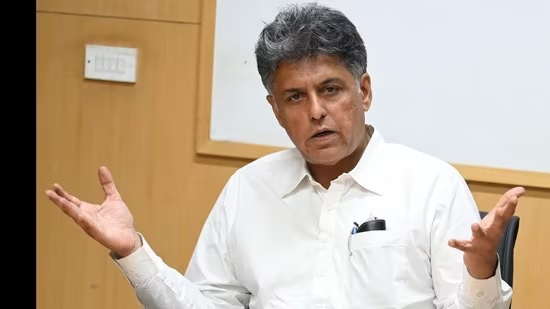
On March 6, Congress Member of Parliament (MP) Manish Tewari raised concerns regarding India’s sovereignty as the United States announced a 30-day waiver permitting India to buy Russian oil. This decision comes against the backdrop of a crisis in the Gulf region, which has disrupted shipping routes in the Strait of Hormuz. US Treasury Secretary Scott Bessent revealed that this temporary measure is aimed at mitigating the effects of the ongoing conflict in West Asia, which has critically impacted oil supplies from Gulf nations.

Questioning US Influence on India’s Energy Security

In a statement on social media, Tewari questioned whether India requires American approval to determine its energy sources. He criticized the US for its “neo-imperial arrogance” and expressed his concerns about India’s energy security, emphasizing that India should not function as a “banana republic” dependent on US permissions for its energy needs. He further pointed out the government’s unexpected silence regarding the US announcement, questioning their understanding of what sovereignty entails.

Allegations of Compromised Sovereignty

Another Congress MP, Randeep Singh Surjewala, echoed similar sentiments, asserting that the ruling Bharatiya Janata Party (BJP) has consistently compromised India’s sovereignty. Surjewala’s remarks highlighted the necessity for India to secure its energy interests, particularly with rising oil prices and the disruptions in the Strait of Hormuz. He criticized the government’s reliance on US approval for purchasing oil from Russia and noted previous instances where India was allegedly pressured to avoid Iranian oil due to US sanctions.

India’s Position on Oil Imports

Following the announcement of the US waiver, questions arose regarding India’s commitment to not purchasing Russian oil. The US has framed this temporary measure as a response to the geopolitical challenge posed by Iran, with the expectation that India will increase its purchases of US oil during this period. The waiver is characterized as a short-term initiative designed to facilitate oil into the global market without substantially benefiting the Russian government, as it only covers oil already stranded at sea.

Impact on Indian Industries

The implications of these geopolitical developments extend to India’s industries that rely heavily on imported liquefied natural gas (LNG) from the Gulf Cooperation Council (GCC) countries, particularly the ceramic and fertilizer sectors. Any hindrance to energy supply could significantly influence these industries, affecting production and cost of goods.

Ongoing Conflict in West Asia

The ongoing conflict in West Asia marks its seventh day, following US and Israeli military strikes on Iran that resulted in the assassination of key figures, including Supreme Leader Ayatollah Khamenei. In retaliation, Iran has launched counter-strikes targeting US military installations and Israeli assets across the region, elevating tensions further and complicating the global energy landscape.

Long or Short, get news the way you like. No ads. No redirections. Download Newspin and Stay Alert, The CSR Journal Mobile app, for fast, crisp, clean updates!

App Store –  https://apps.apple.com/in/app/newspin/id6746449540 

Google Play Store – https://play.google.com/store/apps/details?id=com.inventifweb.newspin&pcampaignid=web_share

Latest News

Popular Videos