


India Played Key Role in Supporting Sri Lanka During Economic Crisis
The CSR Journal Magazine

The economic conditions in Sri Lanka deteriorated significantly in 2022, leading to severe humanitarian and financial crises. The situation had been building for several years due to a combination of factors, including excessive debt accumulation, drastic tax reductions, depleted foreign exchange reserves, and the collapse of the tourism sector during the Covid-19 pandemic. Policy missteps, notably a sudden prohibition on chemical fertilisers, further exacerbated the situation.

By early 2022, the country found itself unable to secure necessary imports of essential goods such as food, fuel, and medicines. This shortage led to widespread power outages, skyrocketing prices, and mass protests. In April 2022, the Sri Lankan government decided to suspend foreign debt repayments, marking a pivotal moment in the crisis.

Nirmala Sitharaman’s Intervention at the IMF

According to former Sri Lankan Finance Minister Ali Sabry, Nirmala Sitharaman, India’s Finance Minister, played a crucial role in advocating for urgent assistance from the International Monetary Fund (IMF). Sabry mentioned that the tone of discussions changed significantly during an IMF meeting in Washington in April 2022 after Sitharaman intervened on behalf of Sri Lanka.

Sabry recalled, “When I went back to the meeting, the tone, the approach, the environment, everything had changed.” Initially, the IMF leadership had been hesitant regarding assistance for Sri Lanka, but their position shifted after engagement with Sitharaman. He noted that her discussions were part of broader Indian support, which encompassed credit facilities, humanitarian aid, and a currency swap.

Following her intervention, Sitharaman assured substantial financial support to Sri Lanka, citing India’s commitment to being a reliable neighbour. This included $4 billion in various forms of assistance, which helped maintain critical imports for the island nation.

Details of India’s Financial Support

The support from India included provisions of a $500 million credit line for petroleum products and a $1 billion concessional facility aimed at securing food, medicines, and other essentials. Additionally, a $400 million currency swap was arranged between the Reserve Bank of India and the Central Bank of Sri Lanka to alleviate liquidity issues.

Furthermore, India postponed around $2 billion in Sri Lankan payment obligations under the Asian Clearing Union, which eased immediate fiscal pressures. A separate credit line of $55 million was allocated for procuring fertilisers to address significant agricultural shortfalls experienced in the country.

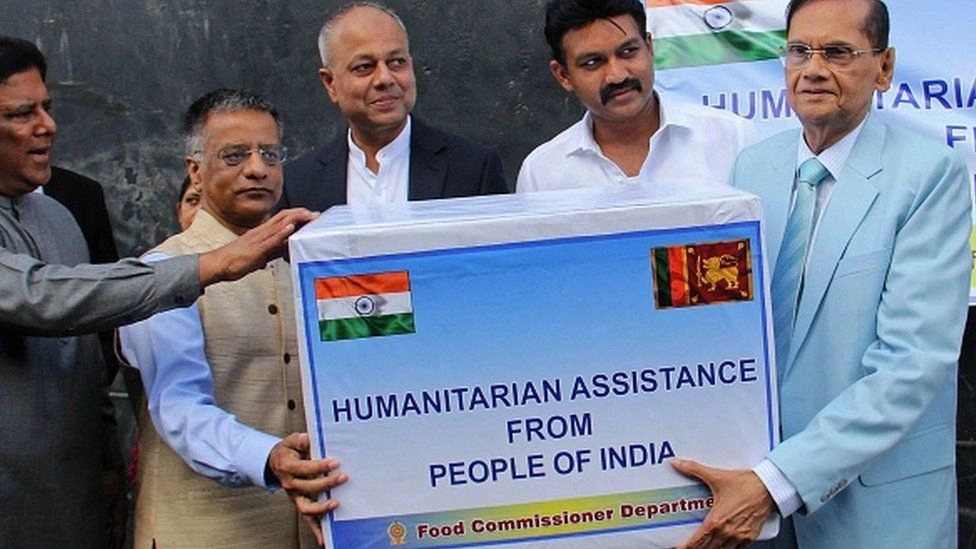
The Tamil Nadu government also contributed humanitarian aid valued at approximately $16 million. This aid consisted of rice, milk powder, and life-saving medicines, demonstrating India’s broader commitment to supporting Sri Lanka during its time of need.

Ultimately, India became the first bilateral creditor to provide the IMF with written financing assurances regarding Sri Lanka’s debt restructuring. This step was pivotal in allowing the IMF to approve a nearly $3 billion Extended Fund Facility in March 2023, signifying a crucial development in Sri Lanka’s recovery process.

Long or Short, get news the way you like. No ads. No redirections. Download Newspin and Stay Alert, The CSR Journal Mobile app, for fast, crisp, clean updates!

App Store –  https://apps.apple.com/in/app/newspin/id6746449540 

Google Play Store – https://play.google.com/store/apps/details?id=com.inventifweb.newspin&pcampaignid=web_share

Latest News

Popular Videos
