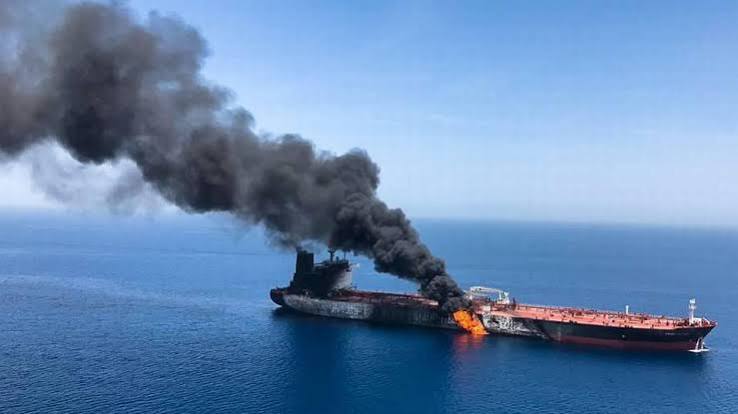
The recent tanker attack in the Strait of Hormuz has led regional powers to intensify their search for ways to ease tensions with Iran. According to reports, an oil tanker was struck by an unidentified projectile on Tuesday, igniting a fire. The United Kingdom Maritime Trade Organisation confirmed this incident, which occurred in the strategic waterway between Oman and Iran. Fortunately, the crew aboard the vessel was reported safe, and there were no immediate indications of environmental harm.
The Strait of Hormuz is a critical shipping route for oil and gas. Although the attack has raised concerns about maritime safety, it is noted that Oman and Iran are reportedly close to finalising a plan to manage shipping traffic within this vital corridor. Historically, Iran has demonstrated its willingness to enforce its authority in the strait, sometimes targeting vessels attempting to navigate through.
<h4\Notably, there was no claim of responsibility for the attack, leaving questions surrounding the motivations behind the incident. The military forces of the United States have also engaged in similar actions by targeting vessels as part of their enforcement of a blockade on Iranian ports.
Diplomatic Efforts to Resolve Tensions
In an ongoing effort to address the escalating crisis, Pakistan is reportedly pursuing diplomatic channels to mediate between the United States and Iran. Ministry spokesperson Tahir Andrabi noted that Field Marshal Asim Munir recently visited Tehran, aiming to revitalise a memorandum of understanding to facilitate the reopening of the Strait of Hormuz. The diplomatic dialogue continues as Foreign Minister Ishaq Dar engages with counterparts in Turkey and Egypt.
Additionally, Qatar’s Foreign Ministry announced that Sheikh Mohammed bin Abdulrahman Al Thani was scheduled to meet with Iranian officials in Tehran. Discussions are expected to encompass strategies for de-escalating recent tensions and restoring conditions that favour dialogue. Tehran has acknowledged these talks, with a spokesperson indicating that issues regarding the security of navigation through the Strait of Hormuz will be addressed.
Despite these diplomatic overtures, US President Donald Trump, in a recent interview, indicated that there is no set timeline for concluding the ongoing conflict, which has now reached the six-month mark. Trump stated that he believes the United States is achieving significant success in its efforts.
Continued Regional Instability and Violence
On a separate note, incidents of violence continue to emerge within the region, particularly in Gaza and Jerusalem. A Jerusalem court recently acquitted an individual accused of attacking a Catholic nun, citing an insanity defence. The incident, which took place in April, has drawn considerable attention and outrage, especially from Israel’s Christian communities, who report increasing harassment in the area.
Moreover, airstrikes by Israel in Gaza have raised alarms and faced criticism from international observers. According to reports, a strike on a tent used by displaced persons resulted in one fatality and multiple injuries. The Israeli military has stated it targets military operatives, yet civilian casualties have continued amid the fragile ceasefire between Israel and Hamas.
According to statistics from Gaza’s Health Ministry, the ongoing conflict initiated by the October 7, 2023, Hamas-led attack on southern Israel has led to substantial civilian casualties, with over 73,400 individuals reportedly killed in Gaza alone. These statistics shed light on the severe toll the conflict has inflicted on the civilian population, complicating peace efforts in the region.
Long or Short, get news the way you like. No ads. No redirections. Download Newspin and Stay Alert, The CSR Journal Mobile app, for fast, crisp, clean updates!