


Challenges Impede Human Efforts to Build Self-Sufficient City on Mars
The CSR Journal Magazine

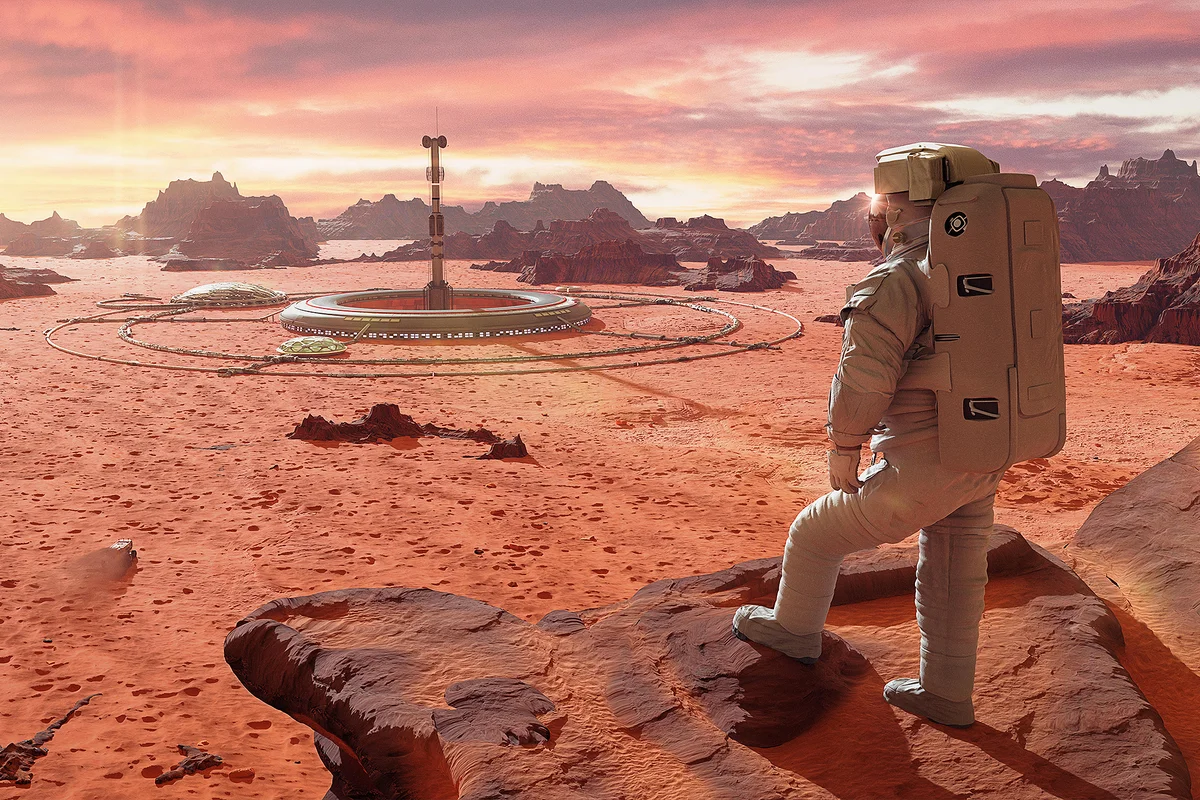
Humans may face insurmountable challenges in establishing a self-sufficient city on Mars. The harsh environmental conditions on the planet pose significant obstacles to sustaining human life. Research suggests that the availability of essential resources such as water and oxygen is limited, requiring sophisticated technologies to extract or generate these elements.

Moreover, the surface conditions on Mars, including radiation and extreme temperatures, complicate efforts to create a habitable environment. Current models indicate that without advanced shielding and thermal regulation, maintaining a stable base for habitation remains a distant prospect.

The logistical issues related to transporting materials from Earth to Mars add another layer of complexity. The vast distance makes supply chain management a formidable task, and the cost of transporting essential goods could be prohibitively expensive. For a city to thrive, it would require a continuous influx of resources, straining the feasibility of long-term habitation.

Human Adaptation and Limitations

The ability of humans to adapt to alien environments is also a significant consideration. Preliminary studies show that prolonged exposure to Mars’s atmosphere, which is composed mainly of carbon dioxide, could adversely affect human health. The potential psychological impacts of isolation and confinement in a Mars colony further raise questions about the long-term viability of a self-sustaining community.

Terrestrial organisms may struggle to thrive in the Martian environment, affecting agriculture, which is vital for food supply. Attempts to cultivate crops in Martian soil could lead to unforeseen challenges, particularly regarding nutrient availability and soil toxicity. Scientists have suggested that reliance on Earth-sourced seeds might not result in sustainable food production once the initial stock is depleted.

Current technology for life support systems is not yet adequate for the complexities of living on Mars. Existing solutions are often temporary and dependent on Earth-based supply chains for maintenance and functionality. The need for a permanent solution to oxygen and food production remains a formidable hurdle.

The Economic Implications of Mars Colonisation

The financial implications of establishing a self-sufficient city on Mars are equally daunting. Any attempt to colonise Mars is likely to necessitate extensive investment from both public and private sectors. Reports indicate that the costs involved in developing the necessary infrastructure could reach billions of dollars. This raises concerns about the allocation of resources, especially when global issues on Earth remain unresolved.

Investors and governments may be hesitant to commit substantial funds without clear short-term benefits. The economic viability of long-term Martian colonisation hinges on advancements in technology and the successful implementation of innovative systems to manage resources. Until feasible frameworks are established, aspirations for self-sufficient cities may remain just that — aspirations.

In addition, the economic models that would support a Martian colony are largely untested. The dynamics of commerce and trade, along with the nature of a Martian economy, must be meticulously planned. The risk of failure could deter further investment, leading to a cycle where only minimal progress is made.

Long or Short, get news the way you like. No ads. No redirections. Download Newspin and Stay Alert, The CSR Journal Mobile app, for fast, crisp, clean updates!

App Store –  https://apps.apple.com/in/app/newspin/id6746449540 

Google Play Store – https://play.google.com/store/apps/details?id=com.inventifweb.newspin&pcampaignid=web_share

Latest News

Popular Videos
