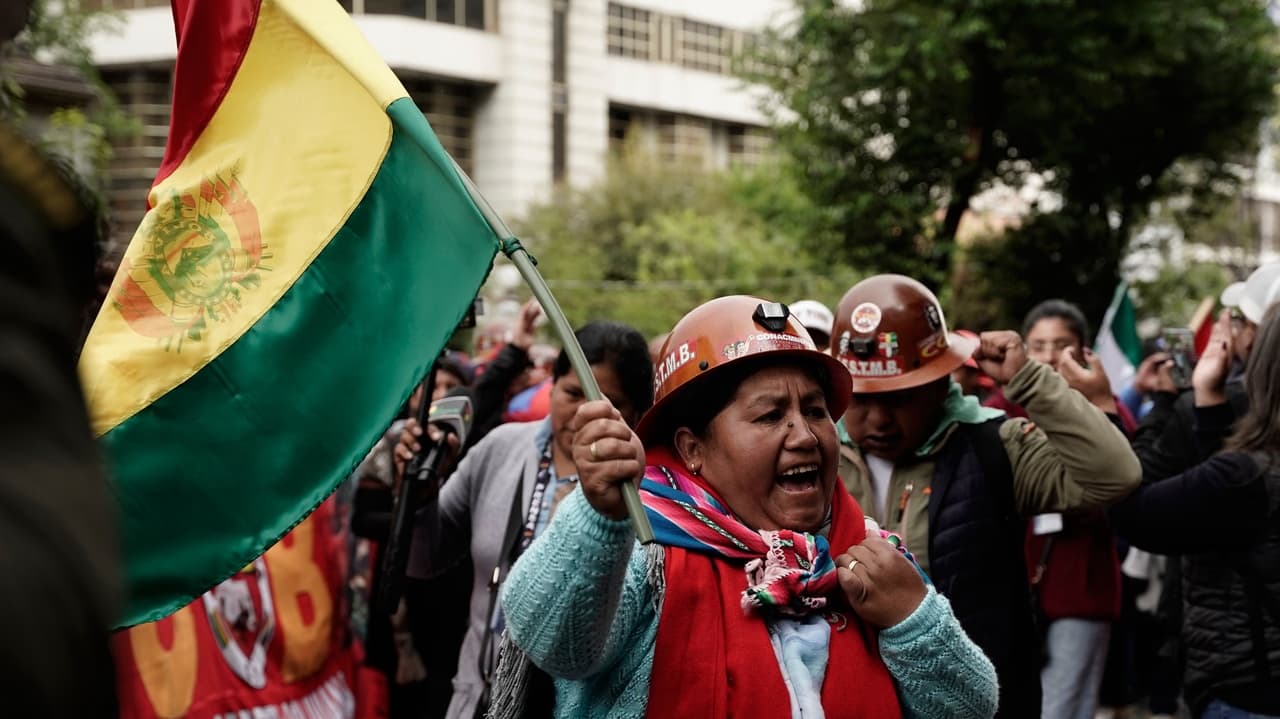
Bolivian President Rodrigo Paz on Saturday declared a 90-day state of emergency, empowering the military to assist police in removing road blockades that have disrupted fuel and food supplies in La Paz and other major cities after weeks of anti-government protests.
The emergency declaration comes after five weeks of demonstrations demanding Paz’s resignation over austerity measures, particularly the abolition of fuel subsidies. The government said the move is intended to restore transport and the supply of essential goods while safeguarding constitutional rights and normal daily activities.
Government Says Emergency Aims to Restore Normalcy
In a televised address, Paz said the emergency measures were not intended to curtail civil liberties but to ensure that citizens could regain access to essential services.
“This is not a state of emergency to restrict people’s lives. It is a state of emergency to give people back their freedom,” he said.
Under the decree, the blocking of streets, roads and highways in ways that disrupt transportation and supplies has been prohibited.
The armed forces have also been directed to temporarily assist police in reopening roads, restoring order and protecting civilians.
According to the government, the emergency could be lifted before the end of the 90-day period if violence subsides and threats to public safety cease.
Paz signed an agreement with one labour union on Friday night, after which its leaders called for the blockades to end. However, other protest groups have rejected negotiations and continued to demand his resignation.
The President said the measures were also aimed at restoring fuel supplies, which have been severely affected as tanker trucks remain stranded due to road closures.
Protests Trigger Supply Shortages and Violence
Demonstrations have resulted in repeated clashes between protesters armed with dynamite and riot police.
Authorities said 365 people had been arrested and 37 others injured during the unrest.
Bolivia’s ombudsman’s office and human rights groups have reported at least 17 deaths, most of them attributed to disruptions in access to medical treatment caused by transport blockades.
The government separately said seven people had died because they were unable to receive timely medical attention.
Blockades on major highways have effectively isolated La Paz, leading to severe shortages of fuel and food, paralysing transport services and preventing patients from reaching hospitals.
As the crisis deepened, supermarket shelves emptied, hospitals experienced shortages of oxygen and businesses were forced to shut down, prompting calls from some quarters for stronger action to restore order.
Economic Crisis Fuels Public Anger
Paz assumed office in November, bringing an end to nearly two decades of uninterrupted rule by Bolivia’s Movement Toward Socialism (MAS) party during what has been described as the country’s most severe economic crisis in a generation.
A centrist leader who defeated more conservative rivals, Paz had pledged to tackle chronic fuel shortages and rebuild the country’s depleted foreign reserves while preserving the welfare policies that had sustained support for MAS.
However, his austerity measures, particularly the removal of long-standing fuel subsidies, have contributed to rising inflation.
Although his administration succeeded in easing fuel shortages, the use of poor-quality petrol reportedly damaged thousands of vehicles.
Efforts to attract foreign investment and revive economic growth have also stalled in Congress.
Indigenous communities and rural workers’ groups from the highlands, many of whom had traditionally backed MAS and supported Paz’s election victory, have spearheaded the protests. They accuse the government of neglecting their concerns after taking office.
Opposition Pressure Mounts as US Backs Paz
Paz is facing pressure from both ends of the political spectrum, with Bolivia’s hard right controlling Congress while the long-dominant left continues to challenge his administration.
Former president Evo Morales has thrown his support behind the protest movement and called for fresh elections from his stronghold in the coca-growing tropics.
Morales is currently evading an arrest warrant over charges linked to statutory rape.
The United States has backed Paz after his government restored ties with Washington following years of strained relations under Morales.
US Secretary of State Marco Rubio told the Bolivian President last week that Washington was “ramping up emergency assistance and logistics operations support” to address shortages caused by the road blockades.
US Defence Secretary Pete Hegseth described the protests as “attempts to overthrow the legitimate government” and warned those he accused of “profiting on death and destruction in our hemisphere”.
“The United States is watching,” Hegseth said.
The declaration of a state of emergency marks the most forceful response yet by Paz to a protest movement that has paralysed vital supply routes, intensified political pressure on his administration and deepened Bolivia’s economic and humanitarian crisis.
Long or Short, get news the way you like. No ads. No redirections. Download Newspin and Stay Alert, The CSR Journal Mobile app, for fast, crisp, clean updates!