


Assam Chief Minister Backs Ulfa Chief Amid Controversy Over Zubeen Garg Mural
The CSR Journal Magazine

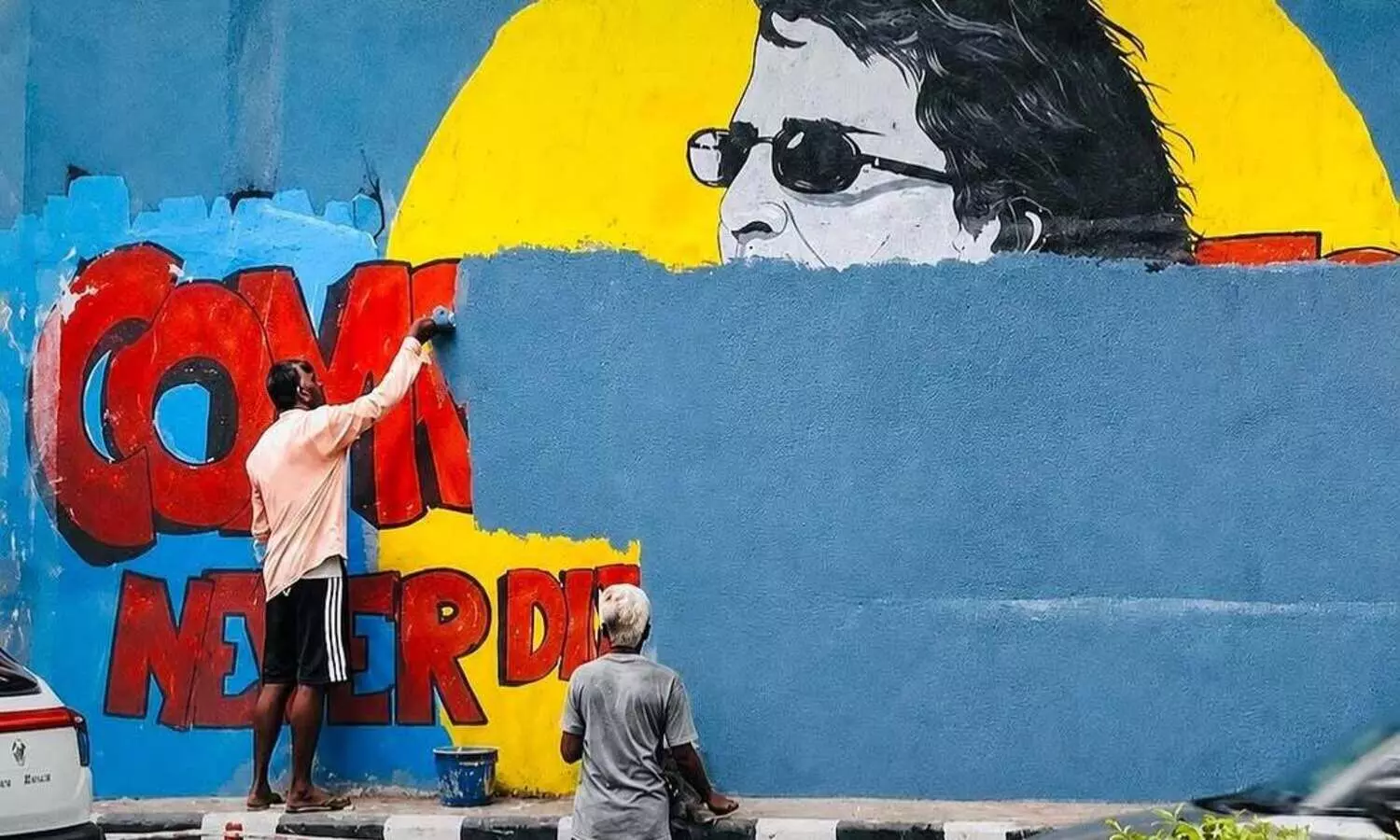
Assam Chief Minister Himanta Biswa Sarma has recently made headlines by advocating for the mural of Ulfa (I) leader Paresh Baruah over that of the Marxist revolutionary Che Guevara. His statements came in response to the uproar surrounding a mural depicting singer Zubeen Garg in a style reminiscent of Guevara. Sarma’s remarks have ignited debates around the cultural and political implications of such representations.

During a press interaction, Sarma suggested that if individuals wished to honour a revolutionary figure, it should solely be someone from Assam, namely Paresh Baruah, who has played a pivotal role in the region’s insurgency for several decades. He conveyed that people should celebrate local figures instead of distant icons like Guevara.

Mural of Zubeen Garg Sparks Controversy

The dispute originally centred on a mural of Zubeen Garg, who tragically passed away in September 2025, leading to widespread mourning across Assam. The mural, located on a flyover in Guwahati’s Ganeshguri, was removed as part of a beautification initiative ahead of an anticipated visit from Japanese Prime Minister Sanae Takaichi, which ultimately did not take place. This action provoked significant backlash, given Garg’s status as a revered cultural figure in the state.

In the aftermath of the removal, a fresh artwork of Garg quickly appeared, created by the same artist, Marshall Baruah. Sarma remarked that the individuals who painted over the original mural believed it did not accurately represent Garg but rather resembled Guevara. He underscored that the painters were genuine Assamese individuals and fans of Zubeen.

Sarma’s justification of the painting’s removal reflects a broader cultural sentiment in Assam, where Garg is often celebrated in various forms of art and music. His comments regarding the painters and their intentions have contributed to the ongoing discourse regarding identity and representation in Assam.

Responses to Chief Minister’s Statements

In his remarks, Sarma noted that individuals who honour revolutionaries should focus on Assamese figures like Paresh Baruah and activist Parag Das. He acknowledged that while he personally does not condone Baruah’s actions, he believes local revolutionaries should be celebrated. Baruah, who has been operating from abroad, remains a controversial figure, associated with a history of violence during the 1980s and 1990s.

Additionally, Sarma’s comments downplayed Guevara’s significance, suggesting a disconnect between Assam and Guevara’s legacy. He claimed to have little prior knowledge of Guevara, despite the revolutionary’s global influence. Sarma highlighted the challenges facing Cuba, contrasting that situation with Assam’s realities.

Marshall Baruah, the artist behind the controversial mural, responded to Sarma’s insinuations by clarifying that he has no affiliations with the Students Federation of India, a student wing of the Communist Party of India (Marxist). He expressed admiration for Guevara, stating that his passion for social justice was what attracted him to the revolutionary figure.

Furthermore, Sarma suggested that only approved versions of Zubeen Garg’s portrait would be allowed in public displays, indicating a move towards regulated artistic expression in Assam. This approach raises questions about artistic freedom in the state.

Long or Short, get news the way you like. No ads. No redirections. Download Newspin and Stay Alert, The CSR Journal Mobile app, for fast, crisp, clean updates!

App Store –  https://apps.apple.com/in/app/newspin/id6746449540 

Google Play Store – https://play.google.com/store/apps/details?id=com.inventifweb.newspin&pcampaignid=web_share

Latest News

Popular Videos
