


Allahabad High Court Rules Against Use of Public Land for Namaz
The CSR Journal Magazine

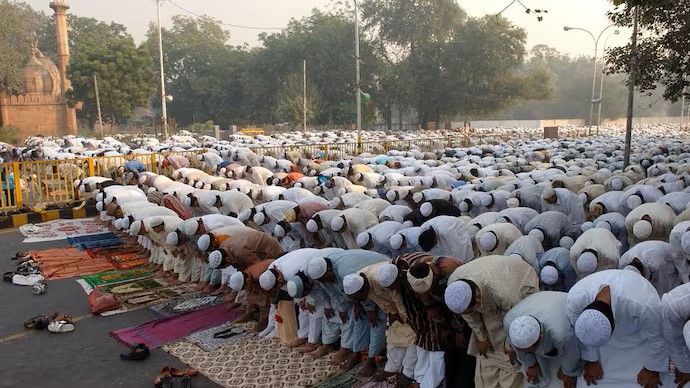
The Allahabad High Court has determined that individuals do not possess the right to use public land for the purpose of offering namaz or hosting significant religious events. This ruling underscores that the constitutional right to religious practice must align with public order and the rights of other individuals. The court’s decision came while addressing a petition related to land usage in Ikona village, situated in the Sambhal district of Uttar Pradesh.

Details of the Petition

The case was presented by an individual named Aseen, who claimed ownership of the specific piece of land through a registered gift deed dated June 16, 2023. Aseen sought judicial sanction to conduct prayers on the land, asserting that he was being unjustly prevented from exercising his religious rights. He maintained that offering namaz on properties he owned does not necessitate prior approval from authorities, citing violations of his constitutional rights.

In response, the Uttar Pradesh government contended that the land in question is classified in revenue records as “Abadi land,” which is designated for public use. State representatives argued that the petitioner failed to establish legitimate ownership because the gift deed lacked precise land identifiers, relying instead on ambiguous descriptions of the property boundaries.

The authorities noted that traditionally, namaz had only been conducted at the site during Eid celebrations and affirmed that no prohibitive measures were imposed on this established practice. However, they accused the petitioner of seeking to shift this tradition by introducing regular congregational prayers that invited individuals from both the village and surrounding areas, potentially disrupting local social harmony.

The Court’s Findings

The High Court articulated that although the Constitution guarantees the freedom of religion, this freedom is not absolute and must conform to public order, morality, and health standards. The bench maintained that public land is designated for communal use and cannot be allocated for continuous religious activities that could disrupt access, movement, or civic order.

Moreover, the court distinguished between private worship and organised religious events. It asserted that personal prayers conducted in the privacy of a home or limited setting are protected. Conversely, once such worship becomes organised and involves larger gatherings, it transitions to a public nature that can be subject to state regulation.

The bench further stated that government authorities should not wait for actual disturbances to materialise but are empowered to take proactive measures when an activity poses a potential risk to public order or communal harmony. Given the petitioner’s inability to provide evidence of ownership and the persistent classification of the land as public property, the court ultimately dismissed the request for permission to conduct prayers on the site.

Long or Short, get news the way you like. No ads. No redirections. Download Newspin and Stay Alert, The CSR Journal Mobile app, for fast, crisp, clean updates!

App Store –  https://apps.apple.com/in/app/newspin/id6746449540 

Google Play Store – https://play.google.com/store/apps/details?id=com.inventifweb.newspin&pcampaignid=web_share

Latest News

Popular Videos
