


Abhishek Banerjee in Delhi to Challenge 20 TMC MPs’ Merger with NCPI
The CSR Journal Magazine

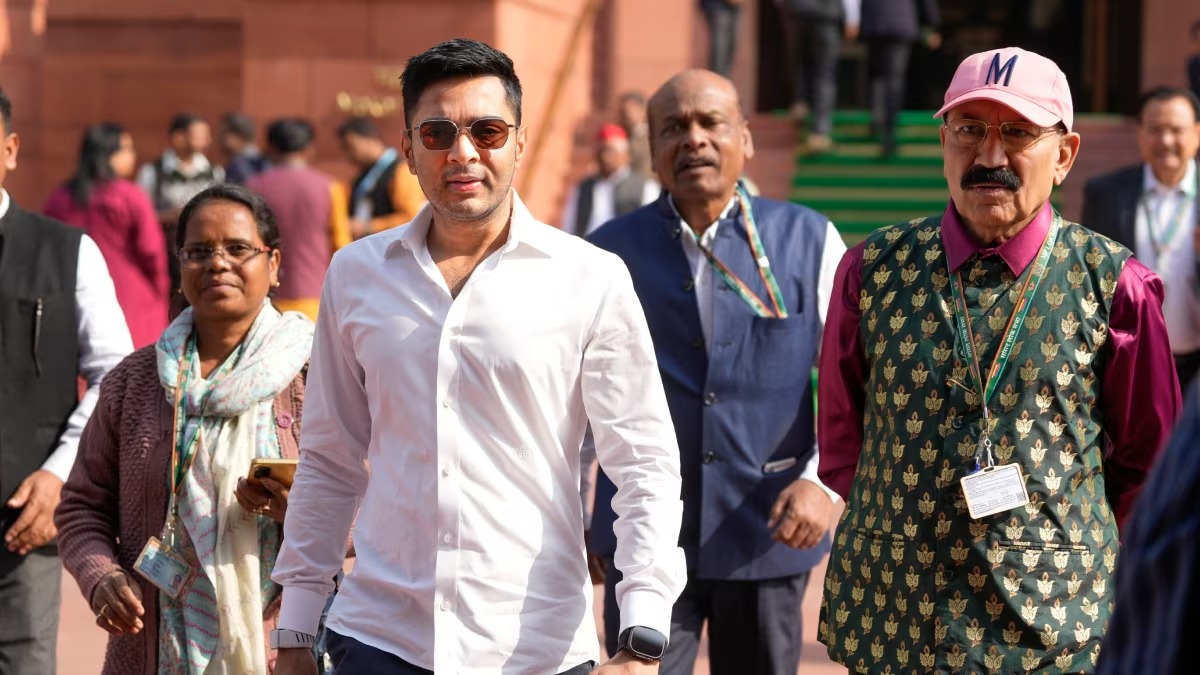
Abhishek Banerjee, the national general secretary of the Trinamool Congress (TMC), arrived in New Delhi on June 19, to address a significant political challenge. Accompanied by party MP Derek O’Brien, Banerjee is set to contest the recent announcement made by 20 TMC MPs regarding their merger with the Nationalist Citizens Party of India (NCPI).

The delegation has planned a meeting with Lok Sabha Speaker Om Birla to formally respond to the claims made by these rebel MPs. This development comes amid an escalating internal crisis within the TMC, which is dealing with rebellions from both the legislative assembly and the Lok Sabha.

The ongoing discord includes a faction of 58 MLAs in West Bengal led by expelled leader Ritabrata Banerjee and the aforementioned 20 MPs in the Lok Sabha, spearheaded by Kakoli Ghosh Dastidar. Party officials are keen to reaffirm their stance against these divisions.

Party’s Position on the Rebellion

Senior TMC MP Saugata Roy has publicly reiterated the party’s unified front against the current dissent among some of its members. He has stated that the TMC remains an indivisible unit, dismissing the claims made by the dissident group regarding their merger with the NCPI.

Roy indicated that Abhishek Banerjee had already submitted a formal letter to the Lok Sabha Speaker, asserting that any members who leave the TMC cannot be considered part of the party. He expressed that the alleged division does not conform to constitutional provisions.

On June 10, Banerjee had submitted a letter to Speaker Om Birla that addressed reports suggesting certain MPs were planning to be recognised as a separate faction. In his communication, Banerjee emphasised the unity of the All India Trinamool Congress (AITC) as a “single, indivisible political party” and clarified that the Lok Sabha group operates solely as an extension of the main political entity.

Legal Framework and Constitutional Concerns

In his letter to the Speaker, Banerjee made specific requests, which included formally documenting his submission, recognising the AITC as a singular entity represented exclusively through its designated Leader and Whip, and denying any recognition to the alleged separate groups. Additionally, he requested an opportunity for the AITC to present its case before any decisions are made concerning such communications.

Banerjee highlighted the constitutional and legal frameworks pertaining to such requests, referencing a Supreme Court ruling in the case of Subhash Desai vs. Principal Secretary, Governor of Maharashtra & Ors. (2023). According to this legal context, he pointed out that the notion of a “split” is no longer a viable defence under the Tenth Schedule since the Ninety-first Amendment was enacted.

The Tenth Schedule now interprets the fragmentation of a political party as a potential cause for disqualification rather than a permissible event. Therefore, the authority to appoint a Leader and Whip in the House lies with the political party, not the legislative subset.

Banerjee concluded by arguing that the pursuit of recognition as a separate group or faction of the AITC is not supported by law. He specified that any attempt at a merger would require satisfying two significant conditions: the political party must merge itself and two-thirds of the legislative party members must switch allegiance.

Long or Short, get news the way you like. No ads. No redirections. Download Newspin and Stay Alert, The CSR Journal Mobile app, for fast, crisp, clean updates!

App Store –  https://apps.apple.com/in/app/newspin/id6746449540 

Google Play Store – https://play.google.com/store/apps/details?id=com.inventifweb.newspin&pcampaignid=web_share

Latest News

Popular Videos
