


Yogi Adityanath Warns Against Offering Namaz on Roads, Stresses Keeping Public Spaces Clear for Traffic

The CSR Journal Magazine

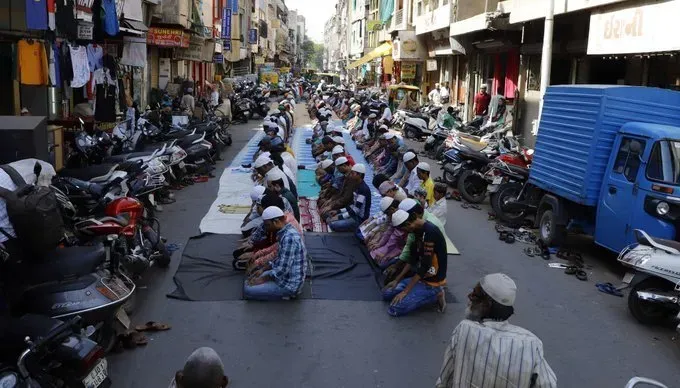
Uttar Pradesh Chief Minister Yogi Adityanath has issued a strong warning regarding the practice of offering namaz on public roads. During an event in Lucknow on May 18, 2026, he emphasised that blocking traffic for such congregational prayers will not be tolerated by his government. Adityanath conveyed that the administration would seek to ensure compliance initially through conversation and persuasion.

He remarked, “You have to offer namaz, you can read it during your shift. We will convince you with love, and if that does not work, another method will be adopted.” This statement, shared via a video on social media platform X, underscores the government’s intention to maintain public order.

Adityanath highlighted that roads are vital for various commuters, including workers, traders, patients, and emergency services, stressing that any interruption to traffic directly disrupts daily life. He stated, “No one has the right to halt traffic or convert intersections into gathering points.” The Chief Minister suggested that the roads should remain unobstructed for movement.

Obstructions to Traffic Impact Daily Life

Continued debate over the offering of namaz in public spaces is evident in Adityanath’s comments. He expressed disbelief at the idea that namaz is commonly performed on roads in Uttar Pradesh, stating that it does not occur. His insistence on the inappropriateness of blocking roads for congregational prayers reflects his broader policy aim of maintaining flow and accessibility in public spaces.

“Go and see for yourself. Roads are meant for movement. Can anyone come and create a spectacle on a crossroads and block traffic?” he queried, reinforcing his stance that public movement should not be disrupted. This approach is part of a series of measures aimed at upholding public order in the state.

Furthermore, Adityanath asserted that the rule of law should apply universally and that public spaces must not be misused. He stated, “We will not stop namaz, but it should not happen on roads,” providing a clear directive on the government’s stance regarding religious practices in public areas.

Reactions to the Chief Minister’s Statements

The Chief Minister’s remarks have attracted criticism from various quarters. An All India Majlis-e-Ittehadul Muslimeen (AIMIM) spokesperson, Asim Waqar, responded by alleging that the Uttar Pradesh government discriminates between different religious groups. He highlighted the apparent contradiction in blocking roads for religious offerings, questioning the consistency of the rules being applied.

Waqar’s criticism included a challenge to the Chief Minister’s portrayal of lawfulness in Uttar Pradesh, citing the closure of roads for Hindu rituals while restricting prayer activities for Muslims. “If namaz cannot be offered on the road, then why close the road for puja aarti? Is this the rule of law?” he asked, raising concerns about perceived unequal treatment.

The ongoing discussion around religious practices in public spaces continues to evoke strong reactions from various stakeholders in the state. Adityanath’s administration remains firm in its directive on maintaining unobstructed access to roads while navigating the complex dynamics of religious observances within the community.

Long or Short, get news the way you like. No ads. No redirections. Download Newspin and Stay Alert, The CSR Journal Mobile app, for fast, crisp, clean updates!

App Store –  https://apps.apple.com/in/app/newspin/id6746449540 

Google Play Store – https://play.google.com/store/apps/details?id=com.inventifweb.newspin&pcampaignid=web_share

Latest News

Popular Videos