


Trump Reports Positive Discussions With Iran While Warning of Military Action
The CSR Journal Magazine

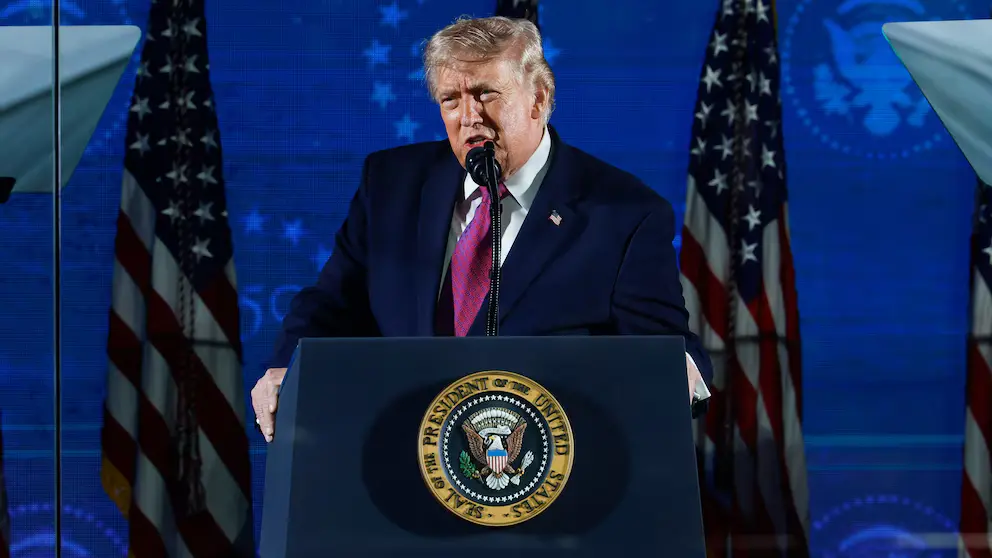
US President Donald Trump stated on Monday that dialogue between Washington and Tehran has been productive, indicating a potential for an agreement. He expressed optimism, suggesting that there exists a “good chance” of reaching a deal. However, he cautioned that military action would resume if negotiations falter. “We’re having good talks. I think there’s a good chance that something could happen, and if it doesn’t, we go back to doing what we were doing two days ago,” Trump informed reporters.

Later that day, during a campaign rally in Michigan, Trump adopted a firmer stance. He asserted that Iran is resistant to influence through monetary means and threatened that the United States would respond aggressively should diplomatic efforts fail.

These remarks came amidst reports of drone attacks in Saudi Arabia, Jordan, and Iraq, raising concerns over the continuing regional tensions despite a halt in US military engagements.

US Bombing Campaign Paused

On Saturday, the United States halted a two-week bombing initiative against Iran. According to a US official and various media reports, military leaders advised Trump that the bombings had achieved their objectives and that remaining targets were limited. Concerns regarding the depletion of air munitions were also raised by General Dan Caine, the Chairman of the Joint Chiefs of Staff.

In light of these issues, Trump dismissed claims of an ammunition shortage, asserting that military stocks were being replenished promptly. He also expressed interest in acquiring more sophisticated weaponry.

Iran has reacted to the ongoing situation with statements from its Foreign Ministry. Spokesman Esmail Baghaei clarified that Iran has not eschewed diplomacy, although he dismissed claims of Iran requesting negotiations as “fabricated.” A senior Iranian official mentioned that Iran would refrain from attacking as long as Trump maintained his self-imposed ceasefire.

Regional Tensions and Accusations

Saudi Arabia reported that it intercepted drones aimed at its oil facilities, including sites in Riyadh, accusing Iran-aligned groups in Iraq of orchestrating these attacks. The Saudi government has declared its right to retaliate if necessary.

Separately, the Houthi movement from Yemen, aligned with Iran, took responsibility for targeting Saudi Arabia’s East-West Pipeline, claiming the action was in retaliation for Saudi drone incursions into Yemeni airspace.

The Strait of Hormuz has become a critical focal point. Iran’s military command accused the US of threatening vessels in Iranian waters, labelling its actions as an attempt to impose an “illegal maritime blockade,” which may escalate the situation further. Tehran has asserted its control over the Strait of Hormuz, a significant conduit for global oil transport, stating that it turned back six ships attempting to cross without permission.

While both the US and Iran interpret a June framework for talks differently, tensions continue to simmer. Washington insists that the agreement mandates free passage through the strait, whereas Tehran argues it retains authority over its transit and can impose associated fees.

Despite ongoing military threats and claims over control of the Strait of Hormuz, indirect communication between Washington and Tehran persists, according to reports. Formal discussions aimed at addressing the complexities surrounding Iran’s nuclear program are anticipated to commence by the end of August.

Long or Short, get news the way you like. No ads. No redirections. Download Newspin and Stay Alert, The CSR Journal Mobile app, for fast, crisp, clean updates!

App Store –  https://apps.apple.com/in/app/newspin/id6746449540 

Google Play Store – https://play.google.com/store/apps/details?id=com.inventifweb.newspin&pcampaignid=web_share

Latest News

Popular Videos
