


Satya Nadella Warns AI Could Leave Entire Industries Struggling If Value Stays With Few Companies
The CSR Journal Magazine

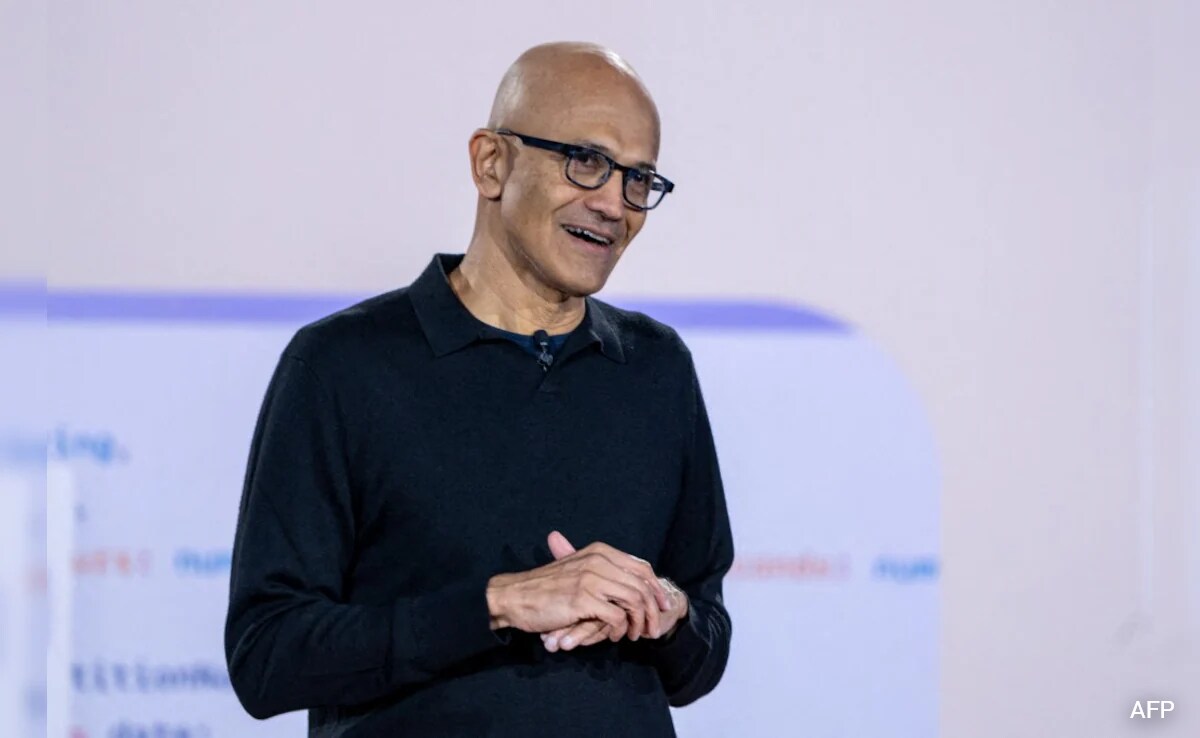
Satya Nadella, the CEO of Microsoft, has expressed significant concerns regarding the potential repercussions of artificial intelligence (AI) on various industries. In a detailed post on social media platform X, he cautioned that if AI’s advantages remain concentrated within a small number of companies, entire sectors could suffer a loss of value, expertise, and long-term competitiveness. This warning emerges amidst an intensifying debate about AI’s effects on employment and business operations.

While many tech firms are advocating for AI as a means to enhance productivity, there is a growing apprehension regarding the disruption of the workforce and the concentration of economic power. Nadella’s remarks underline the necessity for accountability and inclusivity as AI continues to evolve.

Nadella’s Vision for AI and Human Collaboration

In his analysis, Nadella delineated the distinctive nature of the AI era, positing that current technological advancements transcend mere productivity enhancements. Instead, he highlighted the potential for AI systems and human workers to engage in a continuous learning process, thereby establishing a ‘cognitive loop’ that fosters mutually beneficial growth. He advocated for organisations to develop two essential forms of capital: human capital, encompassing the skills, relationships, and creativity of employees, and “token capital,” denoting the AI capabilities that a company cultivates and owns.

Nadella emphasised that rather than replacing humans, AI should complement and elevate human expertise, which becomes increasingly vital as AI systems gain sophistication. He asserted that human agency is key to amplifying the growth of token capital, stating that humans will continue to play a crucial role in setting objectives, bridging ideas across different domains, and identifying significant patterns.

A significant concern for Nadella is the risk of companies becoming overly reliant on a limited number of powerful AI models. He urged businesses to focus on establishing their own learning systems to maintain institutional knowledge and protect intellectual property. This approach is intended to prevent a scenario where all firms are dependent on a few models that dominate the market.

Historical Comparisons and Economic Implications

Nadella drew comparisons to the early stages of globalisation, during which manufacturing and industrial jobs migrated across borders. Although economic indicators showed growth, numerous communities dealt with lasting upheaval. He warned that a similar situation could arise if AI systems absorb industry knowledge, resulting in an uneven distribution of economic rewards, favouring only a handful of companies.

He cautioned against allowing AI to commoditise knowledge from entire industries, urging for a shift towards a “frontier ecosystem” rather than a “frontier model.” This ecosystem would empower businesses across various fields and regions to build their own capabilities, ensuring a more equitable distribution of value throughout the economy.

The discourse surrounding AI has gained further complexity with contrasting viewpoints from industry leaders. In a recent policy essay, Dario Amodei, CEO of Anthropic, presented a more pessimistic outlook on AI’s consequences for employment. He claimed that long-term job displacement might not just be a short-term effect but could reflect a fundamental trait of the technology, necessitating government intervention such as wage insurance or retraining programmes.

Broader Industry Responses to AI Concerns

While Amodei warned about the risk of significant and enduring job loss due to AI’s capacity to replicate human cognitive functions, Nadella focused more on the equitable distribution of economic value. His stance highlights the belief that AI should bolster organisations and their workforce rather than consolidate power within a restricted group of model providers.

Other technology leaders have also weighed in on the discussion, with Jensen Huang recently asserting that linking AI to job losses oversimplifies a multifaceted issue. He insisted that many companies had already been reducing their workforce long before the emergence of generative AI, suggesting a more intricate relationship between technology and employment.

Long or Short, get news the way you like. No ads. No redirections. Download Newspin and Stay Alert, The CSR Journal Mobile app, for fast, crisp, clean updates!

App Store –  https://apps.apple.com/in/app/newspin/id6746449540 

Google Play Store – https://play.google.com/store/apps/details?id=com.inventifweb.newspin&pcampaignid=web_share

Latest News

Popular Videos
