


Delhi Police Utilises AI Surveillance at Jantar Mantar Protests
The CSR Journal Magazine

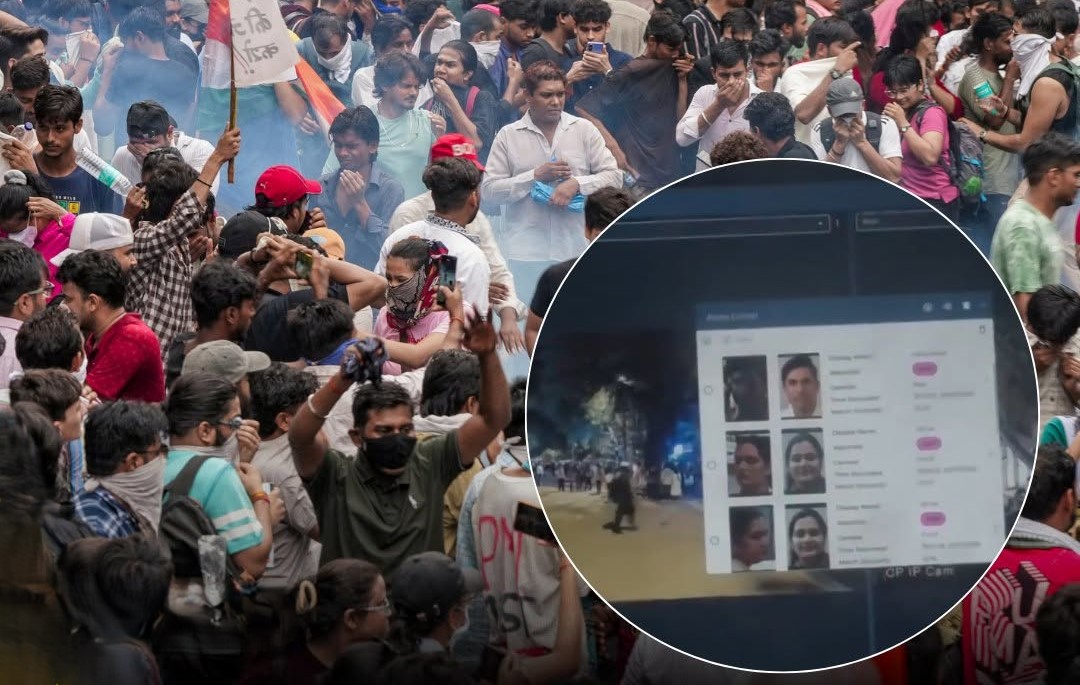
The ongoing student protests at Jantar Mantar in Delhi have ignited a fresh discussion regarding the surveillance technology employed by the authorities. Reports indicate that Delhi Police are allegedly deploying AI-powered facial recognition systems to identify protesters. Footage from the protest site has circulated widely on social media, particularly on X, showing what appears to be a live feed from a CCTV surveillance vehicle equipped with 360-degree cameras. Observers claim that the screens within these vehicles exhibit names, photographs, and relevant details of certain protesters.

Although there is no mention of Aadhaar in the circulated videos, the technology’s capability to access personal information through facial scans has led many to speculate whether it is linked to the Aadhaar database or another government repository. At present, Delhi Police have not confirmed any connection between their technology and the Aadhaar system.

Details of AI Surveillance Vehicles

An article from Indian Express details the specifics of the surveillance setup, revealing that two vehicles have been stationed near the protest site. One vehicle serves as a mobile monitoring unit that collects live feeds from the area’s CCTV cameras. The second vehicle utilises artificial intelligence to analyse these video feeds, cross-referencing faces captured on camera with images stored in a police database.

Officials have stated that the intent behind this technology is not to identify all participants in the protest but to alert them to potential threats. A senior police officer detailed that the mechanism scans for any individuals with a known criminal history. “We have a significant database of criminals and run facial recognition on the footage from various CCTVs to identify any matches,” the officer explained.

The facial recognition technology is integrated into the Ikshana vehicle, which Delhi Police rolled out ahead of the 2023 G20 Summit as part of their larger surveillance framework.

Public Reaction and Legal Challenges

The implementation of these surveillance measures has elicited discomfort among many protesters. Reports indicate that participants have taken to covering their faces due to concerns that footage captured during the protests could be archived and potentially used against them in the future. A student preparing for the UPSC examinations expressed worries about being profiled, stating that the visible presence of cameras creates an intimidating environment.

Additionally, questions have emerged regarding the duration for which the recorded footage will be retained by the police. According to another senior officer quoted in the Indian Express, there is no set timeline for deleting the recordings, particularly if they are deemed relevant to future investigations.

The surveillance operations have sparked a legal challenge, with a petition filed in the Delhi High Court alleging that the continuous monitoring of protesters infringes on their rights to privacy and peaceful assembly. However, Delhi Police have maintained in court that the videography conducted at the protest site is purely for the purposes of maintaining law and order, and not for any form of targeted surveillance.

Long or Short, get news the way you like. No ads. No redirections. Download Newspin and Stay Alert, The CSR Journal Mobile app, for fast, crisp, clean updates!

App Store –  https://apps.apple.com/in/app/newspin/id6746449540 

Google Play Store – https://play.google.com/store/apps/details?id=com.inventifweb.newspin&pcampaignid=web_share

Latest News

Popular Videos
