


Pakistan Faces Consequences If Islamabad Peace Talks Fail
The CSR Journal Magazine

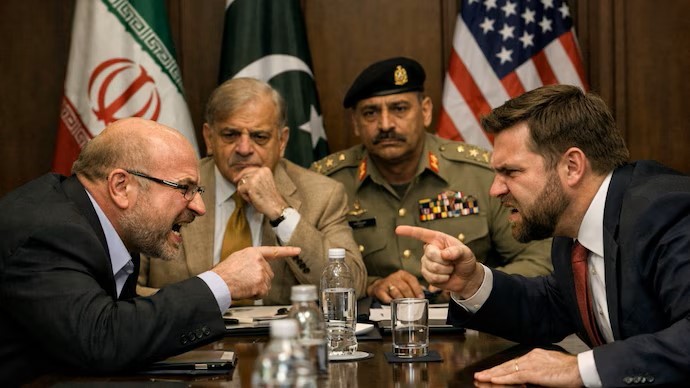
The Islamabad peace talks, initiated by Pakistani Prime Minister Shehbaz Sharif, commenced on Saturday. These discussions involve representatives from the United States and Iran, with American Vice President JD Vance leading the US delegation and Iranian Parliament Speaker Mohammad Bagher Ghalibaf representing Tehran. The negotiations are set against a backdrop of a fragile ceasefire, which US President Donald Trump announced, claiming it was prompted by a request from Prime Minister Sharif and Field Marshal Asim Munir for Washington to mediate with Iran.

Pakistan’s involvement in hosting these diplomatic talks highlights its urgent need for a successful resolution. The government aims to cultivate positive relations with the US while preventing regional instability and avoiding direct conflict with Iran. However, given the complex dynamics between the two nations, the prospects of reaching an agreement appear diminished.

Experts argue that should these talks collapse, Pakistan may face challenges that extend beyond immediate political ramifications, impacting its national security and stability.

Risks of Negotiation Failure for Pakistan

Pakistan’s geographical and diplomatic positioning makes it particularly vulnerable to any military escalation involving Iran. Situated at the junction of South Asia, Central Asia, and the Middle East, any renewed hostilities could have immediate repercussions for Islamabad, especially in connection to its defence relations with Saudi Arabia, Iran’s primary rival.

Analysts warn that a failure of the negotiations could trigger a ‘nightmare scenario’ for Pakistan, potentially pulling the country into conflict with Iran due to its mutual defence pact with Saudi Arabia, established in September 2022. Despite tensions, Pakistan refrained from involvement in the Iran-Saudi hostilities, opting instead to condemn attacks on Saudi territories.

The need for Pakistan to maintain stability is underscored by its historical ties with Gulf nations, balancing diplomacy while managing internal security concerns along its borders with Afghanistan and Iran.

Pakistan’s Vulnerability in a Potential Conflict

Experts assert that the outcomes of the US-Iran talks are critical for Pakistan, primarily due to its historical military engagements and the instability it faces within its own borders. Potential conflicts with Afghanistan, Iran, and India may emerge if diplomatic efforts fail.

Involvement in the Middle East conflict could further exacerbate Pakistan’s security challenges, particularly with its significant Shia population, which could react adversely to perceived aggression against Iran. This would strain the country’s internal dynamics and possibly fuel sectarian tensions.

The Pakistani leadership, currently led by Army Chief Asim Munir and Prime Minister Shehbaz Sharif, faces a precarious situation. They must delicately navigate the pressures from Washington and the implications of a possible military alliance against Tehran, all while maintaining domestic stability and international credibility.

Economic Implications of Delhi’s Diplomatic Efforts

Amidst the evolving geopolitical scenario, Pakistan’s struggling economy further complicates its position. With a fragile economic foundation, the nation cannot afford active involvement in a conflict against Iran. Experts emphasize that a successful agreement between the US and Iran could stabilise the region, whereas a breakdown in talks could exacerbate economic hardships.

Pakistan’s reliance on oil and gas imports from the Gulf exacerbates its vulnerability, making any instability in the region detrimental to its economy. The ongoing crisis in the Strait of Hormuz has already led to increased oil prices, causing immediate economic repercussions in Pakistan, such as closures in various sectors due to inflationary pressures.

The urgency of achieving a diplomatic resolution is thus evident. Should the peace talks falter, Islamabad risks not only regional conflict but also the ensuing economic chaos that could threaten its very foundation. The leadership’s push for peace underscores their understanding of these intertwined challenges that extend beyond mere political negotiations.

Long or Short, get news the way you like. No ads. No redirections. Download Newspin and Stay Alert, The CSR Journal Mobile app, for fast, crisp, clean updates!

App Store –  https://apps.apple.com/in/app/newspin/id6746449540 

Google Play Store – https://play.google.com/store/apps/details?id=com.inventifweb.newspin&pcampaignid=web_share

Latest News

Popular Videos
