


Pakistan Affirms Support for Makkah Pact Following Houthi Drone Incident Near Mecca
The CSR Journal Magazine

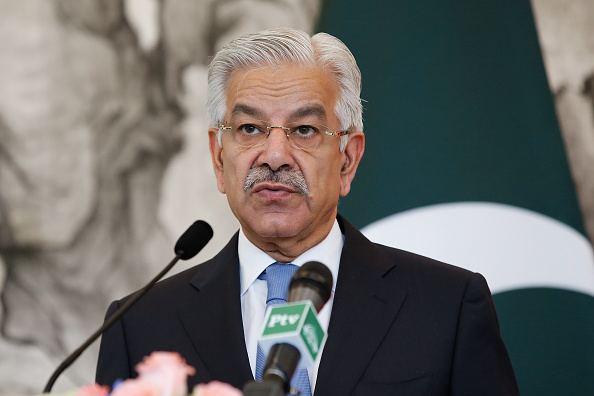
Following recent developments regarding a Houthi drone threat near Mecca, Pakistan’s Defence Minister Khawaja Asif has expressed the country’s unwavering commitment to the Makkah Joint Defence Agreement. This statement comes after Saudi Arabia reported that its air defences intercepted and eliminated a drone launched by the Houthis. Asif emphasised Pakistan’s readiness to fulfil its obligations under the agreement, underscoring that the country’s dedication to protecting the Holy Sites is paramount.

In an interview with Geo News on Wednesday, Asif stated, “the Makkah Agreement applies to us, and we will fulfil our duty.” He maintained that protecting sacred locations is inherent to Pakistan’s stance, independent of agreements like the Makkah pact. He clarified that there is “absolutely no ambiguity” about the applicability of the pact to Pakistan.

Makkah Joint Defence Agreement Overview

Pakistan, Turkiye, and Saudi Arabia formalised the Makkah Joint Defence Agreement on August 7. This agreement is designed to foster a framework for collective deterrence; it stipulates that an armed assault on any signatory nation will be regarded as an attack on all three. Asif’s comments follow a heightened security alert in Saudi Arabia, particularly in the western coastal regions and Mecca, after the interception of the Houthi drone.

Saudi authorities reported that the drone was successfully destroyed before it could enter Mecca’s prohibited airspace, while the Houthi faction denied targeting any Islamic holy sites. This incident occurs amid an increased escalation in hostilities involving Saudi Arabia and the Iran-backed Houthis, who have recently expressed threats against maritime activities within the Red Sea.

Asif further stated during the interview, “If Makkah is attacked, there is no need for an agreement to protect it.” While affirming the pact’s mutual defence provision, he confirmed that discussions regarding Pakistan’s defence strategies would not be publicly disclosed. The Defence Minister reiterated that Pakistan had conveyed Saudi Arabia’s messages to Iran in light of the ongoing tensions stemming from Houthi incursions into Saudi territory.

Pakistan’s Stance on Regional Security and Cooperation

Asif, elaborating on the broader regional security context, noted that the trilateral defence agreement among Pakistan, Saudi Arabia, and Turkiye has emerged as a pertinent response to evolving security challenges. He indicated the potential for additional defence collaborations to take shape in the region, though he clarified that this observation is speculative and not founded on any direct developments.

He also remarked on the necessity for countries within the region to cooperate proactively against non-state armed groups, recognising that they may increasingly need to assure their own security. The Defence Minister noted the disruptions along crucial maritime routes, such as the Strait of Hormuz and Bab al-Mandab, which have significant implications for trade and economic stability in the region, particularly impacting Pakistan’s economy.

Asif acknowledged that the regional conflict had evolved beyond its initial concerns, with the security of maritime trade routes now being a pressing issue. He emphasised the critical nature of maintaining these routes to facilitate uninterrupted trade. Prime Minister Shehbaz Sharif also condemned what was described as a “dastardly and heinous attempted drone attack” against the Holy Site of Makkah Al-Mukarramah, calling for maximum restraint from all involved parties to avert further escalation in the conflict.

Long or Short, get news the way you like. No ads. No redirections. Download Newspin and Stay Alert, The CSR Journal Mobile app, for fast, crisp, clean updates!

App Store –  https://apps.apple.com/in/app/newspin/id6746449540 

Google Play Store – https://play.google.com/store/apps/details?id=com.inventifweb.newspin&pcampaignid=web_share

Latest News

Popular Videos
