


Greece Secures Support from Arab States Against Turkey-Libya Maritime Agreement
The CSR Journal Magazine

Greece has garnered the support of Egypt, Bahrain, and the United Arab Emirates in its ongoing dispute with Turkey regarding a maritime agreement with Libya. The four nations have expressed concerns that this deal poses a threat to regional stability and contravenes international law. A joint statement was issued at the United Nations in New York on Monday, following the approval by Libya’s eastern parliament of the maritime boundaries agreement initially signed by Turkey and Libya’s Tripoli-based government in 2019.

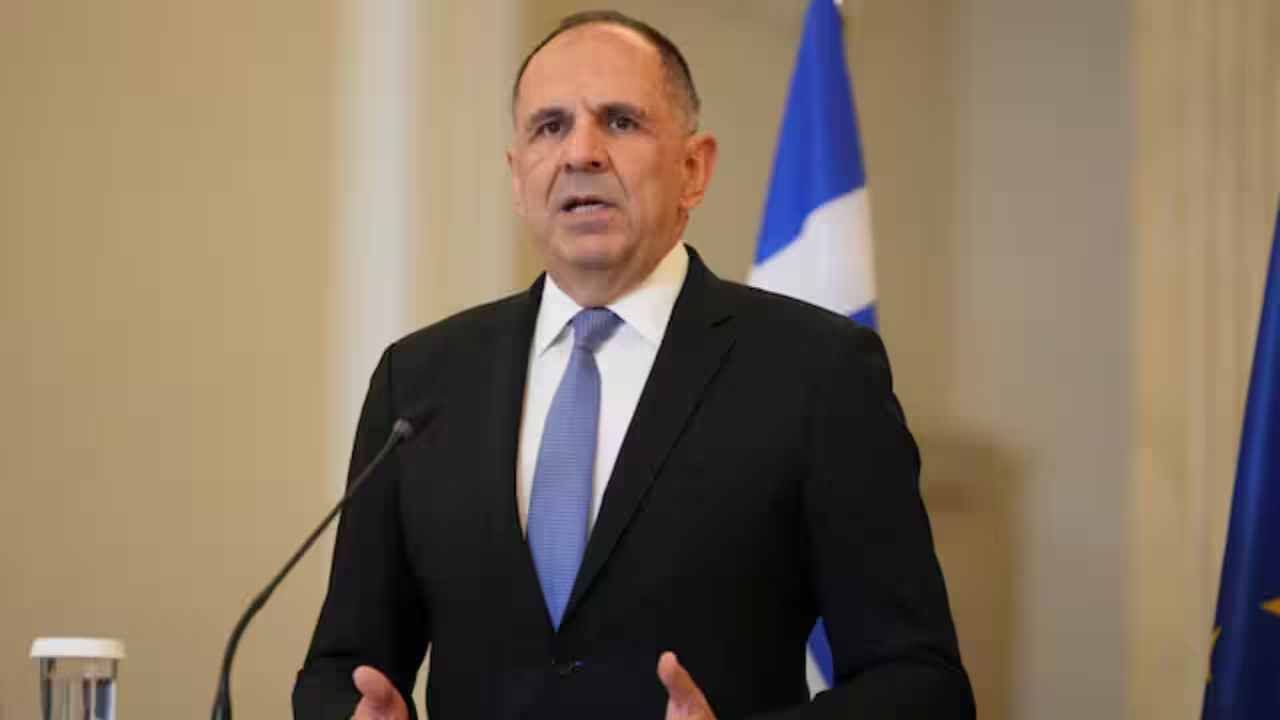
The statement highlighted the collective stance of Greece, Egypt, Bahrain, the UAE, Cyprus, and the European Union, with Greek Foreign Minister George Gerapetritis articulating their position. He declared the 2019 Turkey-Libya maritime memorandum as “null and void,” underscoring the serious implications of the Libyan parliament’s recent decision for regional security.

Gerapetritis emphasised that the acceptance of bilateral agreements that overlook international law could set a perilous precedent. The joint statement also pointed out that the agreement disregards the maritime rights of coastal states, particularly the rights of islands as stipulated in the United Nations Convention on the Law of the Sea (UNCLOS).

Legal Status and Call for Dialogue

The signatories of the joint statement reiterated that the approval by the Libyan parliament did not alter their position regarding the legal status of the agreement. They called for the resolution of maritime disputes through dialogue and adherence to international law. This insistence on dialogue reflects the broader concern among these nations about the implications of the maritime agreement on regional dynamics.

The statement serves as a reminder of the complexities involved in maritime disputes in the eastern Mediterranean, where competing claims have historically led to heightened tensions. The nations involved are advocating for a collaborative approach to resolving these issues, rather than unilateral actions that could exacerbate existing conflicts.

Turkey has defended the maritime agreement, asserting that it aligns with international law and serves the mutual interests of Ankara and Tripoli. The Turkish foreign ministry welcomed the approval from the eastern Libyan parliament, indicating that Turkey intends to continue its efforts with regional partners to foster security and stability in the Mediterranean.

Background on the Turkey-Libya Maritime Accord

The maritime boundaries agreement between Turkey and Libya was signed on November 27, 2019, with the aim of defining their respective maritime jurisdiction areas in the eastern Mediterranean. The memorandum was executed in Istanbul by Turkey and Libya’s then internationally recognised Government of National Accord, based in Tripoli. It delineated a maritime boundary between the claimed continental shelves and exclusive economic zones (EEZs) of both countries, which are critical for rights over natural resources and economic activities.

This agreement has sparked controversy, particularly because its proposed boundary intersects with an area where Greece asserts maritime rights based on its islands, notably Crete. Athens contends that Turkey and Libya cannot establish a bilateral arrangement that ignores the maritime entitlements of Greek islands. Turkey, not being a signatory to UNCLOS, disputes Greece’s interpretation regarding the influence of islands on maritime boundary delimitation.

The disagreement extends to Egypt and Cyprus, both of which oppose the agreement due to concerns that it overlaps with their maritime claims. In 2020, Egypt and Greece entered into a separate agreement establishing an exclusive economic zone in parts of the eastern Mediterranean, a move that has faced opposition from Ankara. The maritime dispute has gained significance as nations seek to access potential offshore oil and gas resources, with Greece granting a Chevron-led consortium a licence to explore for hydrocarbons south of Crete.

Long or Short, get news the way you like. No ads. No redirections. Download Newspin and Stay Alert, The CSR Journal Mobile app, for fast, crisp, clean updates!

App Store – https://apps.apple.com/in/app/newspin/id6746449540

Google Play Store – https://play.google.com/store/apps/details?id=com.inventifweb.newspin&pcampaignid=web_share

Latest News

Popular Videos
