


Egypt Considers Military Support for Saudi Arabia Against Houthis
The CSR Journal Magazine

Egypt is evaluating the possibility of providing military assistance to Saudi Arabia in its ongoing conflict with Yemen’s Houthi movement. This potential involvement could introduce one of the largest military forces in the Middle East into a situation that has significant implications for regional security, particularly concerning the Red Sea and the Suez Canal.

Reports indicate that President Abdel Fattah el-Sisi has requested parliamentary approval to offer military support to Riyadh, contingent on a formal request from the Saudi government. The Egyptian parliament has postponed its vote on this matter until October 26, amid discussions surrounding the mission’s objectives, duration, and financial implications. President Sisi has characterised the proposed role as defensive, clarifying that this does not signify an intention to deploy ground troops into Yemen at this stage.

Geopolitical Considerations

Foreign Minister Badr Abdelatty stated on October 13 that Egypt is prepared to respond to Saudi Arabia’s requests and is contemplating joining the Mecca Joint Defence Agreement. Egypt’s motivations extend beyond its relationship with Riyadh, as the Red Sea serves as a critical maritime route linking the Suez Canal to the Gulf of Aden and the Indian Ocean through the Bab el-Mandeb Strait.

Houthi attacks on commercial vessels since November 2023 have compelled shipping companies to reroute around the Cape of Good Hope, significantly impacting canal revenues. According to reports from the Associated Press, revenue from the Suez Canal plummeted from a record $10.25 billion in 2023 to $3.991 billion in 2024.

Saudi Arabia is also a vital economic ally for Egypt, providing investment, financial assistance, and employment opportunities for Egyptian workers in the Gulf region. Historically, Egypt has intervened in Yemen before, notably in 1962, when President Gamal Abdel Nasser supported republican forces against Saudi-backed royalists.

This military engagement escalated to approximately 50,000 troops within a year, peaking at around 70,000 by mid-1965. The campaign faced numerous challenges, including difficult terrain and tribal resistance, ultimately concluding in 1967 after Egypt’s defeat in the Six-Day War, with military casualties estimated at 26,000.

Military Capabilities and Challenges

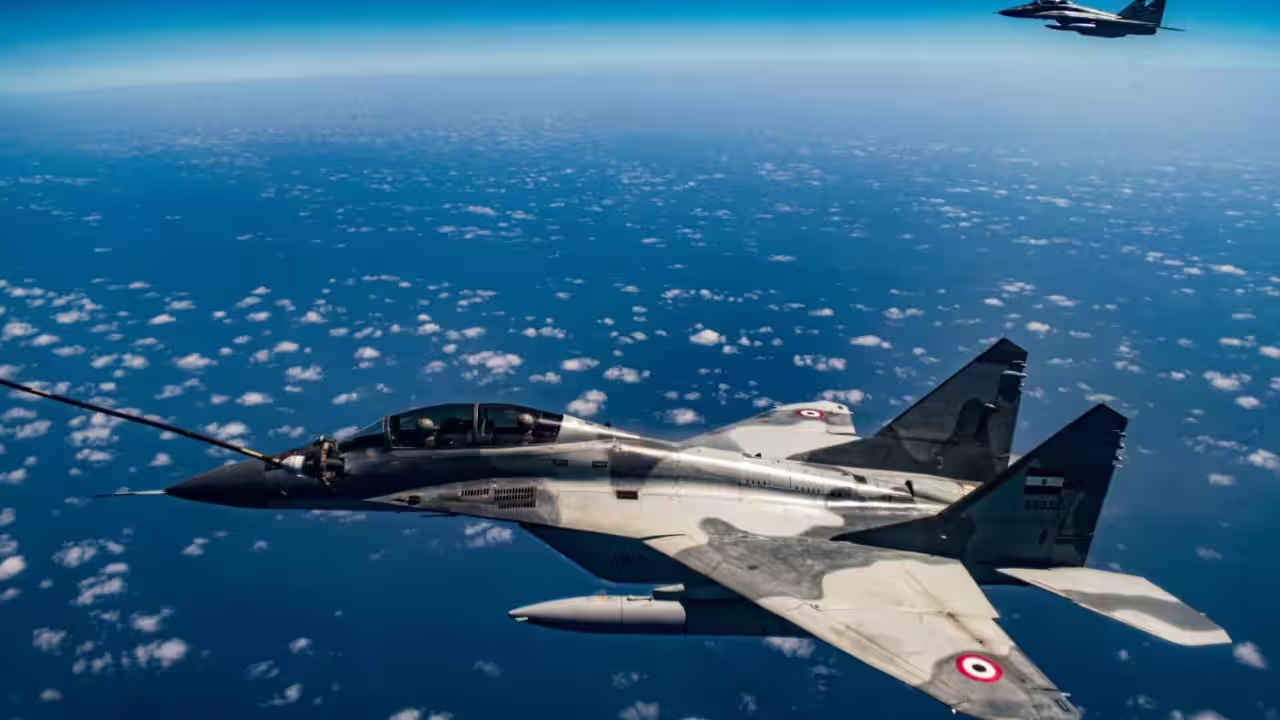
Egypt possesses a range of military capabilities that could be beneficial in this context. Its air force operates advanced aircraft, including Rafale, F-16, and MiG-29M/M2 fighters, as well as E-2C Hawkeye early-warning aircraft, which could enhance surveillance and threat detection. The country’s air defence systems include the S-300VM, Buk, Tor, and Hawk systems.

However, there is currently no indication that Egypt will transfer these assets, as it must maintain its own territorial security. The Egyptian navy is equipped with frigates, corvettes, missile boats, submarines, and Mistral-class helicopter carriers, which could facilitate the escort of merchant vessels and monitor maritime traffic in the Red Sea.

Additionally, Egypt could offer logistical support and intelligence sharing to bolster Saudi operations. The Houthis, formally known as Ansar Allah, present a unique challenge due to their arsenal of ballistic and cruise missiles, one-way attack drones, and reconnaissance capabilities. Their use of mobile launchers complicates detection efforts.

Effective defence against such threats requires robust surveillance, early warning systems, communication networks, and sufficient interceptor capabilities. While air defence assistance and naval patrols could enhance coalition efforts, they would not eliminate the Houthis’ capacity to launch attacks or resolve Yemen’s internal conflicts.

Key considerations for Egypt’s potential involvement include parliamentary approval, the specific military assets to be deployed, and the scope of operations—whether they will remain within Saudi territory or extend into Yemen. Financial costs, the duration of the mission, and command structures will also play critical roles in the decision-making process, with the historical context of the 1960s campaign serving as a reference point.

Long or Short, get news the way you like. No ads. No redirections. Download Newspin and Stay Alert, The CSR Journal Mobile app, for fast, crisp, clean updates!

App Store – https://apps.apple.com/in/app/newspin/id6746449540

Google Play Store – https://play.google.com/store/apps/details?id=com.inventifweb.newspin&pcampaignid=web_share

Latest News

Popular Videos
