


Oil Prices Slide, Asian Markets Rally After US-Iran Peace Agreement
The CSR Journal Magazine

Oil prices have declined in light of the signing of an interim peace agreement between the United States and Iran. On Thursday morning in Asia, Brent crude experienced a decrease of as much as 1.6 per cent, reverting to levels nearly identical to those observed 24 hours earlier.

The futures for Brent crude scheduled for August delivery were priced at $78.23 as of 04:00 GMT, reflecting an increase of approximately seven per cent since the commencement of hostilities launched by the US and Israel against Iran on February 28.

This drop in oil prices follows a brief surge above $81 per barrel, spurred by a statement from US President Donald Trump, warning of the potential resumption of military action should Iran not comply with US demands.

Asian Markets Respond to Renewed Optimism

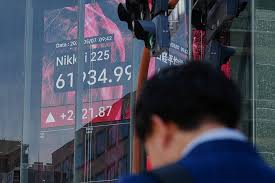
Following the developments regarding the US-Iran agreement, stock markets across Asia experienced significant gains on Thursday. Both Japan’s Nikkei 225 and South Korea’s Kospi reached historic highs, achieving increases of 1.8 per cent and 1.4 per cent, respectively.

In contrast, Hong Kong’s Hang Seng Index faced a decline of 1.7 per cent, diverging from the bullish sentiment observable in other Asian markets. Stock futures in the US also rose, often indicating future market trends, with futures linked to the S&P 500 and the Nasdaq Composite climbing approximately 0.8 per cent and 1.3 per cent, respectively.

The fluctuations in the market underscore the interconnected nature of global economies, particularly in the context of energy supply and geopolitical events.

Details of the US-Iran Agreement

Pakistani Prime Minister Shehbaz Sharif, who facilitated the discussions between the US and Iran, announced on Wednesday that the memorandum of understanding (MoU) had taken effect immediately. Sharif indicated that Iran would promptly reopen the crucial Strait of Hormuz, while the US would lift its naval blockade on Iranian ports.

However, it remains uncertain whether this announcement has resulted in an increase in maritime activity within this vital trade route. The current shipping activity through the Strait of Hormuz is significantly diminished compared to typical peacetime levels, primarily due to perceived threats from Iranian missile, drone, and mine deployments, compounded by the ongoing US blockade.

Reports suggest that over 500 vessels are currently waiting to depart the Gulf via the Strait, with shipping companies voicing concerns over the ambiguity surrounding the safety of maritime operations in the area. The Baltic and International Maritime Council (BIMCO), a prominent shipping industry association, previously expressed apprehensions regarding the security situation, noting a lack of critical information from both the US and Iran related to transit safety.

Jakob Larsen, the chief safety and security officer at BIMCO, emphasised the importance of rigorous risk assessments for shipowners, urging all parties involved to prioritise the safety of seafarers in the region amid ongoing uncertainties.

Long or Short, get news the way you like. No ads. No redirections. Download Newspin and Stay Alert, The CSR Journal Mobile app, for fast, crisp, clean updates!

App Store –  https://apps.apple.com/in/app/newspin/id6746449540 

Google Play Store – https://play.google.com/store/apps/details?id=com.inventifweb.newspin&pcampaignid=web_share

Latest News

Popular Videos
