


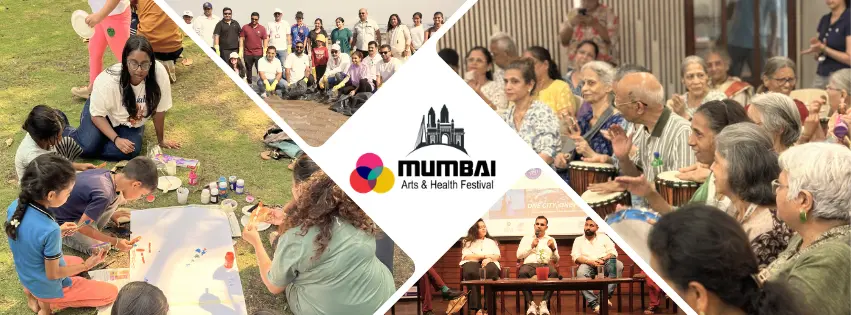

The inaugural edition of the Mumbai Arts and Health Festival (MAHF) 2026 concluded after five days of extensive city-wide programming that brought together artists, healthcare practitioners, researchers, environmental advocates, educators, community leaders, and citizens under the theme “One City, One Pulse.”
Held across Mumbai from May 6 to May 10, the festival transformed hospitals, galleries, beaches, parks, colleges, community centres, and public spaces into platforms for dialogue, creativity, healing, movement, and collective care.
The festival was presented with Maharashtra Pollution Control Board (MPCB) as the Title Partner and Rohini Nilekani Philanthropies as the Associate Partner.
Over the course of five days, MAHF 2026 hosted more than 50 events across the city, engaging over 50,000 citizens through performances, workshops, discussions, public interventions, screenings, movement-based practices, and environmental initiatives. The festival brought together more than 150 community partners, artists, facilitators, institutions, and collaborators, while also working closely with civic and government bodies including the Maharashtra Pollution Control Board and the Greater Mumbai Police. Through panels, workshops, performances, screenings, research sessions, public art engagements, and environmental initiatives, the festival positioned arts and creativity as integral to wellbeing, healthcare, sustainability, and social connection.
Day 1: Opening the City Through Arts and Health
The festival commenced on May 6 with the Opening Celebration held at the Auditorium, Nanavati Max Hospital, Vile Parle East. The opening session featured research poster presentations and a panel discussion on “Arts as Rehabilitation,” bringing together practitioners from dance movement therapy, music therapy, and expressive arts. The discussion focused on how arts-based practices can function as integrative tools within mental health, rehabilitation, and healthcare systems.
View this post on Instagram
The evening expanded the festival into public spaces through Community Art Hour sessions held simultaneously at Five Gardens in Wadala, Joggers Park in Bandra West, and Brahmala Park in Thane. These sessions encouraged participants of all ages to engage with creativity within familiar neighbourhood spaces and highlighted the importance of accessible arts participation.
Another key initiative on Day 1 was “Eco Arts: Bringing the Outside, Inside,” conducted at Oberoi Mall, Goregaon, in collaboration with the Maharashtra Pollution Control Board (MPCB). The engagement integrated environmental awareness with creative expression, inviting participants to reflect on sustainability through interactive artistic experiences.
A dedicated Golden Circle session for senior citizens was also conducted at Malabar Hill, focusing on ageing, wellbeing, engagement, and community participation through arts-based activities.
Day 2: Research, Lived Experience, and Community Storytelling
Day 2 of the festival shifted the focus towards deeper inquiry, research exchange, and community-led narratives.
A major highlight was the immersive GRACE-EPI (Global Research on Arts, Cultural Engagement and Epidemiology) session held in Dharavi with support from Rima Basu and the ACORN Foundation. GRACE-EPI is a seven-year global programme supported by the Wellcome Discovery Award and brought together international researchers Albert Nkata, Sherry Abdulla Bunn, and Rodger Phiri. The session facilitators from Team MAHF included Mahek Shringhey, Karishma Pavaskar, and Devika Kadam.
View this post on Instagram
The session explored methods of measuring the impact of creativity on health and wellbeing while grounding global research frameworks within local realities. Waste pickers, cooks, and artists from the Dharavi rock band participated directly in the engagement, reinforcing the principle that arts and health practices must remain rooted in lived experiences and accessible to all communities.
The day also featured a Creative Ageing session in Vile Parle, which explored the role of arts in supporting emotional wellbeing and social connection among older adults.
An emotionally resonant screening curated by CORO India in collaboration with the Mast Mahila Mandali took place at the National Gallery of Modern Art (NGMA), Fort. The film and subsequent discussion highlighted the power of community-led storytelling through cinematography, photography, and videography. Members of the Mast Mahila Mandali engaged directly with audiences during a question-and-answer session, sharing their experiences as creators, performers, and storytellers.
Day 3: Climate, Care, and Collective Participation
On Day 3, the festival deepened its engagement with environmental awareness, movement, and collective care.
The central event of the day was the “Climate, Care, and Creativity” panel held at NGMA, Fort, in collaboration with the Maharashtra Pollution Control Board. The discussion brought together MPCB official Mr. Shakil Shaikh, Festival Chairperson Mrs. Devika Mehta Kadam, Mr. Chinu Kwatra, and Ms. Prarthana Agarwal, moderated by Mr. Rohan Shivkumar.
The panel explored how creative practices can strengthen public engagement with climate consciousness, sustainability, and shared responsibility. An art walk following the discussion extended these conversations into an experiential public format.</
View this post on Instagram
h4>
The day also included a Dance and Zumba session at SRCC Hospital, Mahalaxmi, integrating movement practices within healthcare settings, while a Stop Motion Animation workshop at St. Xavier’s College, Fort, encouraged younger participants to explore storytelling through visual media.
At the Agatsu Community Center in Bandra, the “Power of Community in Arts and Healing” panel foregrounded grassroots leadership, shared healing, and collective participation. The session concluded with a playback theatre performance that transformed audience experiences into live artistic narratives.
A Folk Dance – Garba session at Ukiyo Studios, Malad, further reinforced the role of traditional cultural practices as living forms of social connection, joy, and wellbeing.
Day 4: Reflection, Nature, and Mental Health Dialogues
Day 4 focused on slowing down, reflective participation, and nature-based engagement.
The day began with a series of early morning public sessions including “Nature Unplugged” at Yeoor, Thane; “Sweat, Stretch & Sketch” at Central Park, Thane; and “Eco Art & Yoga” at Sanjay Gandhi National Park, Borivali. These sessions encouraged participants to engage with mindfulness, movement, environmental awareness, and creativity within natural surroundings.
A Community Art & Movement session at Juhu Beach extended this engagement into a collective public space, creating opportunities for embodied participation and shared artistic exploration.
Healthcare professionals at SRCC Hospital also participated in a dedicated Self-Care Through Movement session, highlighting the importance of arts-based wellbeing practices for caregivers and medical workers.
An “Arts for Mental Health” panel in Govandi, curated by Natasha Sharma, brought together practitioners and participants for an extended discussion around mental health, accessibility, and community care. Although the scheduled art walk did not take place, the session evolved into a rich and deeply participatory dialogue.
The day concluded with a screening of “In Transit” in Bandra alongside performances and community art presentations by artists from queer communities, creating an inclusive space for expression, dialogue, and visibility.
Day 5: Environmental Action and Closing Celebrations
The festival’s final day combined environmental action with public celebration.
In partnership with the Maharashtra Pollution Control Board, MAHF organised a large-scale beach clean-up at Dadar Beach. The initiative was attended by MPCB Chairman Mr. Siddhesh R. Kadam and Team MAHF led by Festival Chairperson Ms. Devika Mehta Kadam, with support from Mr. Chinuu Kwatra of Khushiyan Foundation.
View this post on Instagram