


Law Student Arrested for Selling Fake NEET Papers in Indore
The CSR Journal Magazine

The Crime Branch in Indore has detained a law student for allegedly trading in counterfeit NEET examination papers through social media platforms. The individual, identified as Akshay Malviya, is a first-year law student residing in the Lasudia area of Indore. Reports indicate that he utilised ChatGPT to generate fake question papers, which he subsequently sold to various individuals, thereby misleading them and earning significant financial gains.

Financial Gains from Fraudulent Activity

According to Deputy Commissioner of Police (DCP, Crime Branch) Rajesh Kumar Tripathi, Malviya charged prospective buyers between Rs 50 and Rs 100 for each fraudulent paper. Investigations revealed that he sold these forged documents to approximately 22 to 25 individuals, accumulating an estimated total of Rs 25,000 to Rs 30,000. The financial motive behind this scheme was highlighted, as DCP Tripathi confirmed that Malviya’s actions caused confusion among the public.

Malviya’s methods involved leveraging artificial intelligence to create the fake NEET exam question papers. His distribution primarily occurred via Instagram, tapping into a wide audience on social media platforms. This method not only highlighted the ease of access to technological tools but also the challenges posed in combating the misuse of such technology in fraudulent activities.

The blatant nature of his actions led to the registration of a case against him. The police promptly took action after receiving intelligence reports about his fraudulent activities, emphasizing the importance of monitoring social media as a means to prevent such criminal enterprises.

Legal Charges and Implications

In light of the alleged fraud, Akshay Malviya has been booked under specific legal provisions. He faces charges under Section 318 (4) of the Bharatiya Nyay Sahita (BNS), which pertains to cheating and dishonestly inducing delivery of property. In addition, he has been charged under Section 66 of the Information Technology Act, which addresses computer-related offences involving dishonest or fraudulent intent.

The authorities have reiterated that the fake papers produced by Malviya bore no resemblance to the actual NEET question paper, which was conducted on June 21, 2026. This distinction is crucial, as it serves to clarify any doubts regarding the integrity of the official examination process.

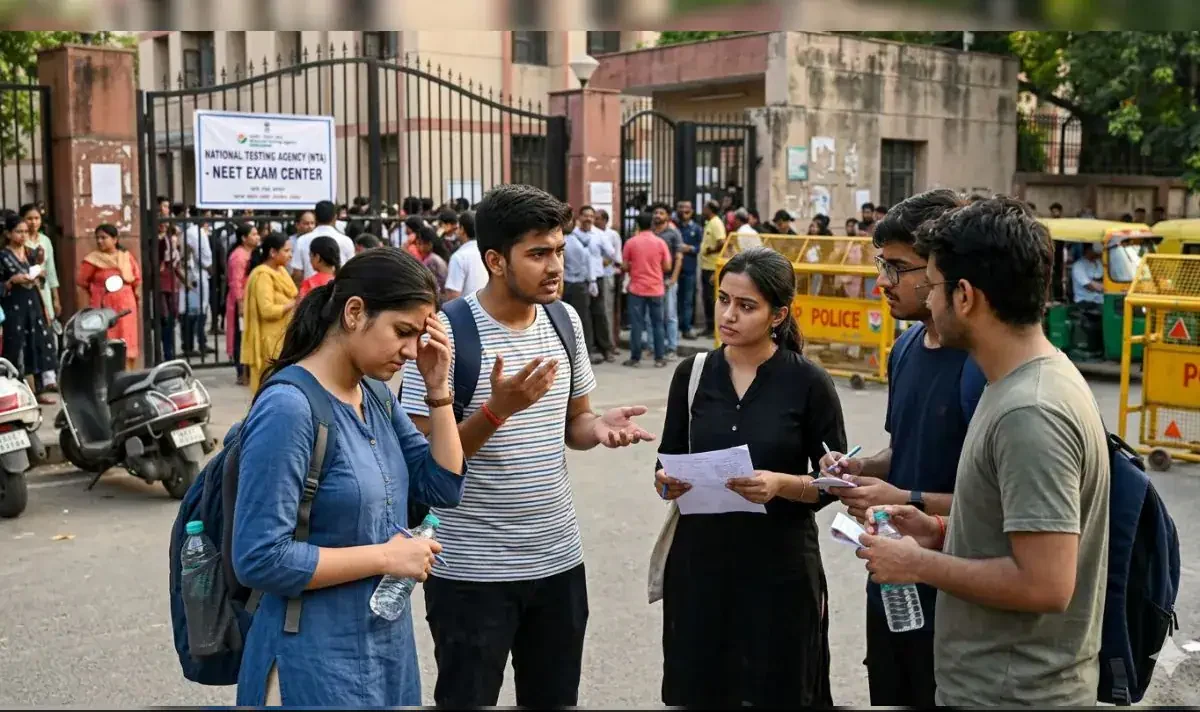
The National Testing Agency (NTA) reported that over 20 lakh candidates took the NEET (UG) 2026 re-examination across 5,440 centres in India as well as 14 centres abroad. Conducted in 13 languages, including Hindi and English, the examination is a significant event for aspiring medical students in India, further highlighting the serious nature of attempts to undermine its legitimacy through fraudulent means.

Long or Short, get news the way you like. No ads. No redirections. Download Newspin and Stay Alert, The CSR Journal Mobile app, for fast, crisp, clean updates!

App Store –  https://apps.apple.com/in/app/newspin/id6746449540 

Google Play Store – https://play.google.com/store/apps/details?id=com.inventifweb.newspin&pcampaignid=web_share

Latest News

Popular Videos
