


Kangana Ranaut Advocates Traditional Craftsmanship
The CSR Journal Magazine

Kangana Ranaut has once again utilised her platform in the fashion world to celebrate Indian textiles. During the promotional events for her latest film, “Bharat Bhhagya Viddhaata,” she showcased an impressive collection of sarees that highlighted the rich diversity and craftsmanship found in Indian materials.

One of her initial choices was a Kanjeevaram saree designed by Gaurang Shah, featuring a regal violet-and-ivory combination. The saree showcased exquisite zari embroidery with temple motifs, enhancing its visual appeal. Notably, Shah is recognised for reviving traditional weaves, and he infused this classic piece with elements from Western India, using vibrant Mochi embroidery. This craft, rooted in the Kutch region of Gujarat, incorporates fine chain-stitch techniques created with a specialized hooked needle.

Kotpad Saree: A Symbol of Heritage

Continuing her celebration of Indian textiles, Ranaut donned a Kotpad saree from Odisha. This particular saree, known for its stunning white-and-red combination, embodies both elegance and cultural significance. The intricate craftsmanship and the traditional methods employed in its creation make Kotpad sarees unique. Utilising natural dyes derived from the roots and bark of the aal tree, these sarees exhibit earthy hues that are environmentally sustainable.

The Kotpad saree is traditionally handwoven by the Mirgan weaving community in Odisha, thereby supporting local artisans. Every piece takes weeks to create, adorned with motifs that reflect the cultural heritage of the region. The designs often feature local wildlife and tribal symbols, signifying their deep-rooted connections to the local community.

Ranaut’s choice of the Kotpad saree illustrates her commitment to promoting traditional craftsmanship long before sustainability became mainstream in fashion. This handwoven textile is a testament to the skill of its weavers and the enduring legacy of natural production techniques.

Presenting the Luminous Paithani and Patan Patola

Ranaut further continued her sartorial showcase with a Paithani saree from Maharashtra, specially woven for her by designer Neeta Lulla’s team. The saree was distinguished by its saffron gold and gulnar red shades and was embellished with traditional ‘Mor-Phool’ motifs, intricately depicting peacocks amidst florals. Paithani is revered for its craftsmanship, characterised by its shimmering silk and metal thread details.

This saree exemplifies the art of weaving where motifs are integrated directly into the fabric itself rather than added post-production. It requires an elaborate process to interlock various coloured threads, a task that can span several months to complete, showcasing the dedication of skilled artisans who uphold this heritage.

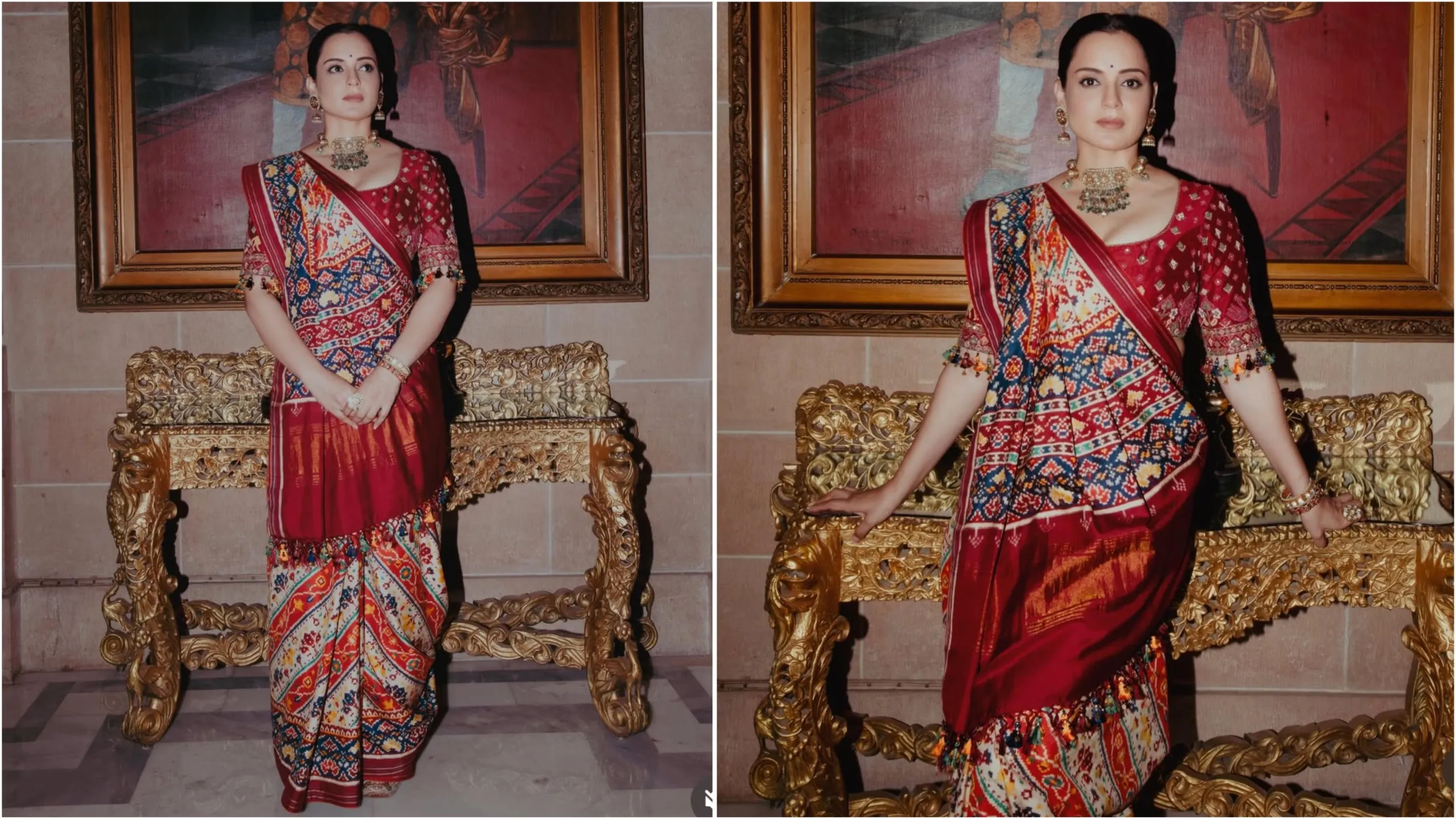
Another highlight was a rich red Patan Patola silk saree, which Ranaut wore during the promotional tour in Jodhpur. This saree features the rare double ikat technique unique to Gujarat, making it one of the most sought-after textiles in India. Coupled with a raw silk blouse adorned with traditional motifs, this outfit further emphasised her focus on showcasing the richness of Indian textiles.

In conclusion, Ranaut’s sartorial choices epitomise a reverence for India’s long-standing textile traditions, presenting the rich artistry of local weavers and artisans. Through her fashion choices, she effectively turns the spotlight back to the cultural legacies that lie at the heart of these textiles.

Long or Short, get news the way you like. No ads. No redirections. Download Newspin and Stay Alert, The CSR Journal Mobile app, for fast, crisp, clean updates!

App Store –  https://apps.apple.com/in/app/newspin/id6746449540 

Google Play Store – https://play.google.com/store/apps/details?id=com.inventifweb.newspin&pcampaignid=web_share

Latest News

Popular Videos
