


Isro Includes Civilians in Astronaut Cadre for Upcoming Selection
The CSR Journal Magazine

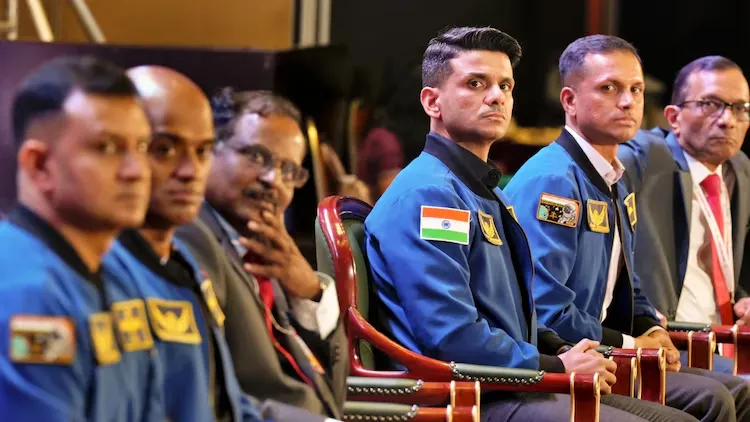
The Indian Space Research Organisation (Isro) is set to expand its astronaut corps to include civilians, marking a pivotal shift in its human spaceflight programme. This development indicates a move away from the previous exclusive reliance on military test pilots for astronaut selection. The news follows recommendations from Isro’s committee on astronaut selection and management, which is tasked with shaping the future of India’s space exploration initiatives.

For the upcoming second batch, the committee has proposed that the selection pool will consist of ten astronauts. This will include six mission pilots, primarily from military aviation backgrounds, as well as four civilian specialists with expertise in science, technology, engineering, and mathematics (STEM). This approach differs significantly from the first group of astronauts, all of whom were Indian Air Force test pilots.

Among the first batch, notable names included Air Commodore Prashanth Nair and Group Captains Shubhanshu Shukla, Ajit Krishnan, and Angad Prathap. The inclusion of civilian specialists aims to bring diverse skills and knowledge into the astronaut cadre, signalling Isro’s commitment to enhancing its human spaceflight capabilities.

New Directions for Future Missions

The second batch of astronaut candidates is poised to expand the intake of military personnel to incorporate combat helicopter pilots, thereby enriching the overall operational expertise within the astronaut corps. The agency’s evolving strategy reflects an ambition not just for initial human spaceflight validation but also for long-term sustained missions in orbit.

Isro is seeking to establish a framework for ongoing crewed missions, scientific investigations, and eventual participation in missions involving India’s future space station, known as the Bharatiya Antariksh Station. However, civilians are not expected to commence flying until the fourth crewed Gaganyaan mission, adhering to global trends where military-trained astronauts are typically deployed during preliminary missions until comprehensive systems and safety protocols are established.

Recent reports highlighted the slow progress of Gaganyaan and emphasised the urgency in developing an astronaut pool to facilitate extended space exploration initiatives. As mission frequencies are projected to increase, Isro is planning for potentially two human spaceflight missions each year, with astronauts likely returning to space approximately every two years.

Future Aspirations and Challenges Remain

To accommodate long-term objectives, international collaborations, and possible attrition, the committee has envisaged creating an astronaut cadre of up to 40 individuals. This extensive planning underscores Isro’s commitment to supporting a robust human spaceflight programme.

Despite these ambitious goals, Isro faces ongoing challenges, including the lack of a permanent astronaut training facility, leading to reliance on a temporary centre for training purposes. Additionally, technological gaps remain, particularly regarding essential systems such as the Environment Control and Life Support System (ECLSS), which is indispensable for sustaining human life during space missions. Even with these obstacles, the decision to include civilians in the astronaut cadre represents a significant turning point for India’s aspirations in human space exploration.

Long or Short, get news the way you like. No ads. No redirections. Download Newspin and Stay Alert, The CSR Journal Mobile app, for fast, crisp, clean updates!

App Store –  https://apps.apple.com/in/app/newspin/id6746449540 

Google Play Store – https://play.google.com/store/apps/details?id=com.inventifweb.newspin&pcampaignid=web_share

Latest News

Popular Videos
