


Isro Develops Lunar Lander Capable of Operating for 200 Days
The CSR Journal Magazine

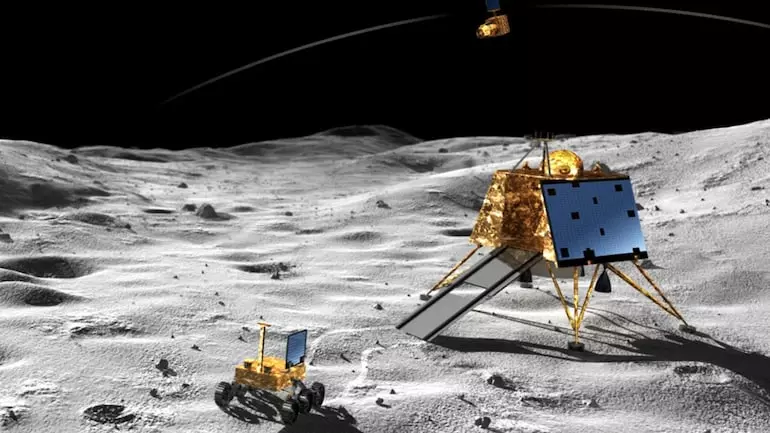
India’s Indian Space Research Organisation (Isro) is working on next-generation lunar landers that could remain functional on the Moon for up to 200 days. This marked increase from the approximately 14-day operational limit witnessed in the Chandrayaan-3 mission has been reported by Isro Chairman V. Narayanan. The initiative aims to enhance the capacity of lunar landers to endure the extreme conditions found on the Moon, particularly its abysmal nights.

The lunar night, characterised by a duration equal to that of the day, presents unique challenges for spacecraft—most notably the harsh drop in temperatures, which can reach as low as minus 180 degrees Celsius. Narayanan explained that overcoming these obstacles is essential for the future of Indian lunar exploration.

By developing robust technologies, Isro and the Department of Atomic Energy (DAE) aim to ensure that future landers can survive multiple lunar day-night cycles, thereby enhancing India’s scientific endeavours on the lunar surface.

Challenges Faced by Previous Missions

The Chandrayaan-3 mission, which successfully landed on the Moon’s South Pole on August 23, 2023, demonstrated the limitations of solar-powered systems. While the Vikram lander was able to function optimally during the lunar day, operations ceased when night fell, leading to a loss of power. This highlights the ongoing challenges posed by the lunar environment, where solar energy is unavailable during extended periods of darkness.

The ability to sustain operations beyond the lunar day could significantly advance India’s capabilities in lunar exploration. If Isro’s ongoing efforts are successful, scientists could gather a wealth of data concerning long-term lunar environmental changes and conduct extensive experiments.

Narayanan emphasised the critical development of artificial heating systems that would regulate the temperatures of electronic components, batteries, and scientific instruments. “We are going to develop artificial heaters. If we succeed, such landers can survive for 100 to 200 days instead of only 14 days,” he noted.

Future Prospects for Indian Space Exploration

The ongoing development of a lander that can endure the severe conditions on the Moon represents a significant advancement for India’s space ambitions. If realised, this project could represent a major leap forward following the accomplishments of the Chandrayaan-3 mission. It could also set the groundwork for more sophisticated missions in the years ahead, including the much-anticipated Chandrayaan-4.

Chandrayaan-4 is expected to take on the challenging task of collecting lunar samples for eventual return to Earth. This mission marks a crucial step beyond the previously established capability for soft landings achieved by Chandrayaan-3.

As India’s space exploration programme continues to evolve, the Indian National Space Promotion and Authorisation Centre (IN-SPACe) has recently selected three startups—Astrobase Space Technologies, SatSure Analytics India, and TM2SPACE Technologies—as the initial recipients under its Technology Adoption Fund scheme. These selections aim to bolster innovation within India’s burgeoning private space sector.

Long or Short, get news the way you like. No ads. No redirections. Download Newspin and Stay Alert, The CSR Journal Mobile app, for fast, crisp, clean updates!

App Store –  https://apps.apple.com/in/app/newspin/id6746449540 

Google Play Store – https://play.google.com/store/apps/details?id=com.inventifweb.newspin&pcampaignid=web_share

Latest News

Popular Videos
