


Israel Strikes Southern Lebanon Despite Ceasefire Claims, Seven Dead
The CSR Journal Magazine

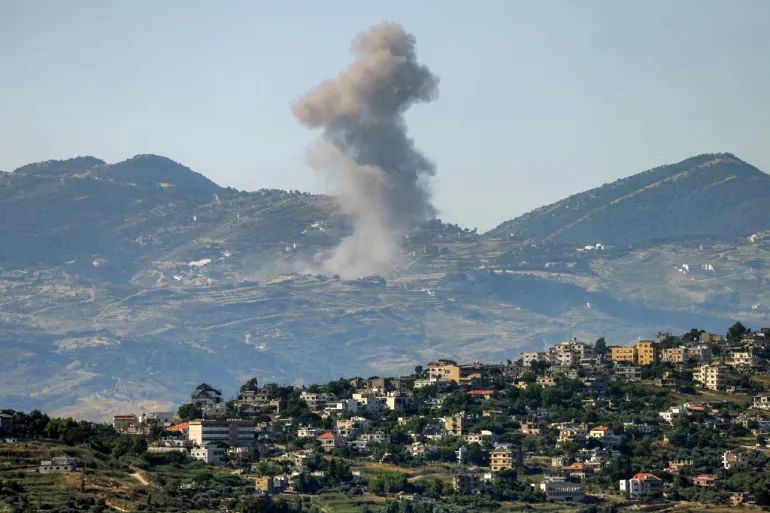
Israeli airstrikes in southern Lebanon on Saturday resulted in the deaths of at least seven individuals, including two children. This escalation followed reports of a potential ceasefire agreement, raising concerns about the ongoing conflict between Israel and the militant group Hezbollah.

As per Lebanon’s National News Agency, the strikes targeted the town of Nabatiyeh and surrounding areas. Reports indicate that additional casualties remain trapped under rubble in the aftermath of the attacks. These developments have intensified scrutiny on a fragile interim agreement brokered between the United States and Iran, which aims to halt hostilities in the region.

Mediators are reportedly working to halt the violence, especially after a heavy exchange of fire on Friday that resulted in at least 47 fatalities in Lebanon and the deaths of four Israeli soldiers. Israeli military sources indicated that Hezbollah launched over 50 projectiles at Israeli forces overnight, prompting a military response from Israel.

Statements from Officials Hide Negotiation Complexities

Israeli Ambassador to the U.S., Yechiel Leiter, stated on X that the Israeli government remains committed to an immediate ceasefire, contingent upon Hezbollah’s adherence to the terms by ceasing hostilities. Meanwhile, Hezbollah’s public announcements suggest a readiness to observe a ceasefire if Israel reciprocates, without confirming the existence of a formal agreement.

A Hezbollah official, who remained unnamed due to the sensitive nature of the discussions, mentioned that Qatar, the U.S., and Iran are attempting to mediate a ceasefire between the two factions. However, concrete details regarding an accord have not been disclosed, leaving the situation precarious.

Conflicting military actions have characterized the recent weeks, with the conflict reigniting soon after U.S. and Israeli attacks on Iran that began on February 28. Following those strikes, Hezbollah intensified its offensives against civilian areas in northern Israel, leading to Israel’s military operations in southern Lebanon.

International Diplomacy and Regional Stability at Stake

The interim agreement signed earlier this week has led to significant geopolitical shifts, including the reopening of the Strait of Hormuz, previously closed by Iran. The deal, which neither Israel nor Hezbollah has officially endorsed, calls for a cessation of military activities in Lebanon while respecting the nation’s sovereignty.

Israeli Prime Minister Benjamin Netanyahu asserted that military operations would continue until Israel’s security concerns are addressed. Conversely, Hezbollah has maintained that attacks will persist until Israeli forces withdraw from Lebanon, a condition that Iran has also acknowledged as part of any potential agreement.

Recent aerial activity suggested ongoing tensions, with smoke reported over the area and low-flying Israeli jets observed above the coastal city of Tyre. The airstrikes claimed multiple lives, including four family members in the Barish area. Efforts for a ceasefire remain tense, with military spokespersons from Israel indicating that their operations are focused on eliminating threats from Hezbollah.

As diplomatic negotiations face delays, Iranian officials have refrained from attending planned talks in Switzerland, citing the necessity for a cessation of hostilities. Concurrently, U.S. Vice President J.D. Vance has also postponed his visit. Discussions regarding the nuclear programme of Iran remain unresolved, highlighting lingering uncertainties in the region’s future.

Long or Short, get news the way you like. No ads. No redirections. Download Newspin and Stay Alert, The CSR Journal Mobile app, for fast, crisp, clean updates!

App Store –  https://apps.apple.com/in/app/newspin/id6746449540 

Google Play Store – https://play.google.com/store/apps/details?id=com.inventifweb.newspin&pcampaignid=web_share

Latest News

Popular Videos
