


Iran Buries Ayatollah Ali Khamenei In Mashhad, Successor Mojtaba Remains Out Of Public View
The CSR Journal Magazine

Iran’s former Supreme Leader Ayatollah Ali Khamenei was buried at the Shrine of Imam Reza in Mashhad early Friday, bringing an end to a week of mass funeral processions, religious ceremonies and public mourning in Iran and Iraq.

Khamenei’s son and successor, Mojtaba Khamenei, remained absent from public view throughout the funeral events and burial. The ceremonies came amid renewed tensions between Iran and the United States following weeks of truce in the four-month-old war.

Khamenei Buried At Shrine Of Imam Reza

Khamenei was killed in the opening strikes of the war launched by the United States and Israel on February 28. Washington and Tehran agreed to a truce last month.

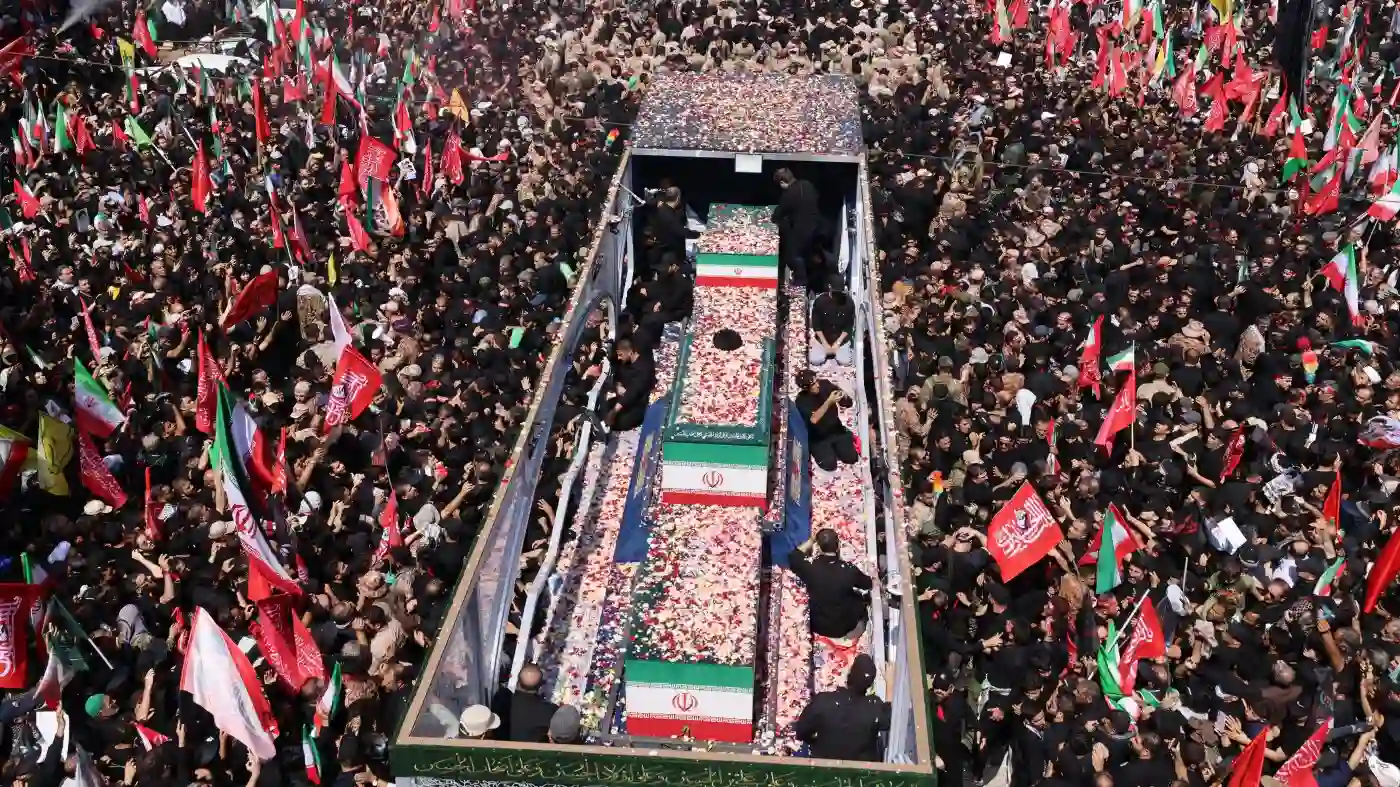
On Thursday, large crowds accompanied Khamenei’s coffin through the streets of Mashhad towards the Shrine of Imam Reza, one of Shi’ite Islam’s holiest sites.

White-turbaned clerics walked alongside the vehicle carrying his body, while mourners dressed in black waved Iranian flags, carried photographs of Khamenei and displayed red placards bearing revolutionary slogans.

Iran’s clerical leadership encouraged large crowds to participate in the funeral ceremonies in an effort to demonstrate the strength and ideological commitment of the Islamic Republic.

The burial marked the culmination of a week of funeral processions, rallies and religious ceremonies across Iran and Iraq.

Mojtaba Khamenei Remains Absent From Public View

Mojtaba Khamenei, who was proclaimed supreme leader by a clerical assembly in early March, one week after his father’s death, has not appeared publicly since the war began.

Although Mojtaba has issued written statements, Iranian authorities have released no photographs, videos or audio recordings of him.

According to senior sources in Tehran, Mojtaba suffered severe injuries in the strike that killed his father, including facial disfigurement and serious injuries to his limbs.

The sources said he was recovering but had not regained sufficient health to appear publicly. State security services are also reportedly limiting his exposure because of concerns about possible future US attacks.

Mourners Raise Anti-US Slogans During Funeral

Anti-US slogans dominated the funeral procession as crowds gathered in Mashhad, with mourners calling for revenge against US President Donald Trump.

“I swear by the blood of the supreme leader, Trump, we will kill you!” members of the crowd shouted, while some women carried placards reading “Kill Trump.”

As evening fell, the courtyard of the Shrine of Imam Reza filled with mourners chanting “Death to America” alongside funeral laments and music broadcast through loudspeakers.

A helicopter carried Khamenei’s coffin over the tightly packed crowd during the final stretch of the procession towards a blue-tiled arched recess inside the shrine.

Khamenei’s eldest son, Mostafa, led the funeral prayer before male mourners carried the coffin, draped in the colours of Iran’s national flag, into the shrine.

Mourners inside the complex held candles, reached towards the coffin and wept during the burial ceremonies.

Khamenei And Four Family Members Buried

Iran’s official IRNA news agency reported early Friday that authorities had completed the burials of Khamenei and four family members who were killed alongside him.

The Shrine of Imam Reza is located in Khamenei’s hometown of Mashhad and serves as a major pilgrimage destination for Shi’ite Muslims.

Before the burial, authorities carried Khamenei’s remains through Tehran, the clerical centre of Qom and the Iraqi shrine cities of Najaf and Karbala.

Large crowds attended the ceremonies at each location, chanting revolutionary slogans and participating in Shi’ite mourning rituals.

Iranian authorities framed Khamenei’s death at the hands of foreign forces within the religious and political tradition of martyrdom, which occupies a central place in Shi’ite theology.

Funeral Comes At Pivotal Moment For Iran

Khamenei’s burial marked the end of nearly four decades of leadership at a critical moment for Iran, months after the latest nationwide protests against the Islamic Republic.

Security forces suppressed the demonstrations, which were driven by anger over the sanctions-hit economy, killing thousands of protesters during a widespread crackdown that echoed earlier periods of unrest.

Analysts believe Iran emerged from the war with the United States in a stronger strategic position while retaining control over the Strait of Hormuz. However, the conflict also caused widespread damage and added to the country’s economic difficulties.

Khamenei became supreme leader in 1989, a decade after Iran’s Islamic Revolution. During his 37-year tenure, he consolidated political, military and economic authority in the office of the supreme leader while increasingly sidelining the elected president and parliament.

He strengthened the system in close coordination with the Islamic Revolutionary Guard Corps, whose influence expanded significantly during his rule.

Mojtaba Khamenei assumed the position of supreme leader with the backing of the Revolutionary Guards, which many observers now regard as the dominant force in Iran’s political and strategic decision-making.

Long or Short, get news the way you like. No ads. No redirections. Download Newspin and Stay Alert, The CSR Journal Mobile app, for fast, crisp, clean updates!

App Store –  https://apps.apple.com/in/app/newspin/id6746449540 

Google Play Store – https://play.google.com/store/apps/details?id=com.inventifweb.newspin&pcampaignid=web_share

Latest News

Popular Videos
