


Indian Diplomat Asserts Jammu and Kashmir is Part of India at Bangladesh Seminar
The CSR Journal Magazine

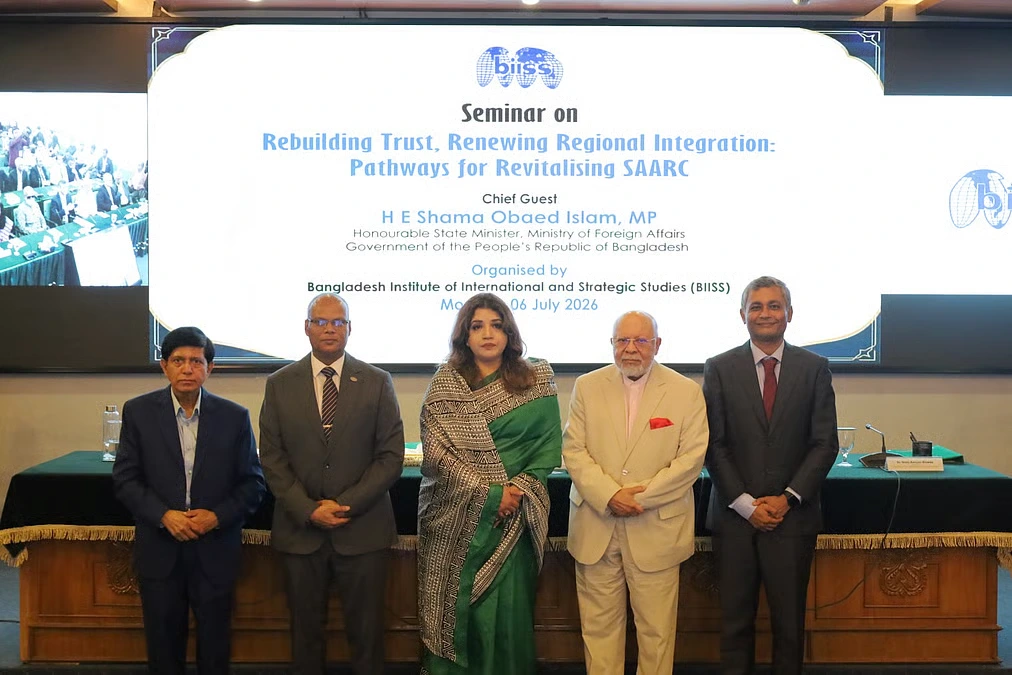
The assertion that Jammu and Kashmir is an integral part of India was reiterated by an Indian diplomat during a seminar at the Bangladesh Institute of International and Strategic Studies (BIISS) in Dhaka. This objection arose when a map portrayed Jammu and Kashmir as part of Pakistan during a presentation by Ahmed Tariq Karim, the former High Commissioner of Bangladesh to India. Pooja Kumari Jha, Second Secretary at the Indian High Commission, raised the concern immediately upon observing the map.

During the presentation titled “Rebuilding Trust, Renewing Regional Integration: Pathways for Revitalising SAARC,” Jha addressed the issue directly. She remarked, “Sir, this is an incorrect map. Jammu and Kashmir is an integral part of India.” This prompt intervention underscored India’s commitment to its territorial claims.

In reply, Karim clarified that the map was intended for representational purposes and did not accurately depict the actual boundaries. Jha accepted his explanation but maintained India’s stance by stating, “I understand, sir, but Jammu and Kashmir is an integral part of India, and it is misrepresented here.” This exchange highlighted the ongoing sensitivity surrounding the territorial issue.

Reactions to the Diplomatic Exchange

Following Jha’s intervention, Karim acknowledged the objection and confirmed its notation. The interaction did not disrupt the seminar’s proceedings, as Karim continued with his presentation after the exchange. His comment, “Point noted,” indicated a recognition of India’s position.

Attending the seminar was Bangladesh’s State Minister for Foreign Affairs Shama Obaed, who served as the chief guest. Obaed remarked on the necessity of enhancing regional cooperation in South Asia, emphasising the need to address the disparity between the region’s potential and its actual performance. Her comments positioned Bangladesh as a pivotal player in the future of regional integration.

She also outlined strategies for revitalising the South Asian Association for Regional Cooperation (SAARC) by advocating for strengthened implementation capacity and enhanced financial resources. Effective mechanisms for specialised tasks and a practical culture of follow-up were proposed as essential steps towards achieving these goals.

Plans for Regional Cooperation and Engagement

During her speech, Obaed noted that Bangladesh is contemplating a closer partnership with SAARC member states to facilitate regional engagement. She said, “It is in this spirit that we are considering a calibrated set of confidence-building initiatives in the coming months.” These initiatives would involve consultations with the Ambassadors and High Commissioners of SAARC nations based in Dhaka, as well as discussions with the SAARC Secretariat in Kathmandu.

Obaed further expressed the intention to explore broader diplomatic outreach at the highest levels. This initiative aims to create a framework that could support regional collaboration and foster trust among member states.

In the wake of the incident, a video of the exchange between Jha and Karim circulated extensively on social media platforms. Indian users expressed their support for the diplomat’s prompt objection to the map, reinforcing New Delhi’s long-standing position regarding Jammu and Kashmir’s status within India.

Long or Short, get news the way you like. No ads. No redirections. Download Newspin and Stay Alert, The CSR Journal Mobile app, for fast, crisp, clean updates!

App Store –  https://apps.apple.com/in/app/newspin/id6746449540 

Google Play Store – https://play.google.com/store/apps/details?id=com.inventifweb.newspin&pcampaignid=web_share

Latest News

Popular Videos
