


India Objects to Inaccurate Map Shown at Bangladesh Seminar on J&K
The CSR Journal Magazine

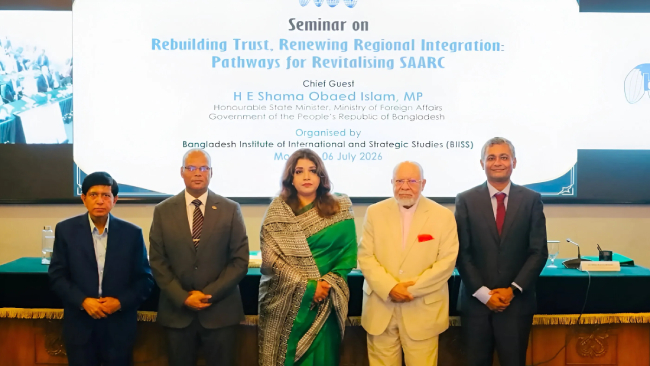
India has formally objected to the display of an inaccurate map during a seminar held at the Bangladesh Institute of International and Strategic Studies (BIISS). The presentation was made by Ahmed Tariq Karim, a former Bangladesh High Commissioner to India, in Dhaka. This incident raised significant attention due to the implications regarding territorial disputes between the nations.

Indian Diplomatic Intervention

Pooja Kumari Jha, the Second Secretary at the Indian High Commission in Dhaka, promptly raised an objection to the incorrect representation. She stated, “The map of India depicted is incorrect. Jammu and Kashmir is an integral part of India.” Her intervention sought to clarify India’s position on its territorial claims, asserting that Jammu and Kashmir is considered an inalienable part of the country.

Following her remarks, Ahmed Tariq Karim acknowledged the objection, confirming that it had been duly noted. This response indicated an awareness of sensitivities surrounding the territorial integrity of both nations, particularly given the historical context of their relations.

The incident also featured the participation of Bangladesh’s State Minister for Foreign Affairs, Shama Obaed, who served as the chief guest at the seminar. The diplomatic presence at the event further highlighted the importance of maintaining a constructive dialogue on regional issues.

Emphasis on Regional Cooperation

During her speech at the seminar, Shama Obaed emphasised the necessity for heightened regional collaboration within South Asia. She addressed the importance of bridging the gap between the potential of the South Asian Association for Regional Cooperation (SAARC) and the actual performance of the organisation. Her comments reflected ongoing concerns regarding the operational efficiency of SAARC.

Obaed outlined several key measures that Bangladesh is considering to revitalise SAARC. She suggested that the organisation could benefit from stronger implementation capacities, improved financial resources, and more effective specialised mechanisms. These proposals aimed at fostering a productive and cooperative environment among member states.

Moreover, the State Minister expressed Bangladesh’s intent to initiate discussions with other SAARC member countries regarding enhanced cooperation. She mentioned the possibility of convening a meeting of senior officials and considering a special session of the Council of Ministers. This initiative is aimed at promoting collaborative efforts among member nations to address shared challenges and opportunities.

Future Diplomatic Initiatives

Shama Obaed outlined a series of potential confidence-building measures that Bangladesh plans to pursue in the upcoming months. These initiatives would be contingent on consultations with SAARC member states. The proposed initiatives could include engaging with ambassadors and high commissioners of SAARC countries based in Dhaka.

Additionally, discussions with the SAARC Secretariat based in Kathmandu will be integral to the planning of any meetings. Obaed stressed the importance of diplomacy at the highest levels to secure better collaboration among SAARC nations.

Overall, the seminar served as a platform for addressing significant cross-border issues and alignment on regional cooperation. The incident of the map depiction is a reminder of the delicate nature of territorial claims, while the discussions on cooperation provided an avenue for strengthening relations within South Asia.

Long or Short, get news the way you like. No ads. No redirections. Download Newspin and Stay Alert, The CSR Journal Mobile app, for fast, crisp, clean updates!

App Store –  https://apps.apple.com/in/app/newspin/id6746449540 

Google Play Store – https://play.google.com/store/apps/details?id=com.inventifweb.newspin&pcampaignid=web_share

Latest News

Popular Videos
