


India Considers Thorium’s Role in Sustainable Energy Transition
The CSR Journal Magazine

Recent discussions have emerged regarding the potential for India to open its thorium sector to private companies. This comes as the government contemplates a policy change, which could reshape the country’s current approach to this vital resource. A draft policy is anticipated following consultations among key ministries. At present, the thorium sector remains under strict government control, with monazite sands—containing significant thorium deposits—currently managed by state authorities.

This speculation highlights the importance of thorium in the context of India’s long-term energy strategy. The country is rich in thorium resources, with large deposits located in coastal regions like Kerala, Tamil Nadu, Odisha, and Andhra Pradesh. For over seventy years, India has sought answers on how to provide sustainable energy independently and thorium could potentially be part of the solution.

Importance of Thorium in India’s Energy Framework

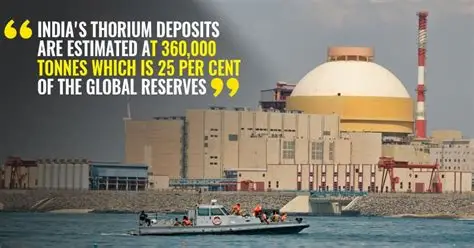
Thorium’s significance stems from India’s geological advantage, as the nation holds approximately 25 per cent of the world’s known thorium reserves, amounting to around 8,50,000 tonnes. In contrast, India possesses less than two per cent of global uranium reserves, which are essential for traditional nuclear reactors. This disparity places thorium at the core of India’s ambition to achieve a target of 100 GW of nuclear power by 2047.

Experts believe that these thorium reserves can support extensive energy generation capabilities over many centuries. This projection aligns with the government’s goal of achieving net-zero emissions by 2070, underscoring thorium’s crucial role in future energy planning.

However, thorium cannot be utilised directly as a nuclear fuel. Unlike uranium-235, which is fissile and can initiate a nuclear reaction independently, thorium-232 is fertile and must first be converted into uranium-233 to be effective as a fuel source.

India’s Three-Step Nuclear Programme

The development of thorium as a viable energy source has been intricately linked to India’s three-stage nuclear strategy established in the 1950s by physicist Homi J. Bhabha. The first stage involves using Pressurised Heavy Water Reactors that operate on natural uranium. These reactors not only generate electricity but also produce plutonium as a by-product.

In the second stage, fast breeder reactors are employed, utilising the plutonium while simultaneously converting thorium-232 into uranium-233. A significant milestone in this phase was reached on April 6, 2026, at 8:25 pm, when the Prototype Fast Breeder Reactor in Kalpakkam achieved its first criticality, marking progress towards thorium utilisation.

The third stage aims for reactors primarily powered by thorium and uranium-233. This plan, including designs developed by the Bhabha Atomic Research Centre, reflects India’s commitment to harnessing its abundant thorium resources for energy security.

Safety and Challenges of Thorium Utilisation

Thorium is often viewed as a safer alternative to uranium in several aspects. For instance, thorium dioxide has a higher melting point, enhancing reactor safety against potential meltdowns. Furthermore, thorium-based fuel results in considerably less hazardous waste compared to uranium, as its radioactive decay products are safer and last for shorter periods.

Despite its advantages, there are considerable challenges in implementing thorium power. Managing the gamma radiation produced in thorium fuels poses handling issues, requiring sophisticated, remotely operated facilities for fabrication and reprocessing. Also, protactinium-233 must be efficiently processed within a set timeframe to prevent waste, which necessitates precise engineering solutions.

While India faces these obstacles, advances made at facilities like Kalpakkam reveal ongoing efforts to address them. The government remains poised to explore the future of thorium in its energy landscape, whether or not private entities are involved in the evolution of this sector.

Long or Short, get news the way you like. No ads. No redirections. Download Newspin and Stay Alert, The CSR Journal Mobile app, for fast, crisp, clean updates!

App Store –  https://apps.apple.com/in/app/newspin/id6746449540 

Google Play Store – https://play.google.com/store/apps/details?id=com.inventifweb.newspin&pcampaignid=web_share

Latest News

Popular Videos
