


India Calls Pakistan a “Frankenstein State” at UN Meeting
The CSR Journal Magazine

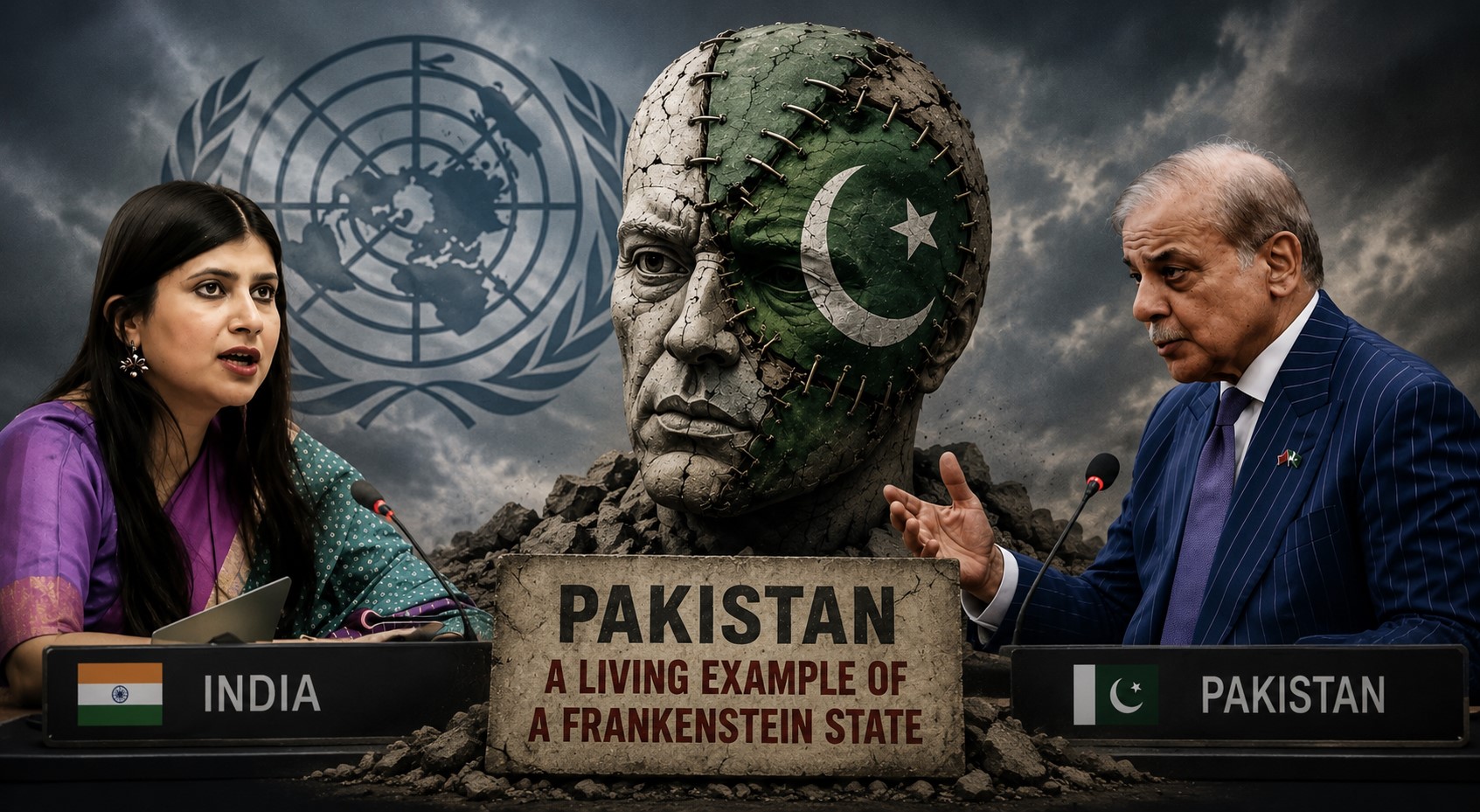
India characterised Pakistan as “a living example of a Frankenstein state” during a recent session at the United Nations. This statement was made by Anupama Singh, First Secretary at India’s Permanent Mission to the UN, who accused Pakistan of being responsible for hosting and training terrorists as part of its official state policy. The comments were delivered on Wednesday as a response to statements made by Pakistan and the Organisation of Islamic Cooperation regarding the Jammu and Kashmir region.

Singh stated that India was exercising its right to respond to what she termed “baseless and malicious allegations” made by Pakistan. She firmly asserted that Jammu and Kashmir “was, is, and will always remain an integral and inalienable part of India.” The official highlighted that the only real issue remains Pakistan’s illegal occupation of Indian territories, and reiterated the need for their return.

Further, Singh pointed out the contradictions inherent in Pakistan’s claims of being a victim of terrorism, stating, “Indeed, a paradox which only Pakistan could sustain.” She referred to remarks made by Pakistan’s Defence Minister regarding the nation’s approach to terrorism, asserting that such admissions should not come as a surprise and that “an illegal and illegitimate occupation can be sustained only through force.”

Comments on the Indus Water Treaty

Singh also addressed the Indus Water Treaty, labelling it as “outdated.” She reaffirmed India’s stance, stating, “It defies logic that a state which exports terror as an instrument of policy continues to demand the privileges of cooperation predicated on goodwill and friendship.” This treaty, which governs the distribution and use of the Indus River and its tributaries, was brokered by the World Bank and established in 1960.

The dialogue surrounding the treaty has intensified following the Pahalgam terror attack that occurred in April 2025, resulting in the death of 26 civilians. Singh remarked, “It is equally undeniable that the treaty is now outdated,” highlighting the necessity to adapt to current realities. She argued that a treaty negotiated in 1960 should not have perpetual entitlement without accountability or adaptation to the profound changes over six decades.

Singh underscored that no technical arrangement can remain unchanged amidst evolving global circumstances, asserting that contemporary relations must take precedence over outdated agreements.

India’s Closing Remarks on Territorial Issues

In her closing statements, Singh suggested that instead of coveting Indian territories, Pakistan would benefit more by focusing on internal stability. She reiterated India’s rejection of Pakistan’s allegations regarding Jammu and Kashmir and reinforced India’s position on the Indus Water Treaty. Her remarks reflected India’s stance on addressing national security and regional cooperation amidst ongoing tensions.

The discussion illustrates the ongoing complexity of India-Pakistan relations, particularly involving contentious issues such as terrorism, territorial disputes, and the management of vital resources. As the international community observes, India continues to assert its narrative while challenging Pakistan’s claims on multiple fronts.

The dialogue at the UN serves as a reminder of the enduring strife in the region, underscoring the need for sustained negotiations and dialogue to resolve longstanding disputes and foster a sense of security and cooperation among neighbouring nations.

Long or Short, get news the way you like. No ads. No redirections. Download Newspin and Stay Alert, The CSR Journal Mobile app, for fast, crisp, clean updates!

App Store –  https://apps.apple.com/in/app/newspin/id6746449540 

Google Play Store – https://play.google.com/store/apps/details?id=com.inventifweb.newspin&pcampaignid=web_share

Latest News

Popular Videos
