


Europe Experiences Second Heatwave of 2026 Affecting England, France and Germany
The CSR Journal Magazine

The second heatwave affecting Western Europe in 2026 has begun, with England, France, and Germany experiencing extreme temperatures simultaneously. This early onset of heat has surprised many as summer officially starts on June 21. Meteorological experts have indicated that significant relief from these high temperatures is not anticipated before the week concludes.

Meteo-France, the French weather agency, has placed sixty departments under an orange alert for heat—its second highest level—and has warned that some areas might escalate to a red alert, indicating an even greater danger from rising temperatures, as the situation unfolds from June 21 onwards.

Forecasts suggest that June 22 is expected to be particularly severe, with temperatures soaring between 37 and 42 degrees Celsius. This day has the potential to set a record as the hottest ever experienced in France during any month.

Warnings Issued Across England and Germany

In England, the Met Office has released amber extreme heat warnings for southern England and south-eastern Wales, effective on June 22 and 23. The temperatures in these regions could reach 34 degrees Celsius, approaching the historic June record of 35.6 degrees Celsius set in 1976.

In Germany, the national weather service DWD has cautioned that almost all regions are likely to experience heightened temperatures, particularly in the south-west where temperatures could peak at 38 degrees Celsius. In addition, severe thunderstorms, hail, and heavy rainfall are anticipated to follow the heatwave.

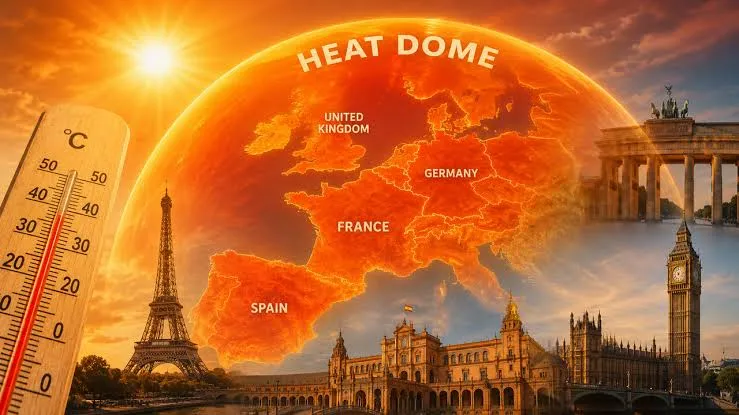
This intense weather pattern is being attributed to a phenomenon known as a heat dome, which entails a large area of high pressure remaining stationary over the continent. The trapped air descends and compresses, leading to a rise in temperature, while the persistent clear skies allow for unfiltered sunlight, exacerbating the heat.

Health Implications of Extended High Temperatures

The danger posed by this heatwave extends beyond the daytime. Forecasters have indicated the likelihood of tropical nights, during which temperatures may not drop below 20 degrees Celsius. Such conditions hinder the body’s ability to cool down and recuperate after the heat of the day.

Prolonged exposure to high night-time temperatures can lead to increased stress on the cardiovascular system, particularly affecting the elderly and those with pre-existing health issues. The warm coastal waters surrounding Europe, which are also experiencing marine heatwaves, contribute to the stifling conditions at night.

The World Meteorological Organisation has identified Europe as the continent experiencing the most rapid warming globally, at approximately twice the average rate of global warming. While heatwaves themselves are not a new occurrence, the rising temperatures associated with climate change are resulting in longer, more intense, and more frequent heatwave events that are emerging earlier in the year.

This current heatwave marks the second significant event of its kind in Europe this year, further underlining the challenges posed by climate change as the continent faces an unprecedented thermal crisis. As the high-pressure dome lingers, authorities advise individuals to remain hydrated, avoid direct sunlight during peak hours, and check on vulnerable members of the community who may be unable to find relief from the heat.

Long or Short, get news the way you like. No ads. No redirections. Download Newspin and Stay Alert, The CSR Journal Mobile app, for fast, crisp, clean updates!

App Store –  https://apps.apple.com/in/app/newspin/id6746449540 

Google Play Store – https://play.google.com/store/apps/details?id=com.inventifweb.newspin&pcampaignid=web_share

Latest News

Popular Videos
