


El Niño 2026 Intensifies, Ocean Temperatures Surpass Previous Records
The CSR Journal Magazine

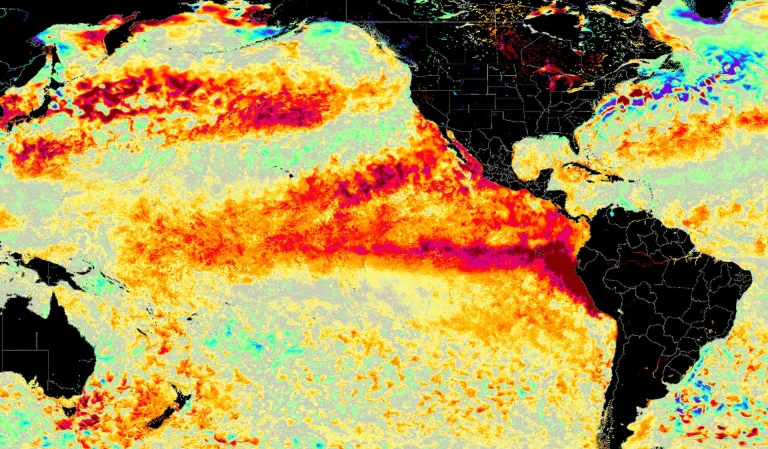
The El Nino phenomenon of 2026 is emerging as a significant climate event, reportedly more powerful than earlier instances noted in June 2015, 1997, and 1982. Recent observations indicate that ocean temperatures in the central Pacific are at notably high levels, exceeding those recorded during previous El Nino years. This unprecedented warming suggests a possible escalation in global weather impact.

Data collected from the Nino 3.4 region shows that, by June 17, 2026, sea-surface temperatures were over 0.58 degrees Celsius higher than the previous daily record for that date, marking 19 consecutive days of record highs. These figures reflect a concerning trend as they indicate a significant deviation from historical averages in the lead-up to powerful El Nino events.

Climate scientists define El Nino as a regular warming of the central and eastern tropical Pacific Ocean, which alters weather patterns worldwide. The potential consequences of strong El Nino events include droughts, floods, marine heatwaves, and shifts in storm behaviour. The unique aspect of the 2026 event is the elevated baseline temperatures due to ongoing global warming, raising questions about its future impact.

Comparison with Past El Nino Events

A recent comparison of sea-surface temperature anomaly maps from June across the years 1982, 1997, 2015, and 2026 highlights stark differences. In contrast to the earlier El Nino years, which developed in a climate with predominantly average ocean temperatures, 2026 is characterised by extensive areas of warmer waters, indicated by widespread red hues. This suggests an exceptionally warm global ocean which could influence atmospheric conditions markedly differently than in prior events.

The implications of this heightened oceanic temperature mean that the anticipated impact on weather patterns could also be more severe or altered. Historical data suggests that El Nino typically strengthens the heat transfer from ocean to atmosphere, often contributing to new global temperature records. However, with the oceans currently containing more residual heat than seen previously, the outcomes may diverge from established trends.

Meteorologists are currently vigilant, observing if the 2026 El Nino develops into a so-called Godzilla El Nino, reminiscent of those experienced in 1982-83, 1997-98, and 2015-16. Past occurrences of such events have led to drastic droughts in Asia and Australia, harsh floods in South America, and significant ecological disruption across tropical regions.

Impact on Regional Weather Patterns

The potential consequences for India are noteworthy, particularly as the southwest monsoon is reportedly facing challenges this season. Historically, strong El Nino events are known to weaken monsoon circulation, but experts point out that the current relationship between such events and weather patterns is increasingly complex. The current condition of warmer global oceans appears to be influencing regional climates in new ways.

As Pacific ocean temperatures continue to break records throughout June, climatologists assert that the next few months will be crucial in determining how El Nino behaves in an already warmer world. The ongoing developments in the tropical Pacific may provide critical insights into this evolving climatic scenario.

With the El Nino event in full development, the global community remains attentive to the impacts anticipated in various regions, as scientists work to refine their understanding of this multifaceted climate phenomenon.

Long or Short, get news the way you like. No ads. No redirections. Download Newspin and Stay Alert, The CSR Journal Mobile app, for fast, crisp, clean updates!

App Store –  https://apps.apple.com/in/app/newspin/id6746449540 

Google Play Store – https://play.google.com/store/apps/details?id=com.inventifweb.newspin&pcampaignid=web_share

Latest News

Popular Videos
