


Chinese Man Shocked to Find His 34th-Floor Apartment Doesn’t Exist in 32-Storey Building
The CSR Journal Magazine

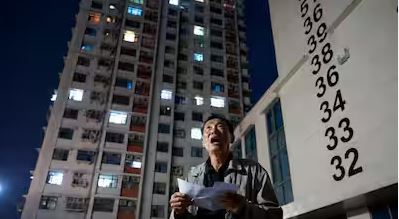
A Chinese man’s real estate purchase turned into an unusual situation when he realised the apartment he bought on the “34th floor” was in a building with only 32 floors. The man, known by the surname Shen, completed his transaction in 2013 for a property situated in a village close to Xi’an, the capital of Shaanxi province. He acquired a flat measuring 90 square metres that was marketed as being located on the 34th floor of a newly constructed building.

The price Shen paid, 2,646 yuan (approximately $400) per square metre, seemed attractive at the time, particularly as it was significantly lower than current market rates. This reduced price was attributed to the property’s limited rights status, which often applies to housing developments on collectively owned rural land as opposed to standard urban residential sites.

For some years, Shen had no reason to question the legitimacy of his purchase. He believed he owned a flat on the 34th floor until complications arose during the official ownership documentation process four years later. At that point, local authorities informed him that the building was officially recognised as having only 32 floors, leaving Shen bewildered about the existence of the higher-numbered floor mentioned in his purchase agreement.

Floor Numbering Practices Contribute to Confusion

The confusion regarding the floor numbers originated from the developer’s practice of omitting certain numbers deemed inauspicious, particularly the number four, which holds negative connotations in some Asian cultures. Consequently, the advertised floor numbers can diverge from the actual number of floors in the building.

In this case, the issue was not merely about the numbering system; official documents clearly classified the structure as a 32-storey building. This discrepancy raised legal questions about how the apartments marketed on higher floors should be treated. Residents in such developments may face complications concerning their ownership rights and property status.

The apartment Shen purchased fell within the category of properties developed under what is referred to as the “limited property rights” model. These types of properties are typically more affordable as they are constructed on rural collective land but come with significant regulatory and legal issues that may complicate ownership.

Public Reaction Highlights Risks of Unique Property Structures

This peculiar incident has attracted significant attention on social media, where many users expressed disbelief that someone could acquire a flat on a floor that is not officially recognised. The case exemplifies the risks involved in purchasing homes in developments with unconventional ownership arrangements.

Numerous commentators pointed out that it emphasises the vital need for prospective buyers to rigorously verify building approvals and property records before committing to significant investments. These kinds of unexpected surprises can lead to serious complications for new homeowners.

As the situation unfolds, it serves as a cautionary tale for potential investors in similar real estate developments. The ongoing discussions around Shen’s purchase highlight the importance of comprehending both the legal frameworks surrounding property rights and the implications of purchasing homes in areas where unverified practices may be common.

Long or Short, get news the way you like. No ads. No redirections. Download Newspin and Stay Alert, The CSR Journal Mobile app, for fast, crisp, clean updates!

App Store –  https://apps.apple.com/in/app/newspin/id6746449540 

Google Play Store – https://play.google.com/store/apps/details?id=com.inventifweb.newspin&pcampaignid=web_share

Latest News

Popular Videos
