


All Chief Ministers Attend NITI Aayog Meeting Led by Prime Minister Modi
The CSR Journal Magazine

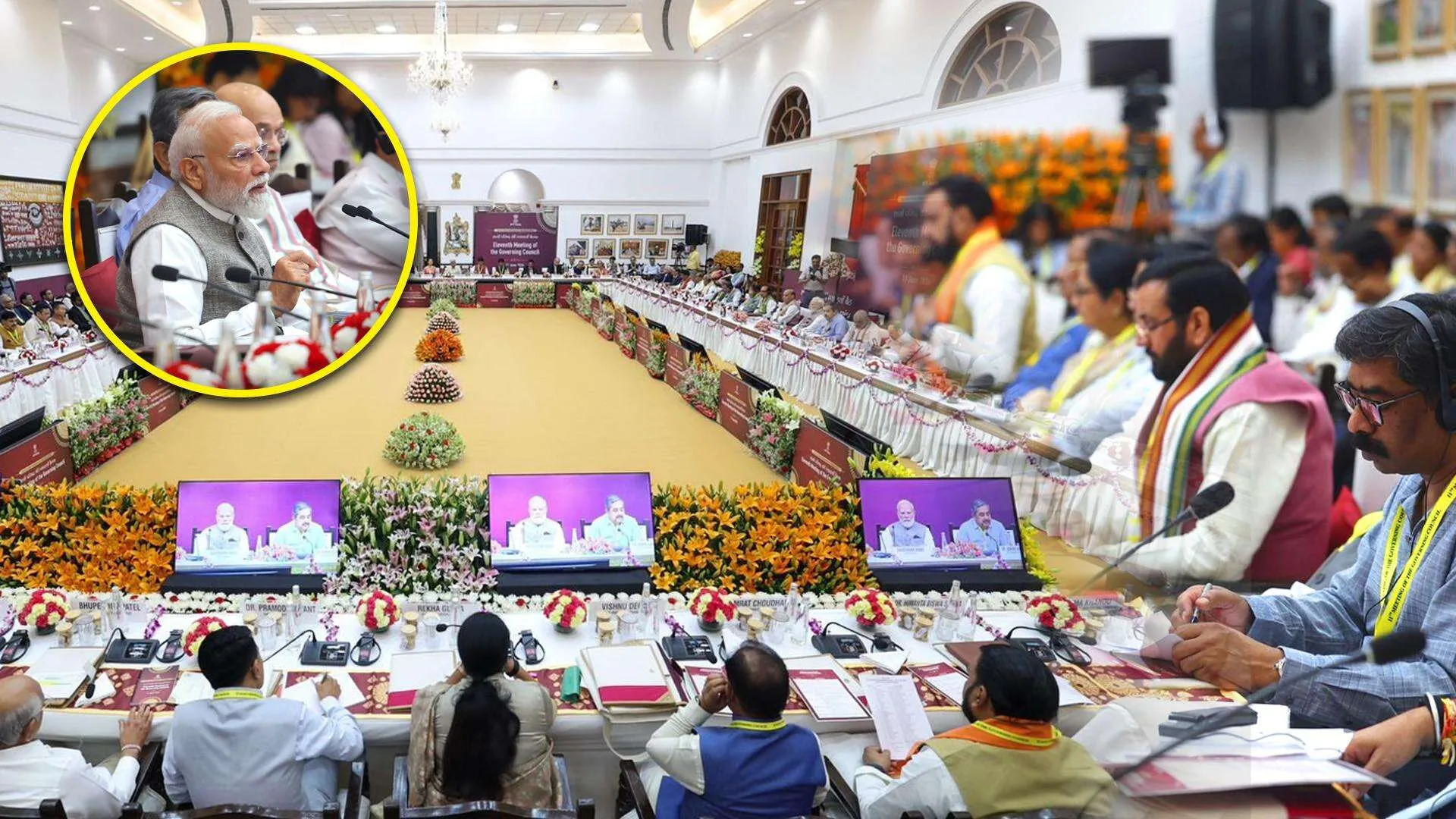
The recent NITI Aayog meeting, chaired by Prime Minister Narendra Modi, witnessed a rare occurrence with the full participation of all 28 chief ministers. This assembly diverged from the past trend characterised by boycotts and absences, especially from opposition-led states. The gathering took place on Thursday, making it one of the most attended sessions in recent history.

Notably, the 11th Governing Council meeting convened at the Rashtrapati Bhavan Cultural Centre included chief ministers from various states, such as Joseph Vijay from Tamil Nadu, DK Shivakumar from Karnataka, VD Satheesan from Kerala, and Omar Abdullah from Jammu and Kashmir. Alongside them were chief ministers from the ruling Bharatiya Janata Party (BJP), including Devendra Fadnavis, Yogi Adityanath, and Suvendu Adhikari.

In addition to the chief ministers, the meeting was attended by Lieutenant Governors of Union Territories and several Union ministers. The primary aim of the assembly was to foster national priorities and development strategies through collaborative effort between the Central government and state authorities.

Previous Meetings Highlight Participation Gaps

The previous gatherings of the NITI Aayog have seen notably reduced attendance, particularly among opposition leaders. In 2023, nine chief ministers were absent from the assembly, while in the year prior, four opposition state leaders, including West Bengal’s Mamata Banerjee and Bihar’s Nitish Kumar, chose to boycott the council meeting. This long-standing trend of limited participation contrasts sharply with the current year’s event, where full attendance was achieved.

Such attendance levels had not been seen for some time, making this meeting a standout gathering in comparison to past years. The full attendance of chief ministers signifies a shift in political dynamics, providing a platform for dialogue across party lines.

Prime Minister’s Vision for Development

During the meeting, Prime Minister Modi expressed optimism regarding India’s growth trajectory despite the prevailing global uncertainties. He stated that the collaborative efforts between the Centre and states are pivotal in realising the country’s ambitions for development, particularly in light of recent free trade agreements with various nations.

Modi emphasised the opportunities these agreements present for micro, small, and medium enterprises (MSMEs), which can elevate their standards to compete globally. He pointed out the need for quality education and demand-driven skilling as fundamental elements in fostering employment for India’s youth.

The Prime Minister also underscored the importance of women-led development as a cornerstone for achieving a developed India, referring to the contributions of women across various sectors. He encouraged state governments to prioritise initiatives that support education, safety, and the empowerment of women to optimally harness their potential.

Following the meeting, several chief ministers individually engaged with Prime Minister Modi, discussing their respective state priorities and demands. This engagement exemplifies a renewed commitment to cooperative governance and dialogue, further solidifying the framework for collaborative federalism in India.

Long or Short, get news the way you like. No ads. No redirections. Download Newspin and Stay Alert, The CSR Journal Mobile app, for fast, crisp, clean updates!

App Store –  https://apps.apple.com/in/app/newspin/id6746449540 

Google Play Store – https://play.google.com/store/apps/details?id=com.inventifweb.newspin&pcampaignid=web_share

Latest News

Popular Videos
