


US Reopens Strait of Hormuz as Iran Deal Takes Effect, Shipping Resumes
The CSR Journal Magazine

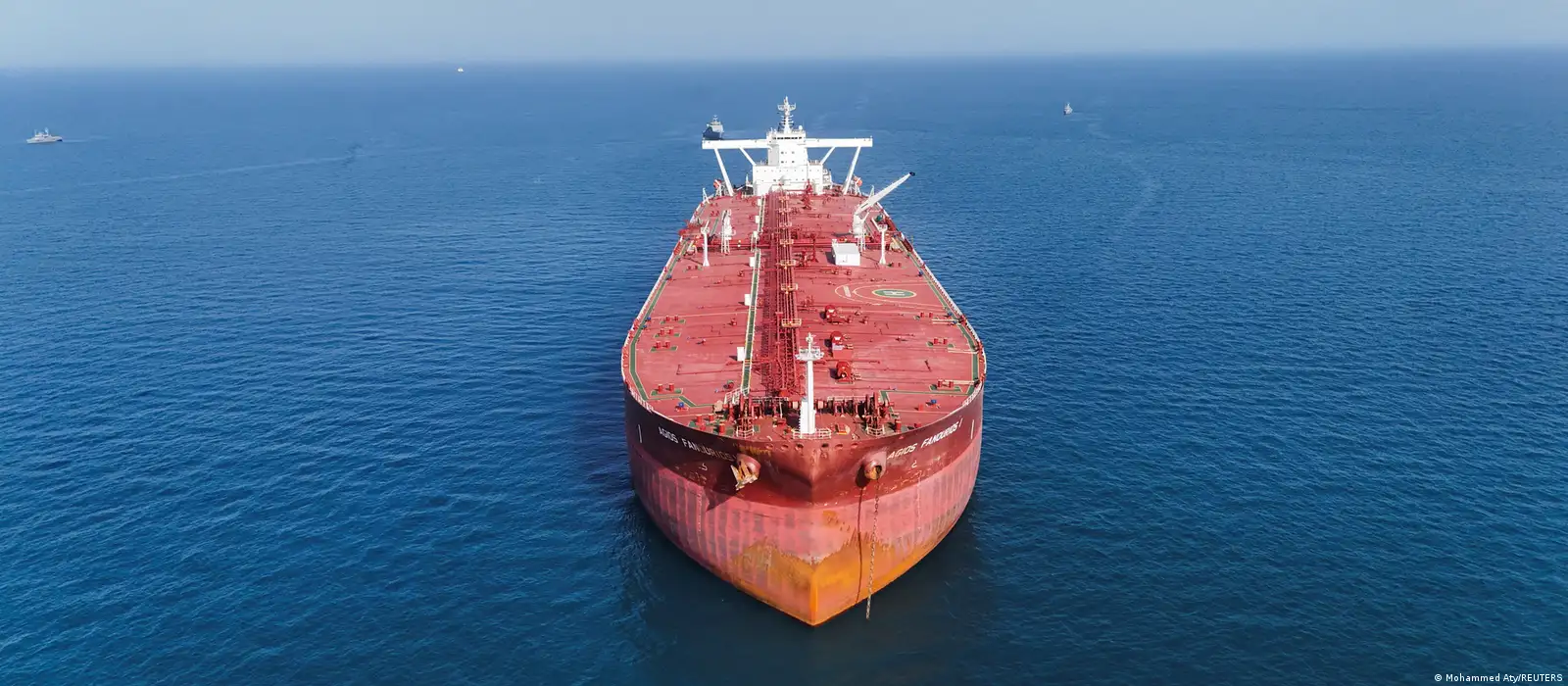
The United States on Thursday lifted its blockade of Iran, allowing oil tankers to resume passage through the Strait of Hormuz after a tentative agreement aimed at ending the conflict between Washington and Tehran came into effect. Shipping activity began recovering almost immediately after the deal took hold, reopening a critical route that had remained largely unusable for months.

However, uncertainty over the next phase of the agreement emerged after US Vice President JD Vance indicated that a planned visit to Switzerland for a ceremonial signing of the accord could be delayed. At the same time, Iranian Supreme Leader Ayatollah Mojtaba Khamenei endorsed direct negotiations with the United States, signalling support for diplomatic engagement despite ongoing differences.

Questions Emerge Over Switzerland Ceremony

Speaking to reporters at the White House, Vance said the administration still intended to travel to Switzerland but that the timing had not been finalised.

“Our plan is to go to Switzerland. I don’t know exactly when,” he said. “I suspect this weekend, but I’m not sure.”

The delay has raised fresh questions about an agreement that President Donald Trump said he had signed to avoid “economic catastrophe” in the United States.

Trump signed the agreement with Iran on Wednesday while attending a dinner with French President Emmanuel Macron at the Palace of Versailles. The accord immediately extended the ceasefire and established a 60-day window for negotiations on broader issues.

According to Trump, the agreement was intended to prevent further economic damage after the conflict pushed up oil prices, disrupted financial markets and added to inflationary pressures. He has also said he did not want to be compared with former US President Herbert Hoover.

Vance Defends Agreement Amid Criticism

Although Vance had initially expressed reservations about military action against Iran, he has increasingly emerged as one of the administration’s principal voices on the conflict and a strong supporter of the agreement.

Responding to criticism that the deal conceded too much, he repeatedly argued that it would compel Iran to “change their behaviour”.

Vance also dismissed accusations that the administration had handled communications poorly.

“I don’t think our public messaging has been chaotic,” he said.

Pakistan, which had been expected to host the signing ceremony near Lucerne, announced that it was postponing a visit by senior officials, including Prime Minister Shehbaz Sharif. Officials said the ceremony had become less urgent because both sides had already signed the agreement.

Warning to Israel and Security Measures

Vance also issued a warning to Israel, whose military operations against the Iran-backed Hezbollah group in Lebanon complicated diplomatic efforts during the conflict.

“Trump is the only head of state in the entire world who is sympathetic to the nation of Israel at this moment in time,” Vance said. “And he happens to be the head of state of the world’s superpower.”

He added that more than 12.5 million barrels of oil had passed through the Strait of Hormuz on Wednesday night and said the easing of restrictions demonstrated that the United States was “honouring our end of the early part of the agreement on the military side.”

US Central Command said American naval forces would remain in the region to ensure that “all aspects of the agreement are adhered to, obeyed and in full force and effect.”

Shipping Activity Begins to Recover

Shipping traffic started to increase after the agreement took effect, with at least two Iranian oil tankers carrying a combined 3.8 million barrels of crude reportedly passing through the former blockade zone without interference, according to shipping tracking data.

Iranian state media reported that operations at southern ports had “normalized”, although it noted that the strait remained under Iranian military supervision and that vessels were still required to coordinate transit.

Lloyd’s List Intelligence said major shipping companies had resumed using the route for the first time in 110 days. Editor-in-chief Richard Meade said vessels owned by leading operators had been effectively stranded since February.

According to the publication, tankers linked to Grimaldi Group, Cosco, Knutsen and NYK, as well as two sanctioned Iranian-flagged vessels owned by the National Iranian Tanker Company, had already passed through the waterway.

Phillip Belcher, marine director at Intertanko, said the central route through the strait remained closed and that around 80 naval mines still had to be cleared. However, vessels were making use of alternative northern and southern routes through Iranian and Omani waters.

Nuclear Talks and Sanctions Relief

The agreement calls for a permanent end to hostilities and opens a 60-day period of negotiations aimed at reaching a final arrangement over Iran’s nuclear programme, although Trump has kept open the possibility of renewed military action.

Under the deal, Iran’s stockpile of highly enriched uranium, believed to be buried under debris, is required to be diluted under international supervision. The agreement also reiterates Iran’s pledge not to develop or acquire nuclear weapons, while broader issues relating to the nuclear programme remain subject to further talks.

The accord immediately lifts US-backed sanctions on Iran, allowing Tehran to resume unrestricted oil exports.

However, European Union foreign policy chief Kaja Kallas said the bloc would maintain its own sanctions for the time being.

“We are not there yet,” she said, while noting that member states could consider easing restrictions at a later stage.

Khamenei Supports Future Negotiations

Ayatollah Mojtaba Khamenei, who has not appeared publicly since being wounded in an attack at the beginning of the conflict, issued his first remarks on the agreement and endorsed direct talks with Washington.

“It is obvious that the face-to-face negotiations that will be held in the future will not mean accepting the enemy’s opinion,” he said.

His comments came as the agreement reopened one of the world’s most important oil shipping routes and set the stage for what is expected to be a complex round of negotiations over Iran’s nuclear programme and the future of relations between Tehran and Washington.

Long or Short, get news the way you like. No ads. No redirections. Download Newspin and Stay Alert, The CSR Journal Mobile app, for fast, crisp, clean updates!

App Store –  https://apps.apple.com/in/app/newspin/id6746449540 

Google Play Store – https://play.google.com/store/apps/details?id=com.inventifweb.newspin&pcampaignid=web_share

Latest News

Popular Videos
