


US, Iran Agree on 60-Day Roadmap After High-Level Switzerland Talks End
The CSR Journal Magazine

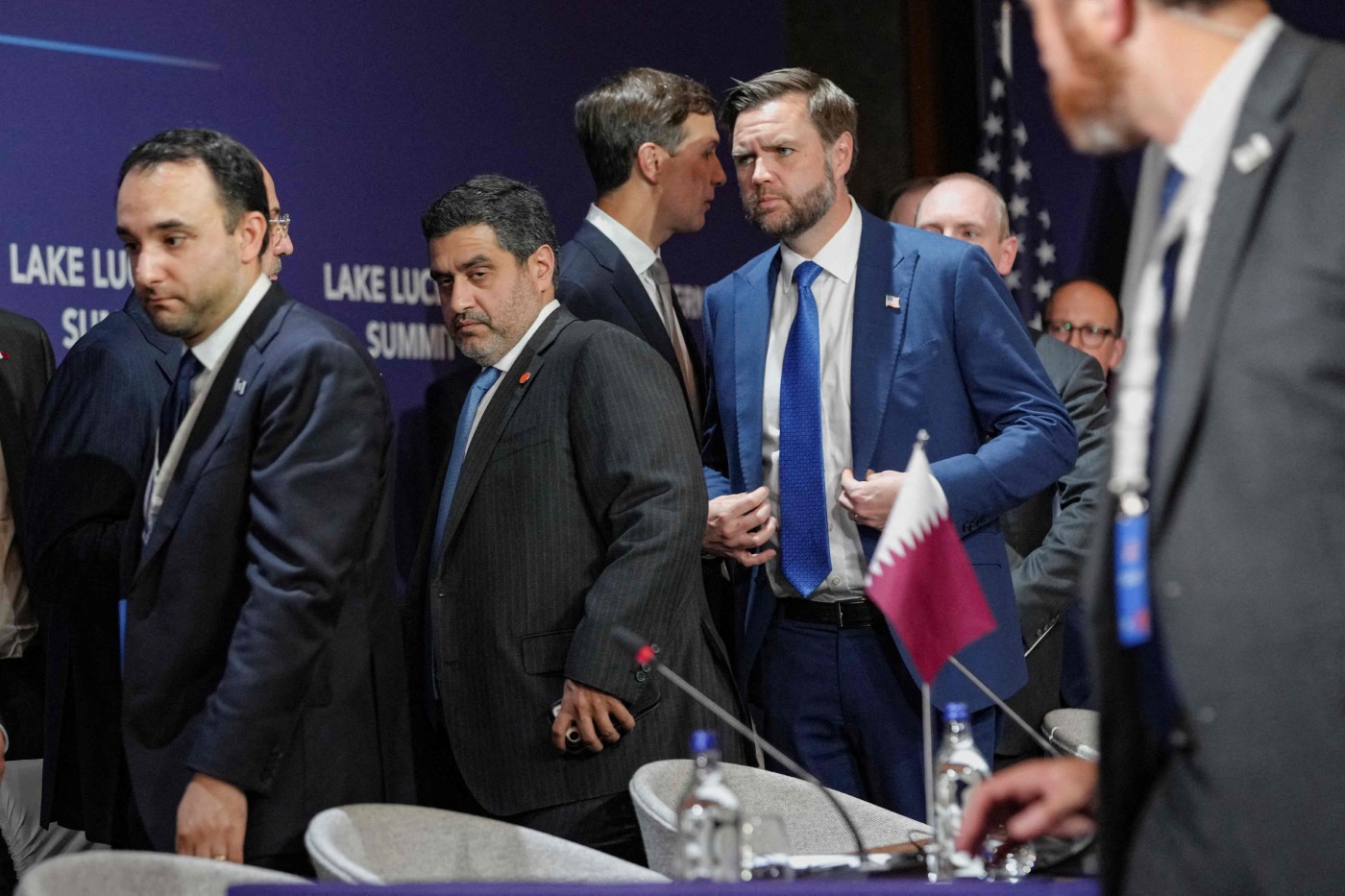
High-level negotiations between the United States and Iran in Switzerland concluded early Monday, with mediators Pakistan and Qatar announcing that the two sides had agreed on a 60-day roadmap aimed at reaching a permanent agreement under the framework of the recently signed 14-point memorandum of understanding (MoU).

While political-level discussions have ended, technical teams are expected to remain in Burgenstock throughout the week to work on implementation details. Officials described the talks as constructive despite tensions over Lebanon, the Strait of Hormuz and sharp exchanges between US President Donald Trump and Iranian leaders.

Mediators Announce 60-Day Roadmap

The first round of talks under the Islamabad Memorandum of Understanding concluded on Sunday, with delegations from the United States, Iran, Pakistan and Qatar participating.

In a joint statement, Qatar and Pakistan said the discussions took place in a “positive and constructive atmosphere” and had made “encouraging progress” towards resolving key issues between Washington and Tehran.

The most significant outcome of the meeting was the approval of a roadmap aimed at securing a final agreement within 60 days.

Technical-level negotiations are set to begin immediately, with discussions moving beyond political commitments towards arrangements concerning implementation, compliance and verification.

A direct communication mechanism has also been established to prevent misunderstandings and reduce the risk of escalation during the negotiation process.

Iran’s Foreign Ministry spokesperson Esmail Baghaei said “good progress was made” during the discussions.

Technical Teams to Continue Work

According to the mediators, senior political-level negotiations have concluded, but technical teams are expected to remain in Switzerland throughout the week.

The working groups will focus on issues relating to nuclear matters, sanctions, monitoring mechanisms and dispute resolution procedures linked to the implementation of the agreement.

A high-level committee comprising representatives of both countries has also been created to oversee the mediation process.

Chief negotiators will provide regular updates to the committee as discussions advance.

The US delegation was led by Vice President JD Vance and included special envoys Steve Witkoff and Jared Kushner.

Iran was represented by Foreign Minister Abbas Araghchi and chief negotiator Mohammad Bagher Ghalibaf.

Pakistani Prime Minister Shehbaz Sharif, Army chief Asim Munir and Qatar Prime Minister Sheikh Mohammed bin Abdulrahman Al Thani also participated in the talks.

Lebanon and Strait of Hormuz Dominate Discussions

One of the major issues discussed was the situation in Lebanon, where continued fighting between Israel and Hezbollah has threatened broader diplomatic efforts.

Iran initially insisted that the negotiations focus on Lebanon, arguing that the agreement was intended to halt conflicts across the region.

A ceasefire brokered on Saturday appeared to be holding, with Israel announcing that movement restrictions near the Lebanese border would be lifted on Monday.

To prevent renewed clashes, the parties agreed to establish a deconfliction cell involving the United States, Iran and Lebanon, with Qatar and Pakistan acting as facilitators.

Negotiators also discussed mechanisms to ensure safe commercial shipping through the Strait of Hormuz, one of the world’s most important maritime trade routes.

Although Iran announced over the weekend that it had once again closed the strait, the United States maintained that commercial traffic continued uninterrupted.

Trump Threats Complicate Talks

The negotiations opened amid tensions after President Donald Trump warned Iran against supporting Hezbollah and threatened further military action.

“Iran must immediately stop their highly paid PROXIES in Lebanon from causing trouble. If they don’t, we’ll hit Iran very hard again, just like we did last week, only harder!!!” Trump wrote on social media.

Iranian chief negotiator Mohammad Bagher Ghalibaf responded on X, saying, “They would do better to be careful about their statements. Our armed forces are prepared to respond to them in a different manner. They may keep talking, it is we who act.”

Iranian state media later reported that the talks had entered a “difficult phase” and were temporarily suspended after what it described as insulting remarks by the US President.

However, behind-the-scenes mediation efforts helped both sides remain engaged.

Speaking at the opening of the negotiations, Vance struck an optimistic tone.

“The question before us now is how much more can we accomplish together? Can we turn over a new leaf?” he said.

He also asked whether the two sides could “change relations in the Middle East permanently”.

Nuclear Programme Remains Key Challenge

Washington is seeking to keep Iran engaged in negotiations over its nuclear programme amid concerns that it could have military applications, allegations that Tehran denies.

The agreement signed last week by President Trump and Iranian President Masoud Pezeshkian immediately allowed Iran to resume unrestricted oil exports and paved the way for access to billions of dollars in frozen assets.

According to a member of the Iranian negotiating team, draft wording has already been agreed for temporary sanctions waivers covering oil and petroleum derivatives.

The agreement also calls for Iran to dilute its stockpile of highly enriched uranium.

However, President Pezeshkian reiterated on Sunday that Tehran would not abandon uranium enrichment.

“We will never back down from the right to enrich uranium, and the other side is also forced to accept it,” he said.

With the political phase of negotiations now complete, technical teams face the challenge of translating broad understandings into a lasting agreement, while unresolved issues relating to Lebanon, maritime security and Iran’s nuclear programme continue to test the fragile diplomatic process.

Long or Short, get news the way you like. No ads. No redirections. Download Newspin and Stay Alert, The CSR Journal Mobile app, for fast, crisp, clean updates!

App Store –  https://apps.apple.com/in/app/newspin/id6746449540 

Google Play Store – https://play.google.com/store/apps/details?id=com.inventifweb.newspin&pcampaignid=web_share

Latest News

Popular Videos
