


app-store-logo
play-store-logo
February 27, 2026

Total Lunar Eclipse 2026: Viewing Opportunities for the Blood Moon in India
The CSR Journal Magazine

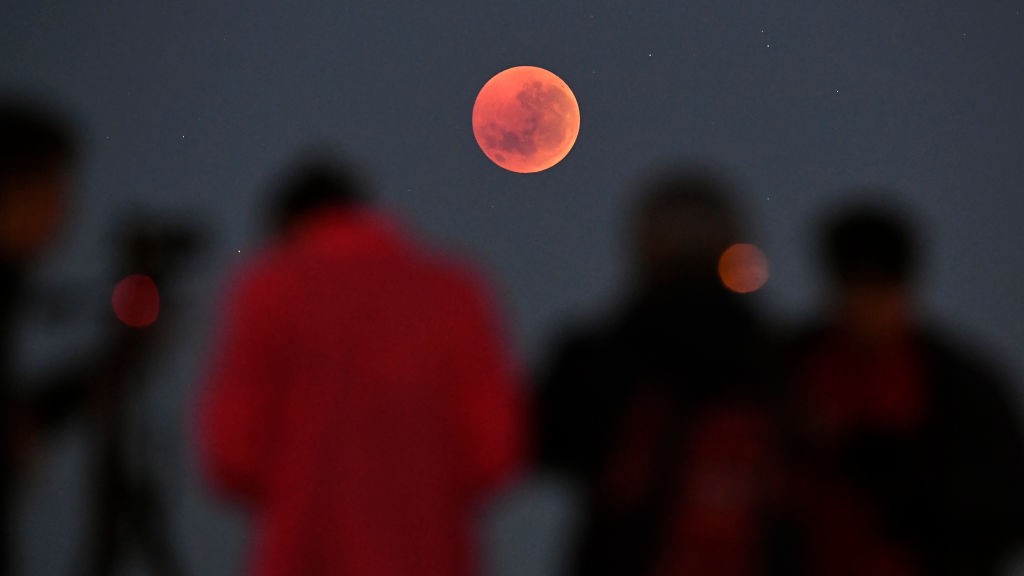
In 2026, astronomy enthusiasts across India can anticipate a remarkable celestial event. A total lunar eclipse, commonly referred to as a Blood Moon, is set to take place on March 3. This phenomenon occurs when the Earth positions itself directly between the Sun and the Moon, obstructing sunlight and casting a shadow upon the Moon. As a result, the Moon often appears with a reddish tint during this period, a visual effect known as a Blood Moon.

Details of the Lunar Eclipse Phases

The total lunar eclipse will be observed in multiple stages on March 3, 2026. The phases are outlined by the following timings in Indian Standard Time (IST): the penumbral phase will initiate at approximately 2:14 PM, followed by the beginning of the partial eclipse at 3:20 PM. Totality, when the Moon is fully within Earth’s shadow, will commence at 4:34 PM, reaching its maximum eclipse at around 5:03 PM, characterized by the deepest red tone. The totality will conclude at 5:32 PM, and the entire eclipse will finish by 6:48 PM.

Visibility Across Different Regions in India

Not all regions in India will witness the complete duration of the eclipse. Since the Moon is expected to rise while the eclipse progresses, different areas will experience various viewing opportunities. For instance, many locations will see the transition of the Moon into its red phase shortly after moonrise, providing visual enjoyment for about 15 to 25 minutes. This last portion of the eclipse offers a stunning sight for observers.

Best Locations for Observation

Optimal viewing locations for the Blood Moon will be along the eastern horizon shortly after sunset. Regions such as Northeast India, including Assam, Arunachal Pradesh, and Meghalaya, may witness the Moon emerging already in a deep red hue, providing a prolonged viewing experience. Eastern cities like Kolkata, Bhubaneswar, and Patna are expected to offer good visibility of the later phases of the eclipse. In contrast, major cities across Northern, Central, Western, and Southern India, including Delhi, Mumbai, Bengaluru, Chennai, and Hyderabad, will largely experience the ending partial stages just after moonrise.

Safe Viewing Practices

Watching a lunar eclipse is entirely safe with the naked eye, unlike a solar eclipse. Therefore, protective eyewear is not necessary for this event. For a more detailed view, binoculars or a small telescope can enhance the experience without compromising safety.

Preparation for Viewing the Eclipse

To ensure a satisfactory viewing experience, observers are advised to step outside around sunset before the Moon rises. It is essential to select an open location facing east, where the view is unobstructed. Checking local weather conditions for clear skies will further enhance visibility. Binoculars can be utilized for a closer examination of the lunar surface details during the eclipse.

Long or Short, get news the way you like. No ads. No redirections. Download Newspin and Stay Alert, The CSR Journal Mobile app, for fast, crisp, clean updates!

App Store –  https://apps.apple.com/in/app/newspin/id6746449540 

Google Play Store – https://play.google.com/store/apps/details?id=com.inventifweb.newspin&pcampaignid=web_share

Latest News

Popular Videos
