


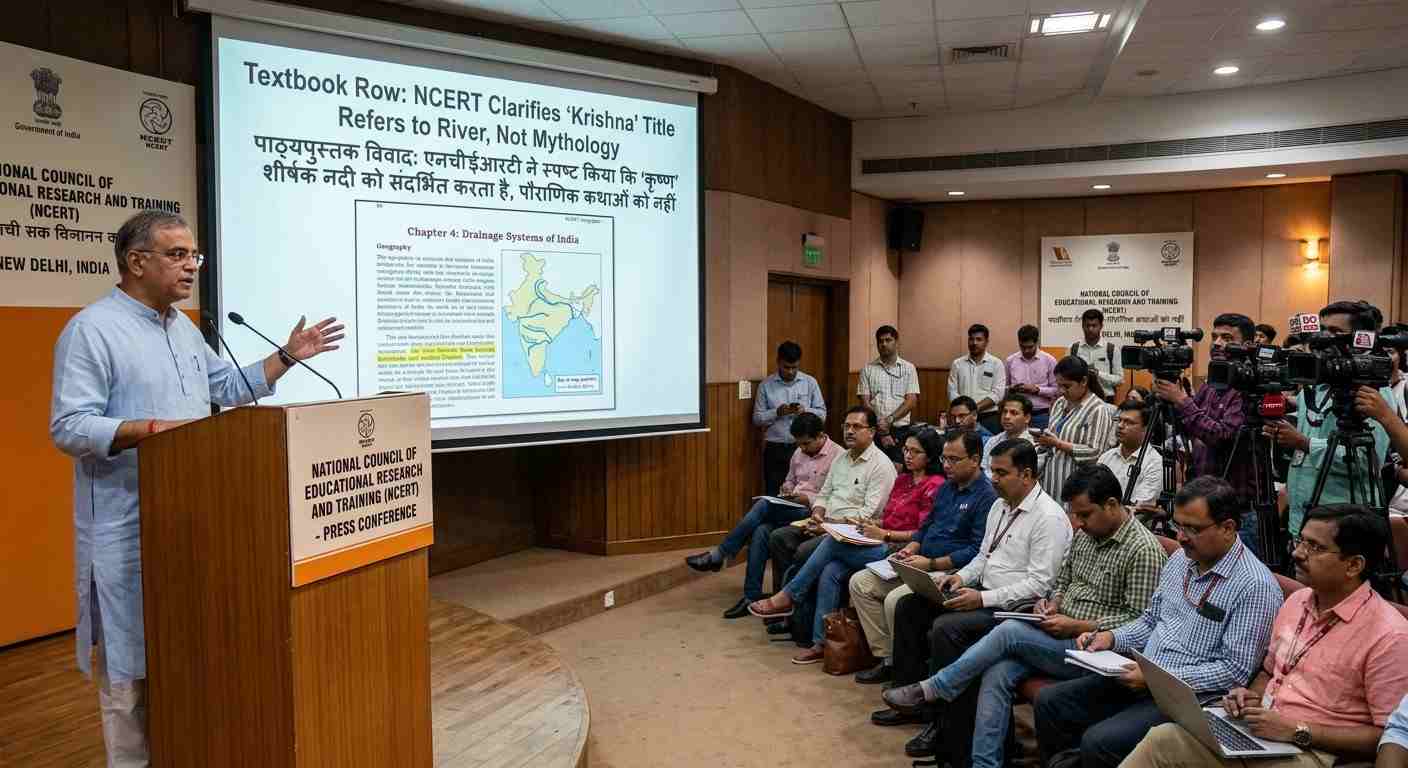
“Textbook Row: NCERT Clarifies ‘Krishna’ Title Refers to River, Not Mythology
The CSR Journal Magazine

The National Council of Educational Research and Training (NCERT) has addressed allegations regarding its Class 6 Kannada R3 language textbook, specifically regarding its title, Krishna. The body firmly stated that the title is indicative of the Krishna River, aligning with its tradition of naming textbooks after notable Indian rivers. This response follows critiques that suggested the book’s title had inappropriate religious connotations.

In its official statement, NCERT pointed out that other language textbooks in the R3 series are also named after rivers, with the Hindi textbook titled Ganga, the English textbook Kaveri, and the Urdu textbook Jamuna, which is the transliteration of Yamuna. The decision to name the Kannada textbook Krishna is rooted in both geographical significance and cultural relevance to the region of Karnataka.

NCERT emphasised that this naming convention is consistent with the National Education Policy (NEP) 2020 and the National Curriculum Framework for School Education (NCF-SE) 2023, both of which advocate for learning that is contextual and culturally significant.

No Evidence of Bias in Dietary Content

The council also responded to claims suggesting that the textbook promotes vegetarianism while sidelining non-vegetarian dietary practices. In its clarification, NCERT referred to Chapter 6, titled Health is Wealth, which aims to educate students about balanced nutrition, physical activity, and hygiene as integral elements of healthy living.

This chapter features a specific section on balanced diets, highlighting the nutritional value of items such as milk, green leafy vegetables, and fruits. Notably, the accompanying illustration on page 63 showcases a variety of both vegetarian and non-vegetarian food items. NCERT indicated that this visual representation supports the objective of providing a comprehensive understanding of healthful eating habits.

Furthermore, the chapter discusses traditional healthy foods from various Indian states, thereby connecting nutrition education to the diverse culinary practices found across the country. Students are prompted to consider the question, “What is a balanced diet?” which NCERT views as a way to foster an inclusive perspective on dietary choices rather than elevating one practice over another. The statement clarified that vegetarianism is neither advocated nor opposed within the text.

Increased Scrutiny of Educational Material

This statement by NCERT comes as scrutiny surrounding textbook content intensifies, particularly regarding ideological influences in school curricula. The council aims to clarify questions and concerns over the methodological framing of educational materials by providing specific chapters and illustrations from the textbook.

NCERT’s response underscores its commitment to delivering high-quality and inclusive educational resources while remaining open to constructive feedback from various stakeholders. This continuing development of textbooks is designed to align with the NEP 2020 and NCF-SE 2023’s goals, ensuring that the materials foster an engaging learning environment.

As the academic session approaches, NCERT’s efforts to address these criticisms may play a crucial role in shaping perceptions of its educational content. The organisation’s dedication to transparency and clarity may also help alleviate concerns regarding the ideological motivations behind its textbook revisions.

Long or Short, get news the way you like. No ads. No redirections. Download Newspin and Stay Alert, The CSR Journal Mobile app, for fast, crisp, clean updates!

App Store –  https://apps.apple.com/in/app/newspin/id6746449540 

Google Play Store – https://play.google.com/store/apps/details?id=com.inventifweb.newspin&pcampaignid=web_share

Latest News

Popular Videos
