


Tamil Nadu at 85.15%, West Bengal at 92.88% Mark Record Post-Independence Turnout
The CSR Journal Magazine

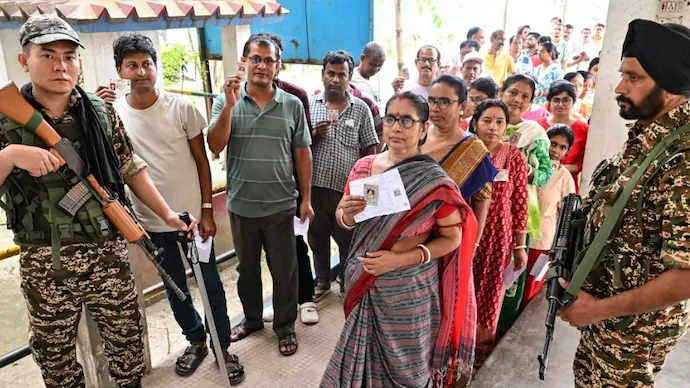
Tamil Nadu achieved an impressive voter turnout of 85.15 per cent on Thursday, while West Bengal recorded an even higher turnout of 92.88 per cent during the first phase of polling, which covered 152 out of its 294 seats. According to the Election Commission of India, these figures represent the highest turnouts seen since India gained independence.

Despite the sky-high turnout rates, both states experienced significant reductions in their electoral rolls between 2021 and 2026. Tamil Nadu saw a decrease of 56.4 lakh names, amounting to a nearly nine per cent decline. In West Bengal, Phase 1 polling resulted in the loss of 18.2 lakh names, equivalent to a reduction of 4.8 per cent.

When applying the 2026 voter turnout percentages to the 2021 electoral rolls, the turnout in Tamil Nadu would adjust to 77.5 per cent, which falls short of its record of 78.3 per cent established in 2011. For West Bengal, while Phase 1 remains the leader in turnout, it is lower than its previous record by 4.5 percentage points.

Comparative Historical Context and Gender Dynamics

The current electoral participation does not surpass previous spikes in voter turnout. For instance, Tamil Nadu experienced a surge of approximately 24 points between 1957 and 1962, largely due to an expanding franchise. Similarly, West Bengal saw a gain of 20.8 points between 1977 and 1982, driven by a renewed political landscape after the Emergency period.

What distinguishes the current election is the sheer level of turnout. Since independence, no Assembly elections had surpassed 78.3 per cent in Tamil Nadu and 84.7 per cent in West Bengal, making these results notable. Additionally, female voters exceeded male voters in both states, achieving a higher turnout by 2.2 percentage points in Tamil Nadu and 1.8 percentage points in West Bengal during Phase 1.

In Tamil Nadu, the capital city of Chennai was a significant contributor to the surge, with an average increase of 19.4 points across 36 seats, nearly doubling the state average of 11.3 points. However, the Cauvery Delta region lagged behind, achieving only a 7.8-point average rise, while Vedaranyam in Nagapattinam recorded the lowest increase at just 3.2 points.

Electoral Roll Reductions and Future Considerations

Turnout is evaluated based on the ratio of votes cast to registered electors. Typically, electoral rolls see an annual growth of 1 to 2 per cent. However, both Tamil Nadu and West Bengal deviated from this norm, with Tamil Nadu experiencing a decline of nine per cent and West Bengal a reduction of 4.8 per cent in their voter lists.

This trend aligns with the objectives of the Election Commission’s Special Intensive Revision initiative, aimed at cleaning up electoral rolls before elections. However, the commission has yet to release detailed information regarding the names removed and the rationale behind these decisions.

The significance of “record participation” may extend beyond a mere statistic, as it often finds its way into political campaign materials and speeches. If the process of removing names from the electoral rolls occurred unevenly across different demographics, the implications of the 2026 voter engagement may be viewed differently in retrospect. The second phase of elections in West Bengal is scheduled for April 29, which will encompass the remaining 142 seats. Observing whether a similar turnout trend materialises will be pivotal for interpreting the 2026 electoral outcomes.

Long or Short, get news the way you like. No ads. No redirections. Download Newspin and Stay Alert, The CSR Journal Mobile app, for fast, crisp, clean updates!

App Store –  https://apps.apple.com/in/app/newspin/id6746449540 

Google Play Store – https://play.google.com/store/apps/details?id=com.inventifweb.newspin&pcampaignid=web_share

Latest News

Popular Videos
