


Supreme Court Dismisses PIL for Daily Preamble Recitation in Schools
The CSR Journal Magazine

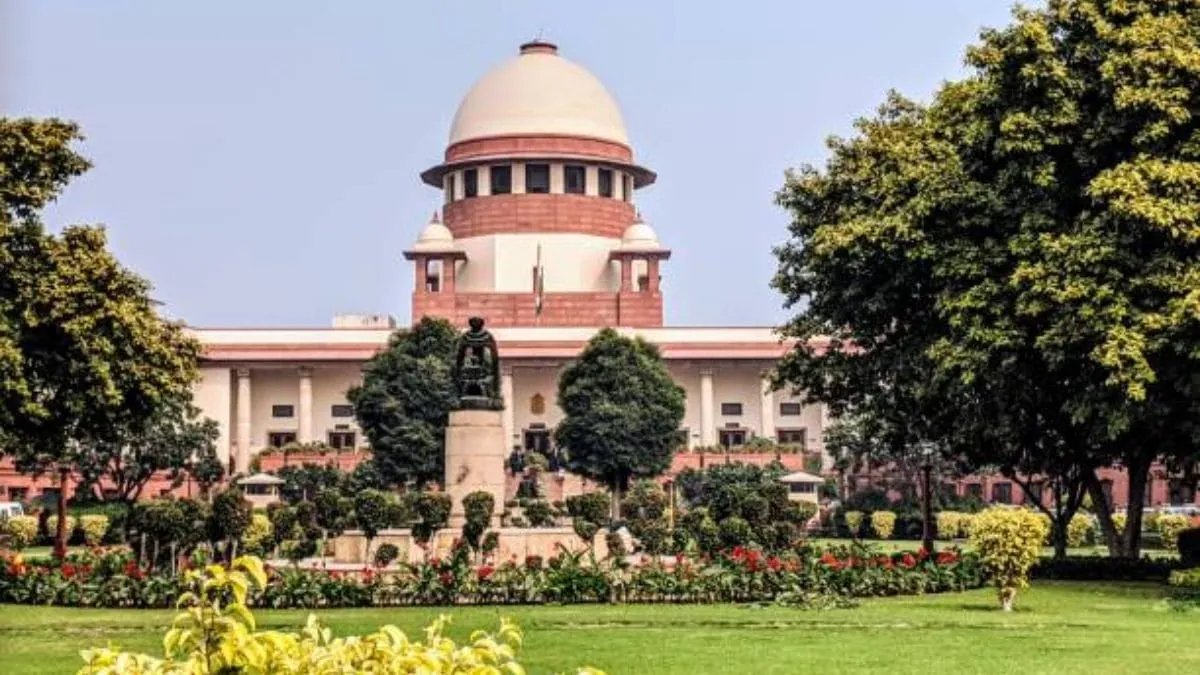
The Supreme Court has rejected a public interest litigation (PIL) that sought a nationwide mandate for the recitation of the Preamble to the Constitution during school morning assemblies. This decision was made on October 6, during proceedings led by a bench comprising Justices Vikram Nath, Sandeep Mehta, and Augustine George Masih. The court highlighted that the Preamble is already an integral part of the educational curriculum, being taught to students from Class 6 onwards.

Details of the Petition

The PIL was filed by Dheeraj Kumar, who serves as an Assistant Professor at Rajdhani College, which is part of Delhi University. Kumar’s request sought directions for the Union Ministry of Education and the Central Board of Secondary Education (CBSE) to create a national policy aimed at enhancing constitutional awareness among schoolchildren. He argued that daily collective recitation of the Preamble, akin to the practice surrounding the National Anthem, would instil constitutional values in children from a young age.

Kumar’s submission included references to initiatives undertaken in states such as Rajasthan, Maharashtra, and Karnataka, where local directives have encouraged schools to incorporate the Preamble recitation in their morning rituals. By presenting these examples, the petitioner advocated for a more uniform national approach towards promoting constitutional education in schools across the country.

Additionally, Kumar drew attention to a circular issued by the CBSE in May 2025, which encouraged schools to include daily positive affirmations during assembly sessions. He posited that regular recitation of the Preamble during these gatherings could provide a significant means of nurturing civic awareness and constitutional values among students.

Supreme Court’s Reasoning

The bench also indicated that any further mandate may not be an appropriate measure, given the existing educational policies that are in place. The justices emphasised the need for a balanced approach towards educational content and methods, reaffirming their belief in the role that schools already play in teaching fundamental constitutional values.

This decision by the Supreme Court not only delineates the court’s limits concerning educational policy but also reflects an implicit trust in established mechanisms for teaching civic responsibility. As the case concludes, it remains imperative for educational stakeholders to consider alternative methods for enhancing civic awareness without requiring new legal mandates.

Long or Short, get news the way you like. No ads. No redirections. Download Newspin and Stay Alert, The CSR Journal Mobile app, for fast, crisp, clean updates!

App Store –  https://apps.apple.com/in/app/newspin/id6746449540 

Google Play Store – https://play.google.com/store/apps/details?id=com.inventifweb.newspin&pcampaignid=web_share

Latest News

Popular Videos
