


app-store-logo
play-store-logo
February 13, 2026

Spotify’s Engineers Transition to AI-Driven Coding with Honk AI
The CSR Journal Magazine

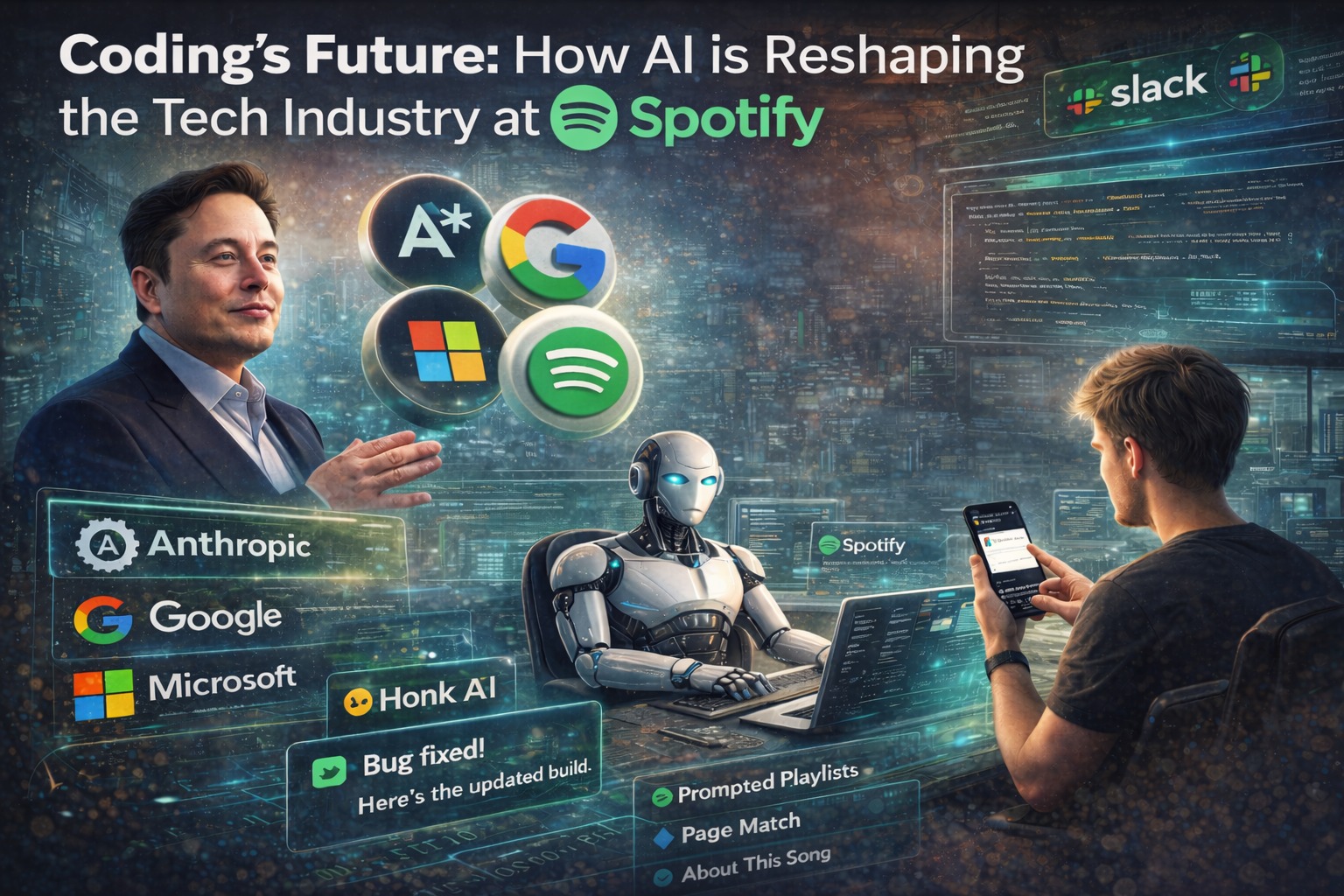
Elon Musk recently stated that the coding profession may see significant reductions by the close of 2026. While this assertion might seem exaggerated, evidence is emerging that supports a growing shift towards automation in the tech industry. Companies are adopting various forms of automation, with coding being prominently affected. Major firms such as Anthropic, Google, and Microsoft are increasingly implementing artificial intelligence to generate complex software. Spotify has now joined this trend.

Internal Advancements in Spotify

During a fourth-quarter earnings call, Spotify’s co-CEO, Gustav Soderstrom, disclosed that the company’s leading engineers have not engaged in coding activities since December 2025. This statement highlighted the company’s integration of artificial intelligence into its development process. At the core of Spotify’s AI transformation is an internal system known as Honk AI, which operates on Claude Code and integrates with a Slack-based “ChatOps” system to streamline build pipelines.

Honk AI’s Role in Development

Honk AI is fundamentally altering how Spotify conducts its development work. The system handles various tasks, such as bug fixes, feature updates, and code deployments in real time. Engineers at Spotify are now directing the AI to perform coding tasks rather than writing the code themselves, and their role has shifted to reviewing and approving the AI-generated output. Gustav illustrated this with a practical example: an engineer can request Honk to correct a bug during their morning commute using Slack on their phone. Once the task is completed, the engineer receives the updated app version on their device, allowing them to merge it into production before arriving at the office.

Accelerated Development Through AI

Spotify reports that the integration of AI has led to a notable increase in development speed. In 2025, the company introduced over 50 new features and modifications to its streaming application. Early in 2026, they launched AI-driven features like Prompted Playlists, Page Match for audiobooks, and About This Song within a matter of weeks. According to Gustav, the rapid pace and scale of these releases would not have been achievable without the assistance of AI in supporting the engineers.

Engineers’ Evolving Roles

Despite the heavy involvement of AI in coding tasks at Spotify, the company clarifies that engineers remain integral to the development process. Their responsibilities are evolving, focusing on overseeing the outcomes generated by AI instead of engaging in repetitive coding. This shift allows them to concentrate on architectural decisions, product strategies, and tackling complex problems. As Gustav described, Honk AI manages the execution, while human engineers provide essential judgment.

The Future of AI in Spotify

The work environment for software engineers at Spotify is changing in a manner similar to trends observed in other tech firms exploring AI-enhanced development processes. Gustav expressed optimism regarding the future of such technologies, stating that this development represents the beginning rather than the culmination of AI’s potential in the workplace.

Long or Short, get news the way you like. No ads. No redirections. Download Newspin and Stay Alert, The CSR Journal Mobile app, for fast, crisp, clean updates!

Latest News

Popular Videos
