



Scientists Create Early-Stage Human Egg Cells From Blood Samples

The CSR Journal Magazine

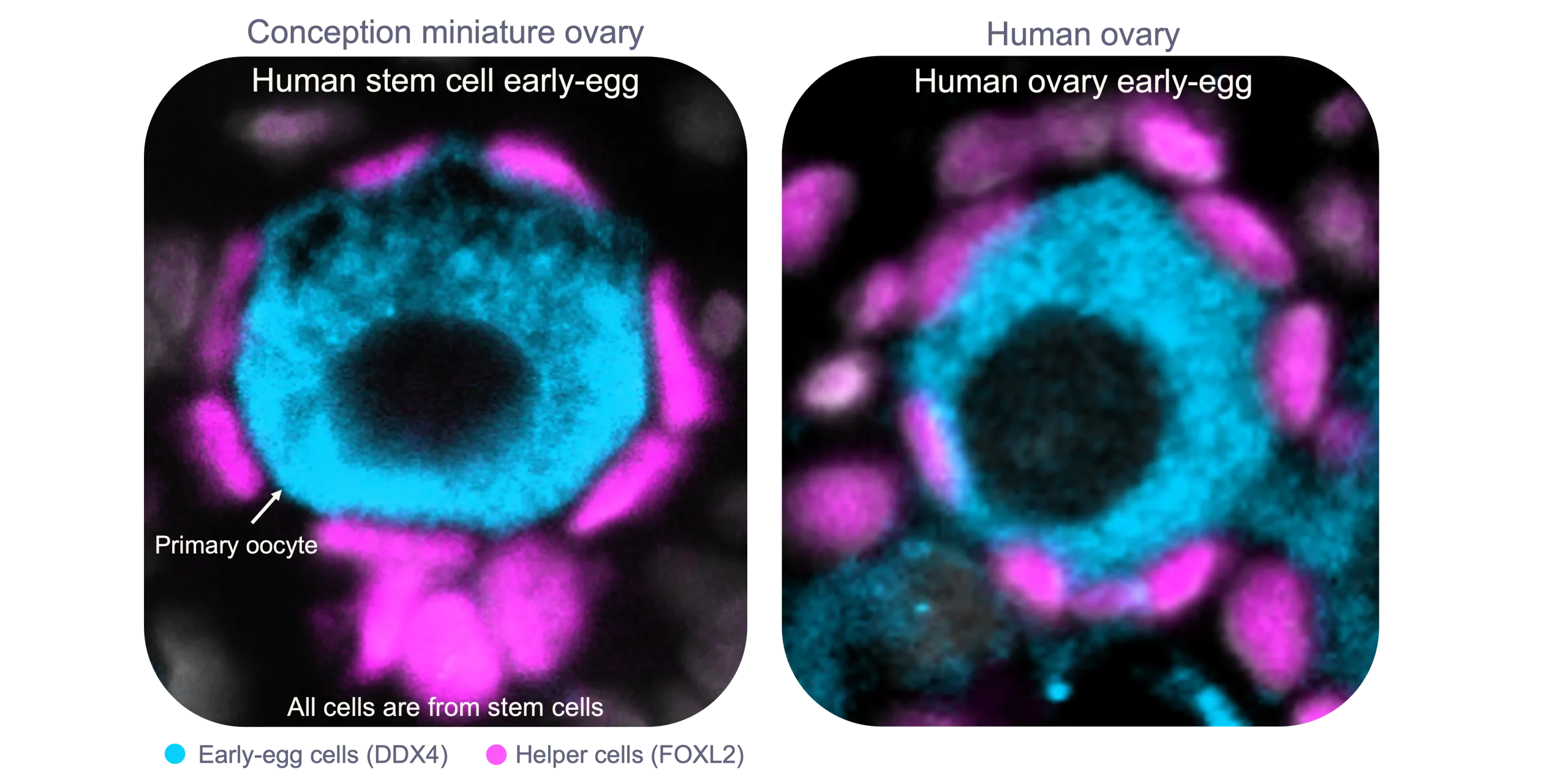
In a significant advancement for reproductive medicine, a biotechnology firm in the United States has reported the successful creation of early-stage human egg cells derived from blood samples. This innovation, led by the California-based company Conception, suggests potential breakthroughs that could transform fertility treatments for numerous individuals. The firm’s work involves generating primary oocytes, or immature egg cells, through the reprogramming of blood cells into stem cells, which are then encouraged to form miniature ovaries containing these early egg cells.

While this development is promising, it remains in the experimental phase. The generated egg cells are not yet mature and are therefore incapable of being fertilised or utilised in pregnancy. Matt Krisiloff, the company’s chief executive, noted the transformative potential of this technology on fertility processes through a message shared on the platform X.

Understanding the Creation Process

The innovative technique commences with a straightforward blood draw. Scientists convert the blood cells into induced pluripotent stem cells (iPSCs), which are adult cells reprogrammed to mimic embryonic stem cells. These iPSCs are then directed to form ovarian tissue, cultivated in the laboratory, where early-stage eggs develop within structures similar to human ovarian follicles.

This method prioritises the recreation of ovarian structures, as it is essential for the eggs to have the surrounding support cells that facilitate proper maturation. Although the egg cells produced at this stage are still evolving and far from fully developed, researchers regard this achievement as a substantial move toward in vitro gametogenesis (IVG), which involves creating gametes from stem cells entirely within a laboratory setting.

Creating functional eggs in laboratory settings has previously been accomplished in mice. In 2016, a team led by Japanese scientist Katsuhiko Hayashi succeeded in producing healthy mice using stem cell-derived eggs, which resulted in normal offspring capable of natural reproduction. Although replicating this outcome in humans poses added complexities due to the intricacies of human egg development, the potential applications for those facing fertility challenges are noteworthy.

Ethical and Scientific Considerations

Despite the excitement surrounding this breakthrough, researchers emphasise that the work remains nascent. The produced egg cells are classified as primary oocytes, indicating they are in an early developmental state and cannot yet be fertilised. Further research is essential to ascertain whether these cells can mature correctly and produce healthy embryos, as well as to ensure their safety before any clinical trials with humans can commence.

Chief executive Matt Krisiloff has acknowledged that the technology is several years away from being available for clinical application and will necessitate extensive safety evaluations before consideration for patient use. Furthermore, the findings lack independent validation from peer-reviewed scientific publications, limiting the opportunity for the broader scientific community to assess these results comprehensively.

The developments in in vitro gametogenesis also provoke significant ethical discussions. Concerns have been raised regarding the long-term safety of stem cell-derived eggs, the ethics of embryo research, the implications of genetic parenthood, and the equitable access to this emerging technology. Experts highlight that as stem cell-derived gametes offer enormous promise, careful scientific and ethical scrutiny will be crucial to transitioning from laboratory experimentation to clinical practice.

Long or Short, get news the way you like. No ads. No redirections. Download Newspin and Stay Alert, The CSR Journal Mobile app, for fast, crisp, clean updates!

App Store –  https://apps.apple.com/in/app/newspin/id6746449540 

Google Play Store – https://play.google.com/store/apps/details?id=com.inventifweb.newspin&pcampaignid=web_share

Latest News

Popular Videos