


Rajya Sabha Passes Bill Criminalising Insult to Vande Mataram
The CSR Journal Magazine

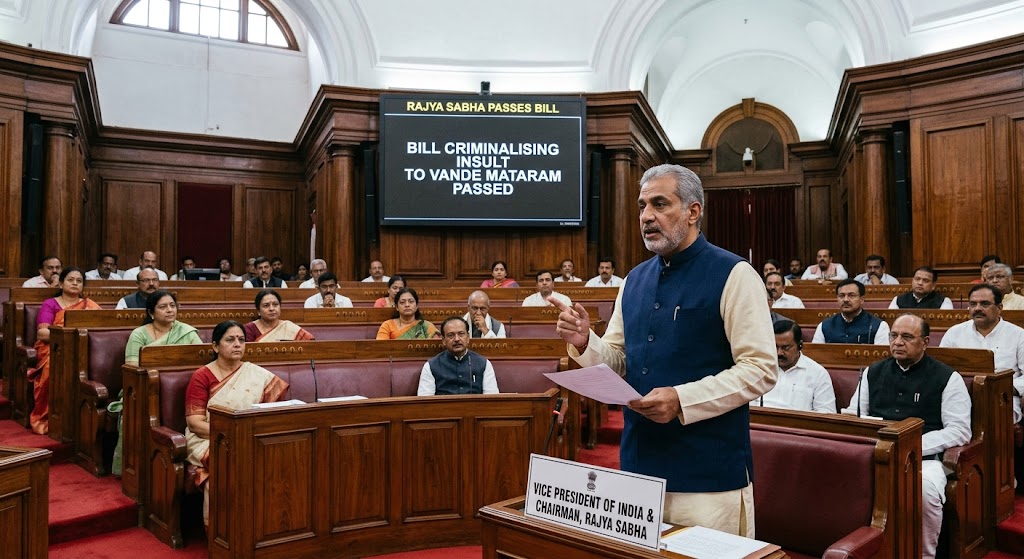
The Rajya Sabha, on 29 July 2026, passed the Prevention of Insults to National Honour (Amendment) Bill, 2026, to make disrespect towards Vande Mataram a criminal offence. The discussions took place in a contentious atmosphere, with members of the Opposition vocally expressing their concerns and demanding a response from Union Home Minister Amit Shah. The Opposition’s protests were focused on allegations regarding the utilisation of police force against demonstrators in the national capital, who were protesting the leakage of the NEET examination papers.

As protests escalated, the Opposition staged a walkout during the legislative discussions, seeking to highlight their grievances regarding the situation in the capital. This atmosphere of dissent marked a significant backdrop for the passage of a bill intended to enhance national sentiments.

Amendment Expands Legal Protections

The recent amendment extends the scope of the Prevention of Insults to National Honour Act, 1971, which has historically provided legal safeguards for the National Flag, the Constitution, and the national anthem, known as Jana Gana Mana. By including Vande Mataram under this Act, the bill aims to solidify the legal status of the national song, further protecting national symbols.

This new legal framework categorises actions such as intentionally preventing or obstructing the singing of Vande Mataram, as well as behaviours deemed insulting or disrespectful to the national song, as criminal offences. Punishments under this amendment may impose penalties of up to three years’ imprisonment for offenders, encompassing acts of desecration against various national symbols.

The introduction of this amendment coincides with the 150th anniversary celebrations of Vande Mataram, signifying the government’s intent to promote the song at formal gatherings actively. Originally authored by Bankim Chandra Chattopadhyay and featured in his novel Anandamath, Vande Mataram holds a prominent place in India’s historical context as a symbol of the freedom movement.

Legal Implications and Future Discussions

Following the passage of the amendment, there are expectations of extensive debates regarding the interpretation of key terms such as “insult” and “obstruction” within the legal text. Deliberations may arise surrounding how the law will distinguish between deliberate acts intended to disrupt the singing of Vande Mataram and personal choices to refrain from participation.

Advocates of the amendment foresee its potential to instil a sense of national pride and responsibility towards upholding national symbols. Nonetheless, critics of the law raise concerns about its implications for freedom of expression and the potential for misuse in various contexts.

As the law comes into effect, stakeholders from various sectors—including legal experts, civil society, and political analysts—will likely monitor its impact on societal norms and the enforcement practices of law enforcement agencies. The bill’s passage represents a significant move in redefining the legal landscape surrounding national honour and the protection of cultural symbols in India.

Long or Short, get news the way you like. No ads. No redirections. Download Newspin and Stay Alert, The CSR Journal Mobile app, for fast, crisp, clean updates!

App Store –  https://apps.apple.com/in/app/newspin/id6746449540 

Google Play Store – https://play.google.com/store/apps/details?id=com.inventifweb.newspin&pcampaignid=web_share

Latest News

Popular Videos
