


Peepal Baba’s Memoir Explores the Journey of Planting 20 Million Trees
The CSR Journal Magazine

Peepal Baba, also known as Swami Prem Parivartan, presents a distinctive exploration of humanity’s relationship with nature in his memoir, “Ghosts on Peepal Trees.” This work diverges from conventional environmental literature, which often focuses on scientific facts and policy discussions, to offer a personal narrative intertwined with cultural reflections. The memoir intersects personal history and environmental advocacy, underscoring the importance of cultural narratives in addressing current ecological issues.

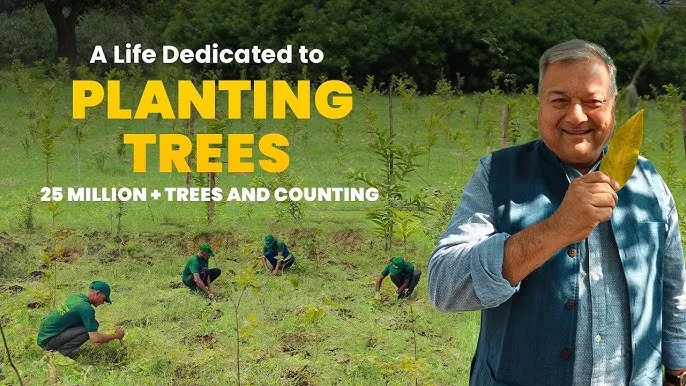
At the core of the memoir is Peepal Baba’s journey as one of India’s leading environmentalists. Through his foundation, Give Me Trees, he has successfully planted and preserved over 26 million trees across 220 districts in 21 states. However, rather than emphasising the scope of his achievements, the author delves into the foundational influences during his childhood, including formative experiences and moral lessons learned from everyday life.

The book’s title is particularly evocative, drawing from traditional narratives about spirits residing in peepal trees. While many view these tales as mere folklore, Peepal Baba prompts readers to consider their deeper significance. He argues these stories may play a crucial role in promoting environmental protection by discouraging the destruction of ecologically vital trees. This concept forms a thematic cornerstone of the memoir.

Personal Experiences Shaping Environmental Advocacy

An engaging aspect of the memoir is its focus on individuals who influenced Peepal Baba’s worldview. He reflects on the impact of his grandmother’s storytelling, which portrayed peepal trees as sacred, and how the encouragement from his primary school teacher, Miss Williams, in Pune, fostered his passion for nature. These initial influences, paired with a growing awareness of the environment, were pivotal in shaping his commitment to conservation.

Peepal Baba argues that ecological understanding often arises through cultural narratives and lived experiences rather than formal education. By incorporating personal anecdotes, he highlights how such cultural elements cultivate a sense of ecological responsibility within individuals and communities.

The memoir adeptly links disparate elements of environmental discourse. While modern discussions typically frame conservation as a technical issue requiring scientific solutions, Peepal Baba contends that these approaches are incomplete without cultural context. He asserts that societies have engaged in natural protection long before the establishment of environmental science, often through traditions and myths that reinforce respect for nature.

Reflections on Conservation and Cultural Memory

Among the thought-provoking segments of the book are Peepal Baba’s insights on the interdependence of human societies and ecosystems. He consistently emphasises the correlation between societal health and the vitality of the environments that support them. Although these notions are not entirely new, their strength is amplified by the author’s extensive grassroots involvement rather than abstract theorising.

The narrative becomes particularly compelling during the author’s personal reflections, which add authenticity to his broader environmental message. Readers unfamiliar with his work may discover a life dedicated to environmental causes, often overlooked outside times of ecological crises. However, the memoir occasionally prioritises advocacy over narrative flow, which may not appease readers seeking a more event-driven autobiography.

Despite these limitations, “Ghosts on Peepal Trees” presents a relevant and unique perspective on environmentalism, rooting ecological wisdom in India’s cultural heritage. By doing so, the memoir encourages readers to reevaluate the stories they carry and the landscapes that shape them. Ultimately, it suggests that conservation is an intrinsic aspect of cultural memory, intertwined with the narratives passed down through generations.

Long or Short, get news the way you like. No ads. No redirections. Download Newspin and Stay Alert, The CSR Journal Mobile app, for fast, crisp, clean updates!

App Store –  https://apps.apple.com/in/app/newspin/id6746449540 

Google Play Store – https://play.google.com/store/apps/details?id=com.inventifweb.newspin&pcampaignid=web_share

Latest News

Popular Videos
