


Oyster Reefs in Bohai Bay Show Signs of Recovery After Restoration
The CSR Journal Magazine

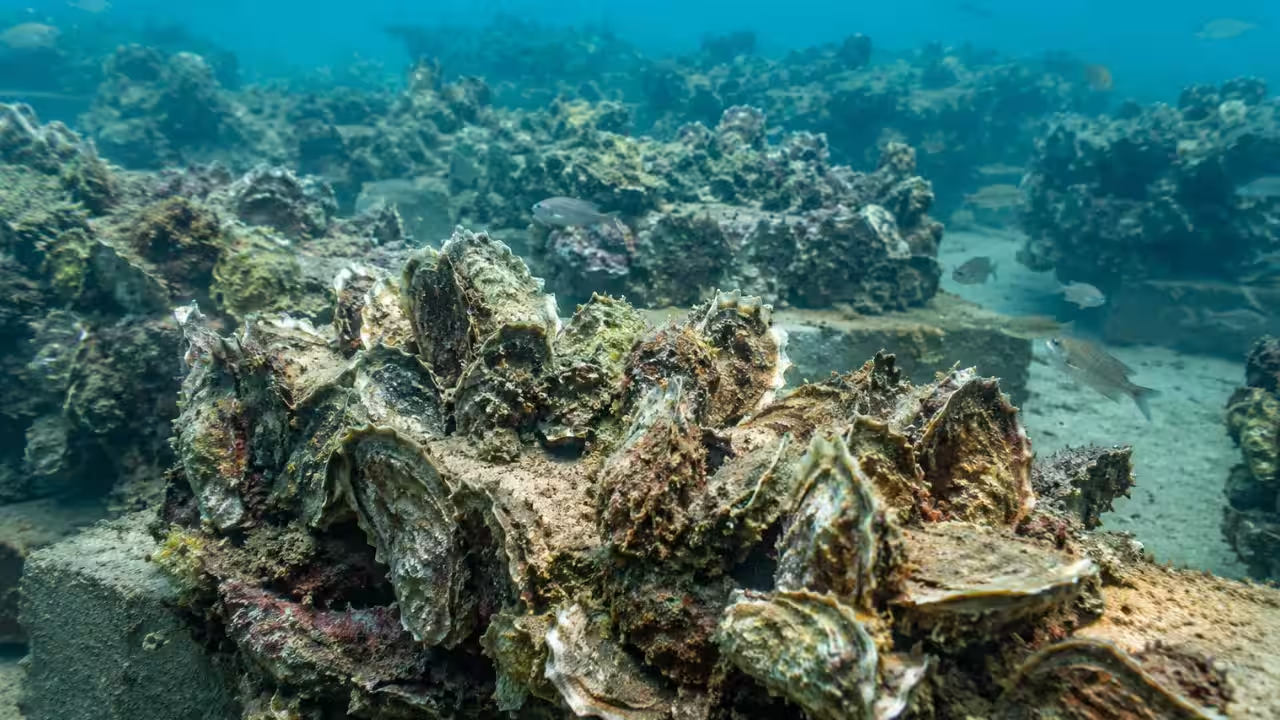
Research conducted in March 2026 indicates that the restoration of oyster reefs in Bohai Bay, China, has led to a significant increase in oyster populations. An average of 286 oysters per square metre was recorded on newly created artificial reefs, marking a notable recovery since the restoration efforts began. This study, led by Chang Liu and colleagues, was published in Frontiers in Marine Science and tracked changes in marine ecosystems from 2022 to 2026.

The researchers noted a substantial reduction in suspended particulate matter in the water surrounding the reefs, which decreased by approximately 62 per cent from pre-restoration levels. In May 2022, the average concentration of suspended particles was measured at 19.3 milligrams per litre, which fell to 7.28 milligrams per litre by March 2026. Although oysters are known to filter particles from the water, the study does not conclusively link their presence to this decrease.

Prior to restoration, the Dashentang area had experienced a severe decline in its oyster habitat, shrinking from around 35 square kilometres in the 1970s to just 1.69 square kilometres in recent years. Factors contributing to this decline included overfishing, coastal development, and alterations to the seabed. The global context is concerning, with estimates suggesting that around 85 per cent of oyster reefs worldwide have been lost.

Details of the Restoration Methodology

The restoration project, conducted between August 2022 and December 2023, involved the installation of 4,500 reinforced-concrete structures and 41,250 oyster-shell frames. These structures were designed to provide surfaces for oysters to attach and create habitats for other marine species. The total volume of these installations was approximately 345,000 cubic metres.

Initial surveys indicated that oyster populations were low on the artificial structures. In November 2023, an average of 65 oysters per square metre was recorded, which fell to 58.8 in March 2024. However, by March 2026, the average had risen dramatically to 286 oysters per square metre. In contrast, natural reefs in the area supported a significantly higher average density of 1,830.4 oysters per square metre at that time.

Another important observation was the recruitment of young oysters, which is crucial for population sustainability. In March 2026, artificial reefs had an average of 204.2 young oysters per square metre, indicating that new individuals were joining the population. However, most oysters on these structures remained small or medium-sized, suggesting that the populations were still in the early stages of development.

Broader Marine Ecosystem Recovery Noted

The researchers expanded their study beyond oysters to include other marine organisms, specifically macrobenthos, which encompasses clams, worms, and crustaceans. Initial counts showed a decline in these species during the restoration process, with numbers dropping from an average of 140.5 individuals per square metre before restoration to 30.4 during construction. By March 2026, this figure had rebounded to 255.6.

Particularly on artificial reefs, the increase in seabed animals was pronounced, rising from 29.4 per square metre in March 2024 to 405.2 by March 2026. The composition of the seabed community also shifted, with molluscs decreasing from 98.1 per cent of the recorded community to 66.3 per cent by March 2026, allowing for a greater presence of worms and arthropods.

While these findings suggest a positive trend in marine life at Dashentang, the researchers caution against attributing all observed changes solely to restoration efforts. They recommend ongoing monitoring to assess the long-term sustainability of the restored reefs and the overall health of the marine ecosystem.

Long or Short, get news the way you like. No ads. No redirections. Download Newspin and Stay Alert, The CSR Journal Mobile app, for fast, crisp, clean updates!

App Store – https://apps.apple.com/in/app/newspin/id6746449540

Google Play Store – https://play.google.com/store/apps/details?id=com.inventifweb.newspin&pcampaignid=web_share

Latest News

Popular Videos
