


NASA’s X-59 Breaks Sound Barrier in Major Milestone for Quiet Supersonic Travel
The CSR Journal Magazine

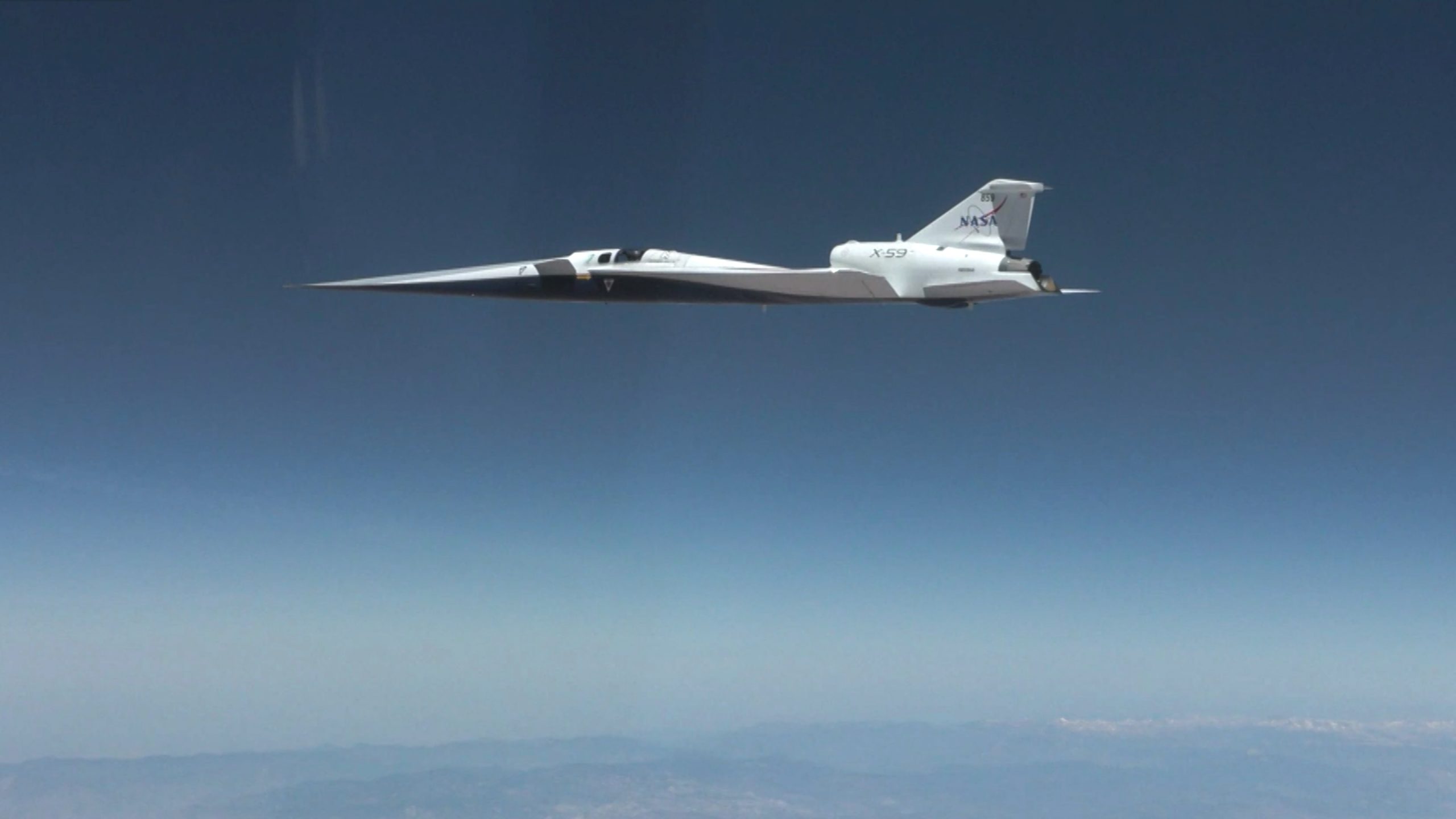
Nasa has marked a significant advancement in aviation with the successful supersonic flight of the experimental X-59 aircraft. This achievement represents a transformative moment in the agency’s Quesst mission, which focuses on mitigating the loud sonic booms typically associated with supersonic travel. By breaking the sound barrier, the X-59 opens new possibilities for quieter air travel across vast distances.

Quiet Supersonic Travel Redefined

Traditionally, supersonic flight has been defined by the dramatic sonic booms generated when aircraft exceed the speed of sound. This phenomenon occurs due to the rapid compression of air waves, which produces a thunderous sound upon reaching the ground. Such noise has historically posed challenges, leading to regulatory bans on supersonic air travel over land regions globally. The innovative design of the X-59 aims to alter this narrative.

The X-59 is engineered to generate a ‘soft thump’ instead of a loud boom, with noise levels comparable to a distant car door closing. This quieting capability significantly enhances the potential for supersonic flight, potentially paving the way for its acceptance in various airspace.

During its inaugural flight at Edwards Air Force Base in California, the X-59 reached a remarkable speed of Mach 1.1, translating to approximately 713 miles per hour or 1,147 kilometres per hour. This accomplishment verifies the aircraft’s operational effectiveness, while the ongoing envelope expansion process ensures that every speed and altitude adjustment tests its safety and structural integrity.

Technical Innovations Behind the Design

The design of the X-59 plays a crucial role in achieving its quiet flight. As an object approaches the speed of sound, air molecules are unable to disperse quickly enough, leading to the formation of high-pressure shockwaves. Conventional supersonic jets typically possess blunt profiles that create a single, overwhelming shockwave. In contrast, the X-59 features a sleek and elongated shape, its nose measuring nearly 30 feet in length. This distinctive design minimizes the merging of pressure waves.

By generating several smaller shockwaves rather than one massive wave, the X-59 reduces the sound intensity before it reaches the ground. This innovative approach ensures that observers experience a gentle sound rather than the jarring boom characteristically associated with supersonic aircraft.

Moreover, the X-59’s engine is mounted on top of the fuselage, utilising the body of the aircraft as a barrier to redirect noise away from the ground. These engineering advancements are a result of significant progress in computational fluid dynamics, enabling researchers to accurately model and optimise the aircraft’s shape for efficient sound management.

Future Testing and Developments

The Nasa team is preparing to further test the X-59 by reaching speeds of Mach 1.4, which equates to approximately 925 miles per hour or 1,488 kilometres per hour, in the coming days. Each successful flight not only enhances knowledge about high-speed travel but also draws closer to the vision of a future where rapid air travel can occur without infringing on the tranquillity of communities below.

As the X-59 continues its testing under the Quesst mission, it embodies a significant leap toward effective integration of speed and noise reduction in aviation, with the potential to revolutionise the travel industry.

Long or Short, get news the way you like. No ads. No redirections. Download Newspin and Stay Alert, The CSR Journal Mobile app, for fast, crisp, clean updates!

App Store –  https://apps.apple.com/in/app/newspin/id6746449540 

Google Play Store – https://play.google.com/store/apps/details?id=com.inventifweb.newspin&pcampaignid=web_share

Latest News

Popular Videos
