


ISRO Successfully Tests New Engine for India’s Heaviest Rocket
The CSR Journal Magazine

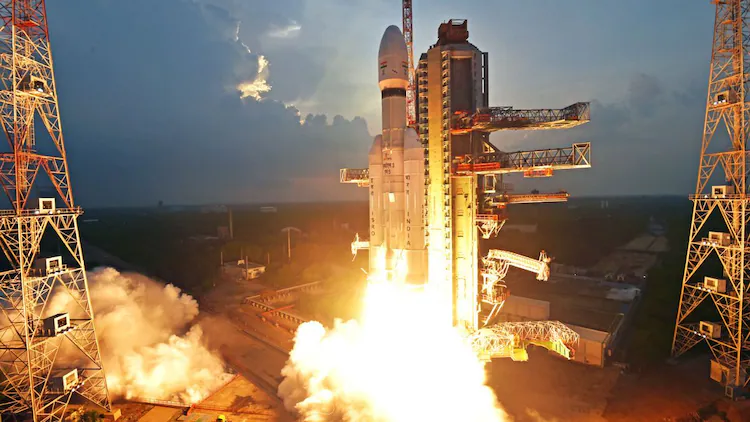
India has achieved a significant milestone in its space exploration efforts. The Indian Space Research Organisation (ISRO) successfully conducted a high-powered test of the CE20 cryogenic engine at the ISRO Propulsion Complex located in Mahendragiri, Tamil Nadu. This powerful engine, which reached a thrust level of 22 tonnes, provides the necessary force to propel rockets against the pull of gravity. This development is crucial for the future of the Launch Vehicle Mark-III (LVM3), recognized as India’s heaviest rocket. Cryogenic engines are among the most intricate components of rockets due to their reliance on fuels cooled to extremely low temperatures. These engines utilize liquid hydrogen and liquid oxygen, which become liquids by being cooled to hundreds of degrees below freezing.

Engine’s Technical Advancements

The latest test not only evaluated raw power but also assessed a nozzle protection system that safeguards the engine’s tail from extreme heat and a multi-element igniter that acts similarly to a spark plug, ensuring reliable engine ignition. ISRO is focused on enhancing the reliability of its rockets, and by conducting tests at sea level under high pressure, engineers can guarantee that the equipment operates flawlessly prior to launch. This success signifies a noteworthy achievement for upcoming missions intending to transport heavier payloads into space.

Significance of CE20 Engine

The CE20 engine serves as the high-performance core of the LVM3, the most potent rocket within ISRO’s inventory. It plays a pivotal role in delivering power when the rocket ascends to its upper flight stages. The recent upgrades to this engine technology will enable the LVM3 to carry larger satellites and, potentially, human passengers into space. The test lasted for 165 seconds, demonstrating the engine’s capacity to endure the extreme heat characteristic of a launch environment.

Highlights of the Mahendragiri Test

The successful outcome of the Mahendragiri test can be attributed to the engine performing precisely as planned under high thermal and pressure conditions. The new ignition system functioned without issues, and the nozzle protection mechanism effectively safeguarded the engine during the burn phase. This accomplishment is pivotal for ISRO as it works toward ensuring that future missions, such as the Gaganyaan program, are not only safer but also more powerful.

Implications for Future Missions

The LVM3 rocket, which successfully launched Chandrayaan-3 to the Moon, will gain from the fortified engine. These enhancements position ISRO for even more ambitious objectives. This particular success directly contributes to the Gaganyaan mission, which plans for Indian astronauts to orbit the Earth. The first uncrewed flight is scheduled for 2026, followed by a human mission anticipated in 2027. This recent test certifies that the engine can manage the thrust necessary to ensure the safety of astronauts during their atmospheric passage.

Long or Short, get news the way you like. No ads. No redirections. Download Newspin and Stay Alert, The CSR Journal Mobile app, for fast, crisp, clean updates!

App Store –  https://apps.apple.com/in/app/newspin/id6746449540 

Google Play Store – https://play.google.com/store/apps/details?id=com.inventifweb.newspin&pcampaignid=web_share

Latest News

Popular Videos
