


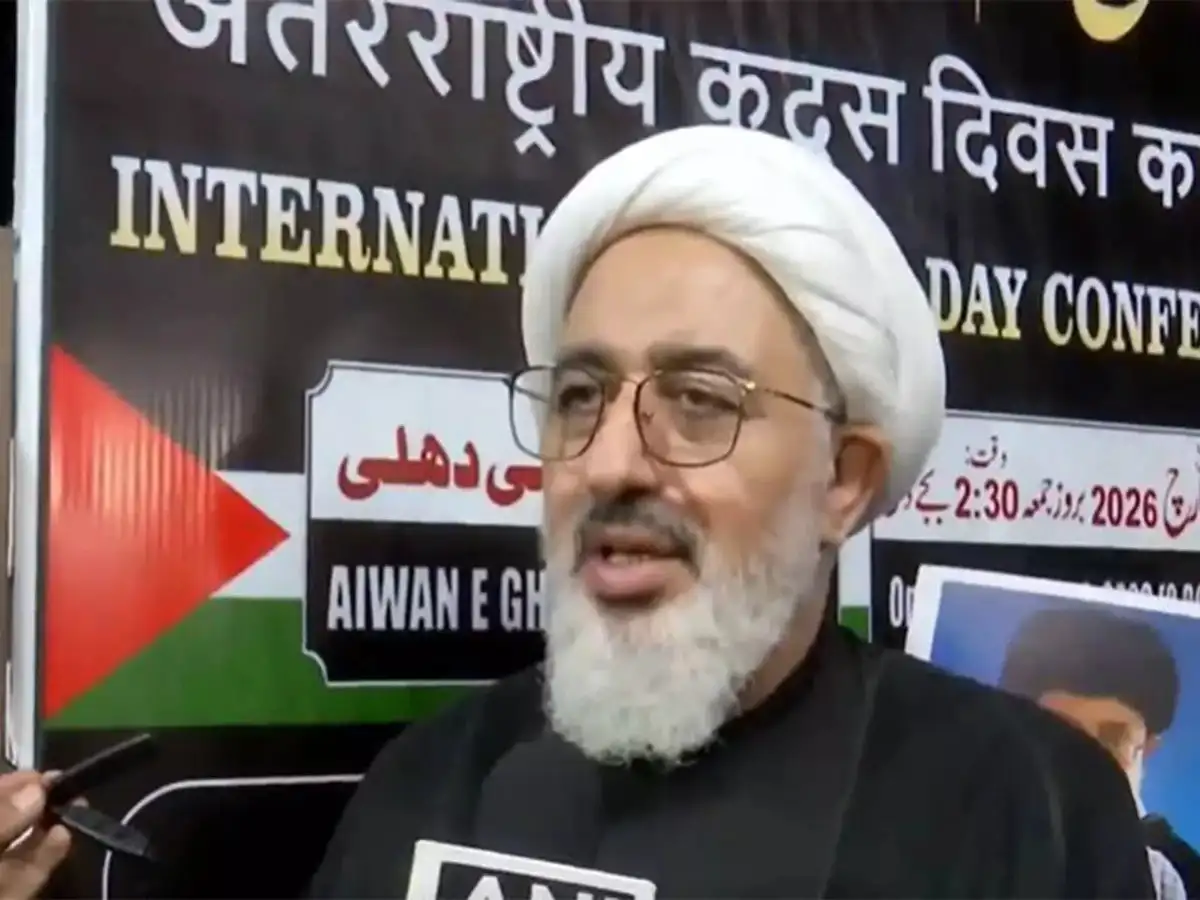

Abdul Majid Hakeem Ilahi, the Representative of Iran’s Supreme Leader in India, has made a public appeal for an end to the conflict in West Asia, highlighting the widespread suffering of people in the region. In a press conference held in Bengaluru, he urged all nations to pressure the United States and Israel to cease hostilities. Ilahi stressed the need for fairness and justice, asking why discussions focus on Iran rather than those responsible for instigating the war. “If they call on the United States and the Zionist regime to stop, everything will return to normal,” he stated.
Ilahi contended that it was unacceptable for nations to be restricted from engaging with Iran economically or politically due to external pressures. He argued for a more equitable and just approach, encouraging an analysis of the situation in its broad context. “We should relay our message to the initiators of the war and tell them to stop because we are all suffering,” he added.
Inevitability of Conflict
According to Ilahi, Iran initially sought to avoid conflict but ultimately found itself drawn into it. He stated that various attempts to broker peace had been made, including negotiations in Oman which were reportedly successful. However, these discussions were derailed when Iran faced military aggression. “Iran made numerous offers to the opposing side, aiming to prevent escalation, but was met with hostility,” he explained.
Ilahi recounted that a swift offensive was planned by the US and Israel, aiming to decimate Iran’s government within three days. He mentioned that the initial assault involved 500 aircraft and numerous missiles, resulting in significant casualties among civilians, including children. “They targeted key infrastructure and personnel, which reflects a disregard for human life,” he stated.
He asserted that Iranian resilience has been crucial, citing that over 4,000 civilians have lost their lives and extensive infrastructural damage has been inflicted, affecting homes, hospitals, and educational institutions. Ilahi condemned the tactics of the opposing forces, asserting a lack of ethics and humanitarian considerations in their military strategy.
Future Negotiations and Current Conditions
Ilahi revealed that a 15-point plan proposed by the US was initially rejected by Iran, which subsequently suggested a 10-point plan that was accepted but ultimately disregarded. He indicated that the current situation is complex, with a de facto ceasefire not fully realised. “It is a state of no war, no peace,” he remarked, noting that despite external pressures, the domestic situation in Iran remains stable and resilient.
Ilahi expressed concerns regarding the blockade affecting maritime traffic to and from Iran. He reiterated that prior to the conflict, the Strait of Hormuz was a critical and open route for international trade, signalling that the return to normalcy hinges on the cessation of US aggression. “The Strait was accessible to all nations, and now it is imperative for those who instigated the war to cease their actions,” he emphasised.
The representative underscored the need for a shift in global attitudes, arguing against the prevailing notion that powerful countries can act without accountability. He urged nations to call on the US and its allies to cease their military actions, highlighting the adverse effects of the war on civilians and economies in the region. “This crisis has been exacerbated by their actions, affecting livelihoods and creating uncertainty,” he concluded.