


Indian Scientists Develop Smart Cancer Drug RK-251 to Enhance Chemotherapy
The CSR Journal Magazine

Indian scientists have introduced a novel cancer treatment option called RK-251, which aims to improve the efficacy and safety of chemotherapy. This development comes at a time when the prevalence of cancer is escalating both globally and within India. Traditional chemotherapy approaches target rapidly dividing cells, struggling to differentiate between cancerous and healthy cells, often resulting in harmful side effects for patients.

Led by researchers from the Institute of Advanced Study in Science and Technology (IASST) and the Indian Institute of Technology (IIT), Guwahati, the project seeks to address two critical challenges in oncology: the collateral damage to healthy cells during treatment and the development of drug resistance in cancer cells. The findings represent a significant advancement in cancer therapeutics, however, extensive human testing remains essential.

According to the World Health Organisation – International Agency for Research on Cancer (WHO-IARC), India recorded 15.6 lakh new cancer cases in 2024. Additionally, approximately 33 lakh individuals diagnosed in the preceding five years were still living with the disease at that time.

Challenges Associated with Traditional Chemotherapy

Chemotherapy plays a crucial role in cancer treatment due to its ability to kill cancer cells and inhibit their growth. Nevertheless, the adverse effects can complicate patient experience. Common side effects include nausea, fatigue, hair loss, and increased vulnerability to infections, all of which can vary in severity based on multiple factors, such as the specific drug used and individual patient characteristics.

Researchers have increasingly explored alternative therapies aimed at differentiating between cancerous and healthy cells. Treatments like targeted therapies and immunotherapies exploit the unique biological characteristics of cancer cells. Unfortunately, even these approaches can lead to side effects, and cancer cells may develop resistance, complicating treatment outcomes.

Resistance arises from the heterogeneous nature of tumours, with some cancer cells being inherently less sensitive to certain drugs, while others may acquire mutations that confer survival advantages. This resistance poses significant challenges for successful treatment strategies.

Mechanism and Effectiveness of RK-251

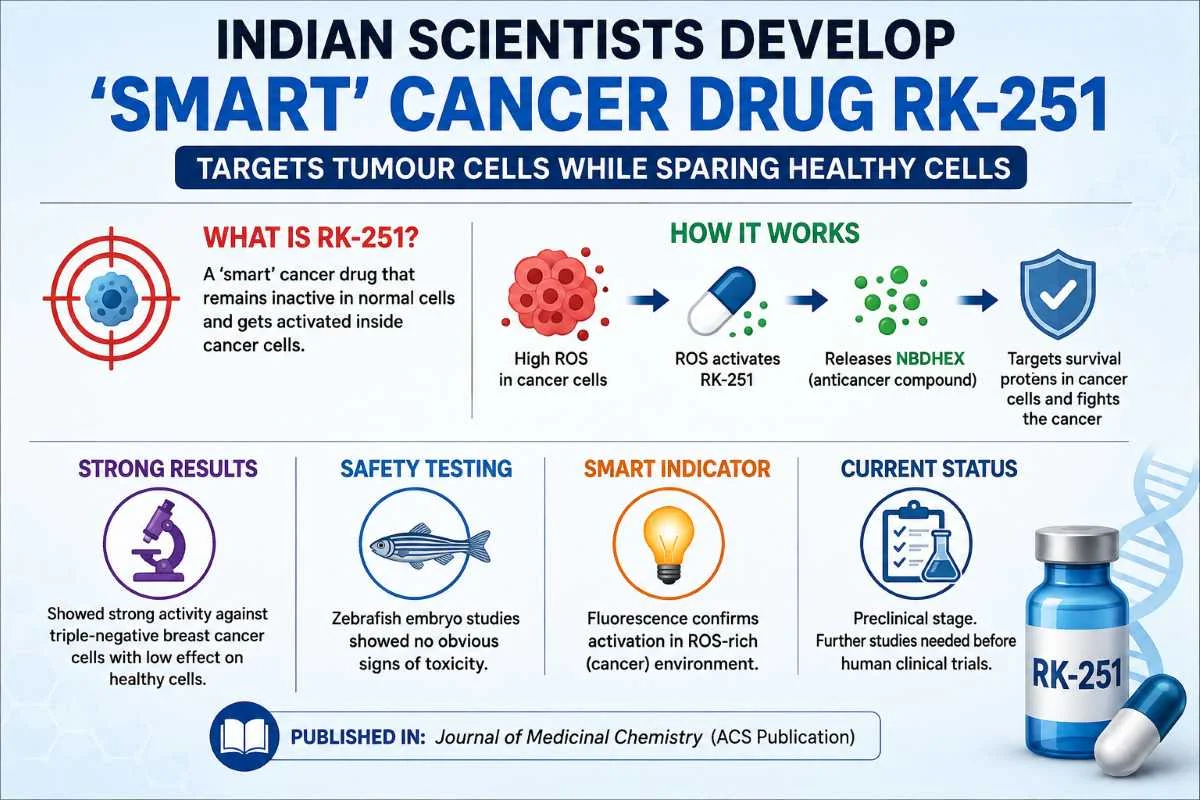
Dr Mandeep Singh Malhotra, a senior oncologist, described RK-251 as a prodrug that becomes active specifically within cancer cells, minimising effects on normal cells. A prodrug is initially administered in an inactive state and is activated in response to specific physiological conditions. In the case of RK-251, the drug exploits elevated levels of reactive oxygen species (ROS), prevalent in numerous cancer cells, to become activated.

Research findings indicate that once RK-251 enters a cancer cell, ROS levels catalyse its transformation into an active form that releases a compound known as NBDHEX. This compound targets proteins essential for cancer cell survival and treatment resistance, thereby potentially enhancing the efficacy of chemotherapy.

Preclinical studies demonstrated that RK-251 exhibited significant anticancer activity against MDA-MB-231 triple-negative breast cancer cells, while showing minimal effects on healthy cells. Tests conducted on zebrafish embryos revealed no obvious toxic effects, suggesting the drug’s selective action might prove beneficial.

The Road Ahead for RK-251 and Its Importance in Cancer Treatment

Despite the promising results, the drug is still in the preclinical phase and has yet to undergo human trials to confirm its safety and effectiveness. Dr Ankit Jain, a medical oncologist, emphasised that while preliminary results suggest RK-251 may selectively affect cancer cells, widespread clinical studies are necessary to validate these findings.

Given the increasing burden of cancer in India, with its highest rates attributed to tobacco use and significant incidences of gastrointestinal and breast cancer, the development of therapies like RK-251 could potentially alleviate treatment-related adverse effects and enhance patient tolerability. A drug capable of selectively targeting tumour cells may offer a more manageable and effective treatment option for patients facing the challenges of chemotherapy resistance.

While RK-251 presents a significant advancement in the realm of cancer therapeutics, experts urge caution against labelling it a replacement for existing treatments until comprehensive clinical trials validate its safety and efficacy in humans.

Long or Short, get news the way you like. No ads. No redirections. Download Newspin and Stay Alert, The CSR Journal Mobile app, for fast, crisp, clean updates!

App Store –  https://apps.apple.com/in/app/newspin/id6746449540 

Google Play Store – https://play.google.com/store/apps/details?id=com.inventifweb.newspin&pcampaignid=web_share

Latest News

Popular Videos
