


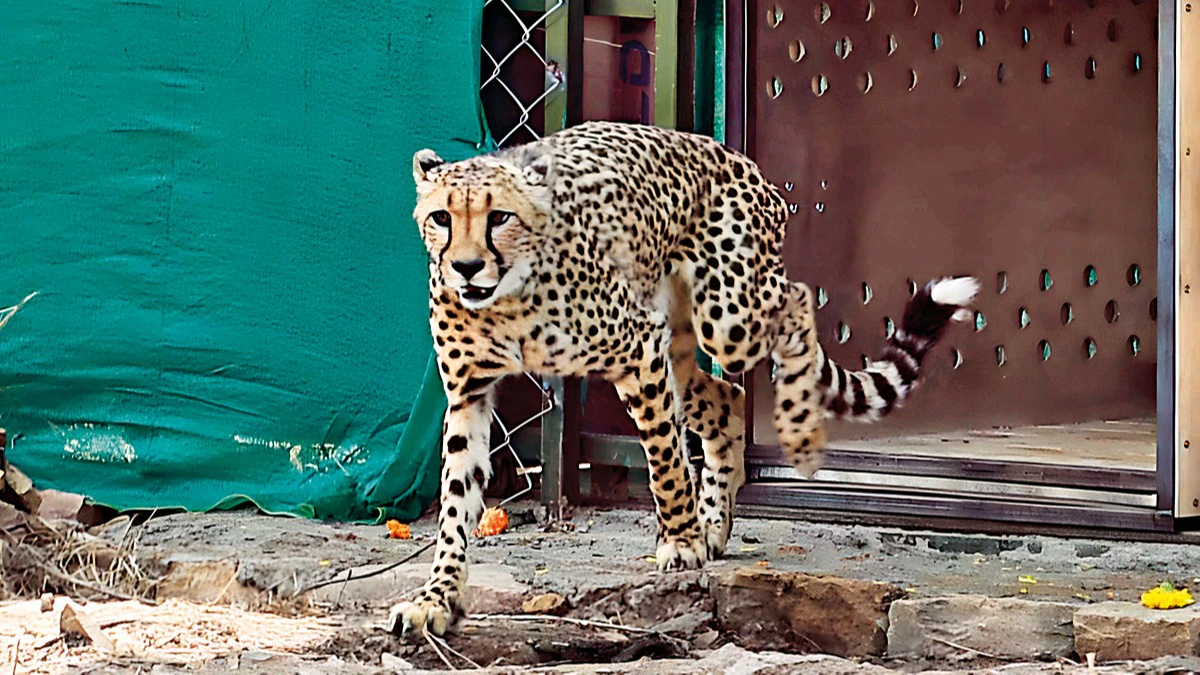

An Indian-born female cheetah has died at Kuno National Park in Madhya Pradesh, significantly impacting the species’ population in the region. Known as KGP-11, the cheetah was found injured in Morena district and had been under veterinary care since June 1. Despite efforts from biologists and park authorities, the young cheetah succumbed to her injuries after a five-day battle for survival.
Details of the Incident Unfold
KGP-11, who was only 27 months old, was located in the Pahargarh area and quickly transported to the veterinary facility at Palpur for treatment. The park authorities confirmed her passing and stated that a post-mortem examination was scheduled for June 7 to determine the precise cause of death. With her loss, the total cheetah population in Kuno National Park has decreased to 49 individuals, while India’s overall cheetah population stands at 52.
Currently, 32 of these cheetahs were born in India, and out of the total, 19 are roaming freely in the wild, with the remaining individuals appearing healthy. This event is part of a larger narrative concerning the reintroduction of cheetahs in India, which has seen both progress and challenges since its inception.
The demise of KGP-11 arrives on the heels of recent tragic findings. Just weeks prior, four cheetah cubs were found dead near their den site, raising concerns about the vulnerabilities faced by these animals in their new habitat. Preliminary investigations indicated that an attack by a wild animal may have led to the cubs’ untimely deaths.
Project Cheetah’s Rollercoaster Journey
The situation becomes ever more pronounced when considering India’s ambitious Project Cheetah, which aims to reintroduce the species to its native habitats after an absence of nearly 70 years. The initiative launched on September 17, 2022, started with eight cheetahs brought from Namibia to Kuno. Following that, 12 more cheetahs arrived from South Africa in 2023, alongside another group of nine cheetahs, including six females and three males, transported from Botswana earlier this year.
This mixed fortune follows celebrations on May 11, when park authorities released a film featuring female cheetahs alongside their cubs, generating a wave of optimism. The very next day, Madhya Pradesh Chief Minister Mohan Yadav facilitated the release of two female cheetahs from Botswana into open forest areas of Kuno National Park.
While the reintroduction efforts have created excitement, these recent fatalities underscore the harsh realities of wildlife conservation in India. All stakeholders remain invested in the well-being of the remaining cheetahs, as they monitor the situation and assess the health of the entire population.
Monitoring and Future Steps
As conservationists and authorities look ahead, the ongoing health checks and habitat assessments will gain prominence to ensure the safety and survival of the remaining cheetahs. The situation also calls for enhanced protective measures to shield these animals from potential threats in their environment.
The commitment to rejuvenate the cheetah population is unwavering; however, this recent event serves as a reminder of the challenges faced in wildlife management. The authorities continue to collaborate, implementing more proactive strategies to safeguard the remaining wildlife and to restore the cheetah’s standing in its ecological niche.
With Kuno National Park now housing 49 cheetahs and three at the Gandhi Sagar Sanctuary, the journey of India’s cheetah reintroduction program remains a critical issue, demanding ongoing attention and effort from both officials and wildlife enthusiasts across the nation.
Permalink: indian-cheetah-dies-kuno-national-park