


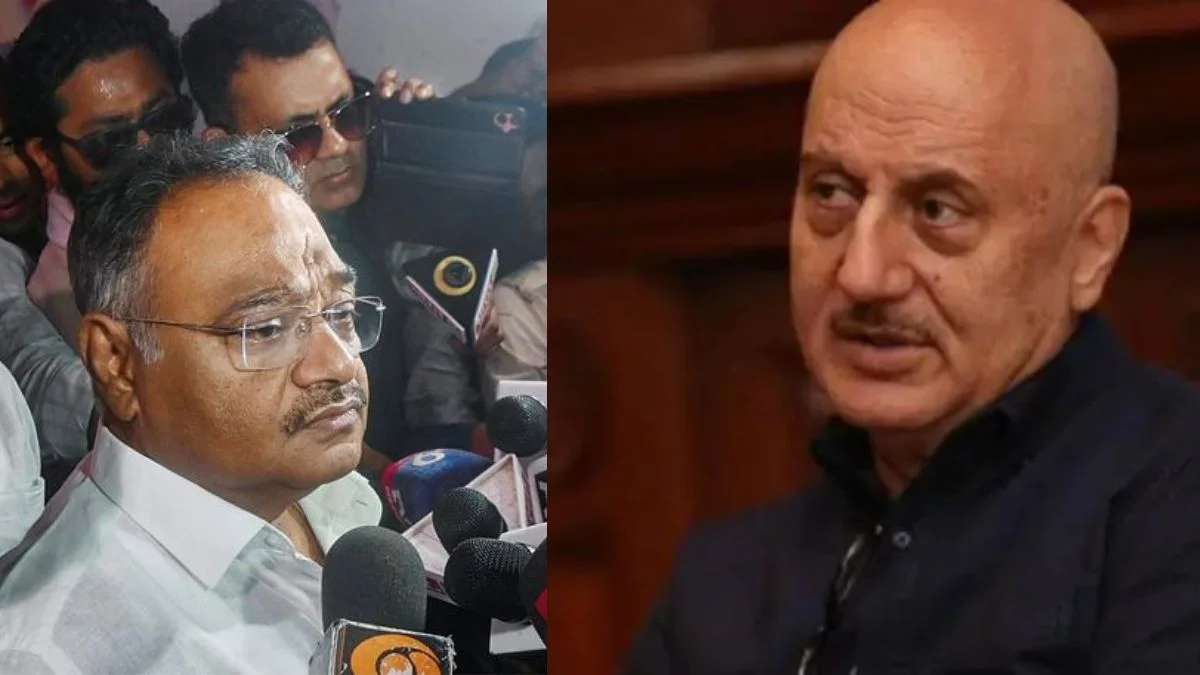
“Hair Can Regrow On Anupam Kher’s Head, But TMC Won’t Return”: West Bengal BJP President Samik Bhattacharya

The CSR Journal Magazine

West Bengal BJP President Samik Bhattacharya stated that the Trinamool Congress (TMC) should not be regarded as a legitimate political entity, alleging that the party has transformed the state into a marketplace. He reiterated that the dynamics within the TMC are of no concern to the BJP, emphasising their stance on the party’s diminishing influence in West Bengal.

In his remarks, Bhattacharya referenced previously made statements regarding the TMC’s political struggles. He drew an analogy between the party’s decline and the possibility of hair regrowth on Bollywood actor Anupam Kher’s head, asserting that while hair may grow back, the TMC will not regain its power. He asserted that the party’s operational management over the past seven years had been severely compromised.

Criticism of TMC’s Financial Incentives to Voters

Bhattacharya expressed concern over the practice of TMC leaders suggesting that women support the party in exchange for financial assistance of Rs 1,500 each. He labelled this tactic an insult to women’s political intelligence, questioning whether financial incentives could truly influence their political awareness and decision-making. His comments highlight a recurring theme in political discourse regarding the use of money to sway voters.

In addressing the issue, he pointed out that appealing to voters through monetary compensation undermines their autonomy. By questioning the TMC’s strategy, he urged for a more respectful and empowering approach towards women voters, rather than a transactional relationship based on financial handouts.

Furthermore, Bhattacharya drew a parallel between the TMC’s financial offers and the BJP’s own incentives, stating that the BJP also provides Rs 3,000 to women. He questioned whether this would lead all women to support the BJP, highlighting the broader implications of using financial incentives in political strategy.

Accusations of Corruption Against TMC

Labelling the TMC as synonymous with corruption, Bhattacharya questioned the efficacy of a government operating under a mindset of buying votes. He asserted that such practices do not reflect a sustainable or ethical governance model. His remarks aimed to portray the TMC as a party plagued by corruption and declining credibility.

Bhattacharya’s critique was anchored in a desire for accountability, suggesting that any political party should focus on genuine connection with voters and governance rather than relying on financial inducements. The underlying message was one of integrity in political processes and the need for a reformed approach to governance in West Bengal.

In conclusion, Bhattacharya’s statements reflect the ongoing political rivalry between the BJP and TMC in West Bengal, highlighting issues of governance, voter influence, and allegations of corruption. As the political landscape evolves, these topics remain central to the discourse surrounding state and national elections.

Long or Short, get news the way you like. No ads. No redirections. Download Newspin and Stay Alert, The CSR Journal Mobile app, for fast, crisp, clean updates!

App Store –  https://apps.apple.com/in/app/newspin/id6746449540 

Google Play Store – https://play.google.com/store/apps/details?id=com.inventifweb.newspin&pcampaignid=web_share

Latest News

Popular Videos