


The Fascinating Reasons Behind Why Cats Meow Exclusively at Humans
The CSR Journal Magazine

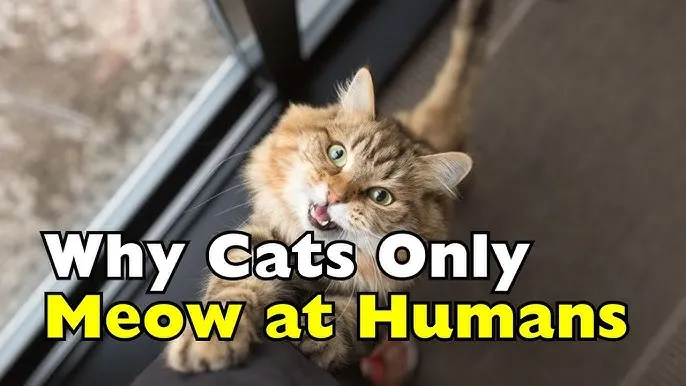
The relationship between domestic cats and their human companions has long been a subject of curiosity. Unlike their wild counterparts, cats are known to meow specifically at humans, a behaviour that is not observed between cats themselves. This communication appears to have evolved as a way for cats to interact with the dominant species in their environment—humans. This unique vocalisation serves a specific purpose, often aimed at eliciting a response from their human caregivers.

Domestic cats retain the meows they used as kittens, redirecting them toward humans instead of employing more silent forms of communication used among adult cats. This phenomenon can be considered a form of neoteny, where juvenile traits persist into adult life. The result is a sound designed to catch human attention, reflecting a long-standing bond formed over thousands of years.

The Origins of Feline Domestication

The history of cat domestication dates back to approximately ten thousand years ago in the Fertile Crescent, where early agricultural practices began. As humans settled and stored grains, they inadvertently attracted rodents, leading to the presence of wildcats. African wildcats, seeking food, approached human communities, initiating a mutually beneficial relationship.

Recent research indicates that house cats are genetically linked to these African wildcats. Through a process not directed by human intervention, these wildcats became domesticated by adapting to their surroundings and developing traits that allowed them to thrive alongside humans. This process differed from dog domestication, which involved intentional breeding for specific purposes.

Studies have revealed that the complex history of cats and humans is encapsulated within their vocalisations. The meows that cats utilise are not merely random sounds; they have been shaped over generations to capture human attention and elicit nurturing responses. This adaptation highlights the intricate bond between the two species.

The Science Behind Meows

In-depth research has also examined how human responses to cat vocalisations can influence the behaviour of cats. Evidence suggests that cats adapt their meows based on the responses they receive from their human companions, further reinforcing the communication bond. This presents an intriguing example of slow acoustic selection, where the sounds that elicit favourable reactions are reinforced over generations.

Moreover, the accompanying purr can also carry deeper implications. Some studies suggest that the purring of cats serves multiple purposes, including communication and possibly even healing. The frequencies produced during purring have been associated with aiding in bone density and healing, further illustrating the physiological and emotional connections between cats and humans.

Conclusion: Understanding the Cat-Human Bond

The communication methods between cats and humans are unique and multifaceted. The evolution of specific vocalisations like meows has established a distinctive form of interaction, symbolising the bond created through years of cohabitation. Cats have retained elements of their juvenile calls to communicate with humans, which fosters a deep emotional connection.

Both historical and contemporary research further illustrates the complexities of this relationship. Understanding these dynamics sheds light not only on the nature of feline behaviour but also on the shared experiences that define pet ownership. As such, the meow is more than just a sound; it represents a bridge in the long-standing love story between cats and their humans.

Long or Short, get news the way you like. No ads. No redirections. Download Newspin and Stay Alert, The CSR Journal Mobile app, for fast, crisp, clean updates!

App Store –  https://apps.apple.com/in/app/newspin/id6746449540 

Google Play Store – https://play.google.com/store/apps/details?id=com.inventifweb.newspin&pcampaignid=web_share

Latest News

Popular Videos
